It was on this day back in 1969 that I arrived, shortly before 8:30am, at the offices of Post Office Telephones in Trinity Street, Peterborough. I was just sixteen years old and had never had a job of work before. I had previously applied for a job as a Computer Operator at a local engineering firm but had been turned down because “I didn’t have the aptitude for working with computers”. Fascinating – but more on that later. I had finished school the previous week and had applied for a job as a Clerical Assistant with Post Office Telephones a little while before. On passing the exam and interview, I had been accepted. Though I had been told I would not start there until September – so I thought that would be great, a couple of months on holiday and then start! However, there was a chap who was planning on emigrating to Australia, so he did just that without letting his manager know, finally handing in his week’s notice and leaving! As a result I received a letter advising me that my new start date was 7th July and so I began work that day, having ended school the previous week. The first couple of days were a bit of a blur, being introduced around, filling in forms, signing the Official Secrets Act as I was now a Civil Servant (something I am still bound by, even now) and on the Wednesday I sat with a lady who began my training. That was fine, but on the following day when I turned up and sat at my desk, I saw no sign of the lady from the previous day. My manager was an ex-army major and so when I sat there doing nothing, not knowing what to do, I was asked rather sternly by the manager where my trainer was, so I replied that I had no idea and after a short while a chap turned up to continue my training. This he did very well and in fact he and I are still in contact after so many years. I really did have to learn about life outside of school and I enjoyed it for the most part, though it is very different, in the same way as school is a whole lot different now. At work over the next few years I was moved around into different groups learning different aspects of the business, as one senior manager had asked if I planned to make this my career, which I did. I went from Office Services to Accounts, then Directory Compilation and into Sales. As expected I didn’t get on with everyone, but that is life. I also grew in my own self-confidence, which I really needed. Then, when computers were introduced I found I could manage those far better than some of my colleagues, which also helped me and made me smile, given the computer operator job I hadn’t previously got – yet now I was using them! A different kind of computer work though, I guess. As I got older I was offered promotion and that was a challenge which, after a bit of work, I achieved. I was also enjoying these moves as it meant I was dealing with a range of people, both colleagues and customers.
Peterborough General Managers Office, where I first started work. The building was later converted into this hotel.
But there were a few folk in the office who I simply did not get on with and as does happen, unfortunately one was a senior manager. Their ways were not mine and I learned that further promotion was never going to be mine, at least not in that office in Peterborough, even though I was through a promotion board. My face simply did not ‘fit’ as the saying goes. But the company itself was changing, times as well as attitudes were also changing so, when an opportunity came for me to move to Leicester on a higher grade job with the same firm, I took it. For a little while this meant travelling every workday from Peterborough to Leicester and back, but that was good too as I met a lovely lady on the train and a while later we married. Yes, I chatted her up on the train! More work changes a few years later meant moving up to Nottingham and after a while the marriage didn’t work out, but as some of us know that can happen. I was in Nottingham for a few years but again further changes in the firm, which years before had become a private company, meant me moving again, first briefly up to Sheffield then down to Birmingham. I had previously bought a house near Chesterfield, but then house prices fell so I had to stay where I was living and travel every day. That wasn’t easy. I was in Birmingham for another few years but rumours were spreading about more changes, so when it was learned that wherever I went the office would often close (which wasn’t true, by the way!) you can imagine what was being said. However, I had learned on the quiet that we were indeed moving, but to a brand new building across the road from where we were. So when I was asked by colleagues over this rumour about me, I told them that I liked Birmingham and so wouldn’t close them, but simply move them to a better building! A few weeks later the official news broke, so you can imagine how I was viewed! But by now I wasn’t getting any younger and with so much travelling my health had begun to deteriorate. As I have said, because of housing prices I could not sell my property, also I’d had epilepsy from birth, but that was under control fairly well. As a youngster I had developed asthma – I had wondered why I got breathless at times, but I had done a great deal of singing in various choirs, which helped. So it was that I got a transfer back to Sheffield, with an interesting comment from my manager who said, in the nicest, kindest way “Good luck – and don’t come back!”. That transfer was on an initial trial of three months, but after just one month I was called in to see the senior manager there in Sheffield and told not to worry as I was not going back to Birmingham. Over the next few years I became a Trainer and that I thoroughly enjoyed. But my father had been a teacher and an older brother was a driving instructor, so maybe it is in the blood.
Then one day I was called in to see a couple of very senior managers who told me I was to go and train a new team of people in Manchester. This new team would then be doing the work that the team I was presently working with were doing. Furthermore I was not to mention any of this to my existing colleagues. I wasn’t happy, but it had to be done and if I hadn’t, someone else would have been found to be their trainer as the change was going to be made. But at the end of the several months spent with this new team, where I and a couple of other trainers taught the new team, I was advised that me going back to work in Sheffield would not be a good idea. Thankfully I was told of a job opportunity working back in Leicester and I appreciated that very much, as I would be working with people I knew and doing a job I enjoyed. That change wasn’t always easy, as one or two folk there were, to put it mildly, difficult, but I survived. Then the day came when further changes were announced. I naturally thought I would be on the move again, but I was told “Oh no, we have a new team – we don’t want you”. So I accepted the package I was offered, fondly named ’New Start’ and left the firm. I then went out into the big wide world, where I found that just about all of my existing training qualifications with British Telecom counted for nothing. So I went on a full teacher training course, I passed that and with quite a bit of help and guidance started up my own business, teaching people (mainly my age and above) the basics of taking good photographs (which I had done as a hobby since I was a teenager) and how to use computers as well as the ways of sharing photographs with family and friends via the Internet. I did all that until I retired, except then my health deteriorated, I had heart problems and I found myself in this lovely Care home, where I now write my weekly blogs. I am well looked after, I certainly eat far better here than I did at home – I never was any good in the kitchen – and I have also found that consuming milk or cream is not good for me. Add to that I have become vegetarian, so I’ve seen quite a few changes over the years! I cannot live forever, but I hope to carry on for a few more years yet. This is a shorter blog than before, but after the last couple of weeks I too need a break!
This week… As the saying goes, time flies like an arrow – but fruit flies like a banana!
So last week we had the two fleets, set up for battle. Now for a bit of action. The route of the British battlecruiser fleet took it through the patrol sector allocated to the German submarine U-32. After receiving the order to commence the operation, the U-boat moved to a position 80 miles east of the Isle of May at dawn on 31 May. At 03:40, it sighted the cruisers HMS Galatea and HMS Phaeton leaving the Forth at 18 knots. It launched one torpedo at the leading cruiser at a range of 1,000 yards, but its periscope jammed ‘up’, giving away the position of the submarine as it manoeuvred to fire a second. The lead cruiser turned away to dodge the torpedo, while the second turned towards the submarine, attempting to ram. U-32 crash dived and, on raising its periscope at 04:10, saw two battlecruisers (the 2nd Battlecruiser Squadron) heading south-east. They were too far away to attack, but the sighting of two battleships and two cruisers were reported to Germany. U-66 was also supposed to be patrolling off the Firth of Forth, but had been forced north to a position 60 miles off Peterhead by patrolling British vessels. This now brought it into contact with the 2nd Battle Squadron, coming from the Moray Firth. At 05:00, it had to crash dive when the cruiser HMS Duke of Edinburgh appeared from the mist heading toward it. It was followed by another cruiser, HMS Boadicea and eight battleships. U-66 got within 350 yards of the battleships preparing to fire, but was forced to dive by an approaching destroyer and missed the opportunity. At 06:35, it reported eight battleships and cruisers heading north. The courses reported by both submarines were incorrect, because they reflected one leg of a zigzag being used by British ships to avoid submarines. Taken with a wireless intercept of more ships leaving Scapa Flow earlier in the night, they created the impression in the German High Command that the British fleet, whatever it was doing, was split into separate sections moving apart, which was precisely as the Germans wished to meet it. Jellicoe’s ships proceeded to their rendezvous undamaged and undiscovered. However, he was now misled by an Admiralty intelligence report advising that the German main battle fleet was still in port. The Director of Operations Division had asked the intelligence division for the current location of German call sign DK, used by Admiral Scheer. They had replied that it was currently transmitting from Wilhelmshaven. It was known to the intelligence staff that Scheer deliberately used a different call sign when at sea, but no one asked for this information or explained the reason behind the query – to locate the German fleet. The German battlecruisers cleared the minefields surrounding the Amrum swept channel by 09:00. They then proceeded north-west, passing 35 miles west of the Horn’s Reef lightship heading for the Little Fisher Bank at the mouth of the Skagerrak. The High Seas Fleet followed some 50 miles behind. The battlecruisers were in line ahead, with the four cruisers of the II scouting group plus supporting torpedo boats ranged in an arc 8 miles ahead and to either side. The IX torpedo boat flotilla formed close support immediately surrounding the battlecruisers. The High Seas Fleet similarly adopted a line-ahead formation, with close screening by torpedo boats to either side and a further screen of five cruisers surrounding the column 5 to 8 miles away. The wind had finally moderated so that Zeppelins could be used, and by 11:30 five had been sent out. Visibility, however, was still bad, with clouds down to 1,000 feet.
HMS Warspite and HMS Malaya, seen from HMS Valiant at around 14:00hrs.
By around 14:00, Beatty’s ships were proceeding eastward at roughly the same latitude as Hipper’s squadron, which was heading north. Had the courses remained unchanged, Beatty would have passed between the two German fleets, 40 miles south of the battlecruisers and 20 miles north of the High Seas Fleet at around 16:30, possibly trapping his ships just as the German plan envisioned. His orders were to stop his scouting patrol when he reached a point 260 miles east of Britain and then turn north to meet Jellicoe, which he did at this time. Beatty’s ships were divided into three columns, with the two battlecruiser squadrons leading in parallel lines three miles apart. The 5th Battle Squadron was stationed 5 miles to the north-west, on the side furthest away from any expected enemy contact, whilst a screen of cruisers and destroyers was spread south-east of the battlecruisers. After the turn, the 5th Battle Squadron was now leading the British ships in the westernmost column, and Beatty’s squadron was centre and rearmost, with the 2nd BCS to the west.
Battlecruiser action.
(1) 15:22hrs, Hipper sights Beatty. (2) 15:48hrs, First shots fired by Hipper’s squadron. (3) 16:00hrs-16:05hrs, HMS Indefatigable explodes, leaving two survivors. (4) 16:25hrs, HMS Queen Mary explodes, nine survive. (5) 16:45hrs, Beatty’s battlecruisers move out of range of Hipper. (6) 16:54hrs, Evan-Thomas’s battleships turn north behind Beatty.
At 14:20 on 31 May, despite heavy haze and scuds of fog giving poor visibility, scouts from Beatty’s force reported enemy ships to the south-east; the British light units, investigating a neutral Danish steamer which was stopped between the two fleets, had found two German destroyers engaged on the same mission. The first shots of the battle were fired at 14:28 when HMS Galatea and HMS Phaeton of the British 1st Light Cruiser Squadron opened on the German torpedo boats, which withdrew toward their approaching light cruisers. At 14:36, the Germans scored the first hit of the battle when SMS Elbing of Scouting Group II hit her British counterpart HMS Galatea at extreme range. Beatty began to move his battlecruisers and supporting forces south-eastwards and then east to cut the German ships off from their base and ordered HMS Engadine to launch a seaplane to try to get more information about the size and location of the German forces. This was the first time in history that a carrier-based aeroplane was used for reconnaissance in naval combat. HMS Engadine’s aircraft did locate and report some German light cruisers just before 15:30 and came under anti-aircraft gunfire but attempts to relay reports from the aeroplane failed. Unfortunately for Beatty, his initial course changes at 14:32 were not received by the 5th Battle Squadron (the distance being too great to read his flags), because the battlecruiser HMS Tiger, the last ship in his column, was no longer in a position where she could relay signals by searchlight to Evan-Thomas, as she had previously been ordered to do. Whereas before the north turn, HMS Tiger had been the closest ship to Evan-Thomas, she was now further away than Beatty in HMS Lion. Matters were aggravated because Evan-Thomas had not been briefed regarding standing orders within Beatty’s squadron, as his squadron normally operated with the Grand Fleet. Fleet ships were expected to obey movement orders precisely and not deviate from them. Beatty’s standing instructions expected his officers to use their initiative and keep station with the flagship. As a result, the four Queen Elizabeth-class battleships, which were the fastest and most heavily armed in the world at that time, remained on the previous course for several minutes, ending up ten miles behind rather than five. Beatty also had the opportunity during the previous hours to concentrate his forces, and no reason not to do so, whereas he steamed ahead at full speed, faster than the battleships could manage. Dividing the force had serious consequences for the British, costing them what would have been an overwhelming advantage in ships and firepower during the first half-hour of the coming battle. With visibility favouring the Germans, at 15:22 Hipper’s battlecruisers, steaming approximately north-west, sighted Beatty’s squadron at a range of about fifteen miles, whilst Beatty’s forces did not identify Hipper’s battlecruisers until 15:30. (position 1 on the above map). At 15:45, Hipper turned south-east to lead Beatty toward Scheer, who was forty-six miles south-east with the main force of the High Seas Fleet. Beatty’s conduct during the next fifteen minutes has received a great deal of criticism, as his ships out-ranged and outnumbered the German squadron, yet he held his fire for over ten minutes with the German ships in range. He also failed to use the time available to rearrange his battlecruisers into a fighting formation, with the result that they were still manoeuvring when the battle started. At 15:48, with the opposing forces roughly parallel at fifteen thousand yards, with the British to the south-west of the Germans (i.e., on the right side), Hipper opened fire, followed by the British ships as their guns came to bear upon targets (position 2). Thus began the opening phase of the battlecruiser action, known as the ‘Run to the South’, in which the British chased the Germans, and Hipper intentionally led Beatty toward Scheer. During the first minutes of the ensuing battle, all the British ships except HMS Princess Royal fired far over their German opponents, due to adverse visibility conditions, before finally getting the range. Only HMS Lion and HMS Princess Royal had settled into formation, so the other four ships were hampered in aiming by their own turning. Beatty was to windward of Hipper, and therefore funnel and gun smoke from his own ships tended to obscure his targets, while Hipper’s smoke blew clear. Also, the eastern sky was overcast and the grey German ships were indistinct and difficult to range.
Beatty’s flagship HMS Lion burning after being hit by a salvo from SMS Lützow.
Beatty had ordered his ships to engage in a line, one British ship engaging with one German and his flagship, HMS Lion, doubling on the German flagship SMS Lützow. However, due to another mistake with signalling by flag, and possibly because HMS Queen Mary and HMS Tiger were unable to see the German lead ship because of smoke, the second German ship, Derfflinger, was left un-engaged and free to fire without disruption. SMS Moltke drew fire from two of Beatty’s battlecruisers, but still fired with great accuracy during this time, hitting HMS Tiger nine times in the first twelve minutes. The Germans drew first blood. Aided by superior visibility, Hipper’s five battlecruisers quickly registered hits on three of the six British battlecruisers. Seven minutes passed before the British managed to score their first hit. The first near-kill of the Run to the South occurred at 16:00, when a twelve-inch shell from Lützow wrecked the ‘Q’ turret amidships on Beatty’s flagship Lion. Dozens of crewmen were instantly killed, but far larger destruction was averted when the mortally wounded turret commander promptly ordered the magazine doors shut and the magazine flooded. This prevented a magazine explosion at 16:28, when a flash fire ignited cordite charges beneath the turret and killed everyone in the chambers outside ‘Q’ magazine. Lion was saved, but HMS Indefatigable was not so lucky, as at 16:02, just 14 minutes into the gunnery exchange, she was hit aft by three eleven-inch shells from SMS Von der Tann, causing damage sufficient to knock her out of line and detonating ‘X’ magazine aft. Soon after, despite the near-maximum range, Von der Tann put another eleven-inch shell on Indefatigable’s ‘A’ turret forward. The plunging shells probably pierced the thin upper armour, and seconds later Indefatigable was ripped apart by another magazine explosion, sinking immediately and leaving only two survivors from her crew of 1,019 officers and men (position 3). Hipper’s position deteriorated somewhat by 16:15 as the 5th Battle Squadron finally came into range, so that he had to contend with gunfire from the four battleships astern as well as Beatty’s five remaining battlecruisers to starboard. But he knew his baiting mission was close to completion, as his force was rapidly closing with Scheer’s main body. At 16:08, the lead battleship of the 5th Battle Squadron, HMS Barham, caught up with Hipper and opened fire at extreme range, scoring a 15-inch hit on Von der Tann within 60 seconds. Still, it was 16:15 before all the battleships of the 5th were able to fully engage at long range. At 16:25, the battlecruiser action intensified again when HMS Queen Mary was hit by what may have been a combined salvo from Derfflinger and Seydlitz. She disintegrated when both forward magazines exploded, sinking with all but nine of her 1,275 man crew lost. (position 4).
HMS Queen Mary blowing up.
During the Run to the South, from 15:48 to 16:54, the German battlecruisers made an estimated total of forty-two eleven and twelve-inch hits on the British battlecruisers. Shortly after 16:26, a salvo struck on or around HMS Princess Royal, which was obscured by spray and smoke from shell bursts. But she was still afloat after the spray cleared. At 16:30, Scheer’s leading battleships sighted the distant battlecruiser action and soon after wards HMS Southampton sighted the main body of Scheer’s High Seas Fleet, dodging numerous heavy-calibre salvos to report in detail the German strength: 16 dreadnoughts with six older battleships. This was the first news that Beatty and Jellicoe had that Scheer and his battle fleet were even at sea. Simultaneously, an all-out destroyer action raged in the space between the opposing battlecruiser forces, as British and German destroyers fought with each other and attempted to torpedo the larger enemy ships. Each side fired many torpedoes, but both battlecruiser forces turned away from the attacks and all escaped harm except Seydlitz, which was hit forward at 16:57 by a torpedo fired by a British destroyer. Though taking on water, Seydlitz maintained speed. The destroyer HMS Nestor led the British attacks. The British disabled the German torpedo boat V27, which the Germans soon abandoned and sank, and Petard then torpedoed and sank V29, her second score of the day. But HMS Nestor and HMS Nomad were immobilised by shell hits, and later sunk by Scheer’s passing dreadnoughts. Bingham was rescued and awarded the Victoria Cross for his leadership in the destroyer action.
There was now a run to the North, where the Germans chased the British, in which the tables turned. But because Beatty once again failed to signal his intentions adequately, the battleships of the 5th Battle Squadron – which were too far behind to read his flags – found themselves passing the battlecruisers on an opposing course and heading directly toward the approaching main body of the High Seas Fleet. Having received Goodenough’s signal and knowing that Beatty was now leading the German battle fleet north to him, Jellicoe signalled to his own forces that the fleet action they had waited so long for was finally imminent and so at 16:51 he informed the Admiralty in London of this. But the difficulties of the 5th Battle Squadron were compounded when Beatty gave the order to Evan-Thomas to “turn in succession”, rather than “turn together” as the battleships passed him. Evan-Thomas acknowledged the signal, but Beatty’s flag lieutenant aggravated the situation when he did not haul down the flags (to execute the signal) for some minutes. So, when the 5BS had moved within range of the enemy battleships, Evan-Thomas issued his own flag command warning his squadron to expect sudden manoeuvres and to follow his lead, before starting to turn on his own initiative. The order to turn in succession would have resulted in all four ships turning in the same patch of sea as they reached it one by one, giving the High Seas Fleet repeated opportunity with ample time to find the proper range. But the captain of the trailing ship, HMS Malaya, turned early, mitigating the adverse results. For the next hour, the 5th Battle Squadron acted as Beatty’s rearguard, drawing fire from all the German ships within range, while Beatty soon deliberately eased his own squadron out of range of Hipper’s now-superior battlecruiser force. Since both visibility and firepower now favoured the Germans, there was no incentive for Beatty to risk further battlecruiser losses when his own gunnery could not be effective. Illustrating the imbalance, Beatty’s battlecruisers did not initially score any hits on the Germans in this phase, but they had rapidly received five more before he opened the range. The four battleships were far better suited to take this sort of pounding than the battlecruisers, and none were lost, though HMS Malaya suffered heavy damage, an ammunition fire, as well as heavy crew casualties. At the same time, the fifteen-inch fire of the four British ships was accurate and effective. As the two British squadrons headed north at top speed, eagerly chased by the entire German fleet, the 5th Battle Squadron scored thirteen hits on the enemy battlecruisers, although only one, on SMS Markgraf, did any serious damage). (position 6).
Now the fleets were converging and as a result, Jellicoe was now aware that full fleet engagement was nearing, but had insufficient information on the position and course of the Germans. To assist Beatty, early in the battle Jellicoe had ordered Rear-Admiral Hood’s 3rd Battlecruiser Squadron to speed ahead to find and support Beatty’s force, and Hood was now racing SSE well in advance of Jellicoe’s northern force. Rear-Admiral Arbuthnot’s 1st Cruiser Squadron patrolled the van of Jellicoe’s main battleship force as it advanced steadily to the south-east. At 17:38, the scout cruiser HMS Chester, screening Hood’s oncoming battlecruisers, was intercepted by the van of the German scouting forces under Rear-Admiral Boedicker. Heavily outnumbered by Boedicker’s four light cruisers, HMS Chester was pounded before being relieved by Hood’s heavy units, which swung westward for that purpose. Boedicker’s ships turned toward Hipper and Scheer in the mistaken belief that Hood was leading a larger force of British capital ships from the north and east. A chaotic destroyer action in mist and smoke ensued as German torpedo boats attempted to blunt the arrival of this new formation, but Hood’s battlecruisers dodged all the torpedoes fired at them.
Fleet action.
(1) 18:00 Scouting forces rejoin their respective fleets. (2) 18:15 British fleet deploys into battle line (3) 18:30 German fleet under fire turns away (4) 19:00 German fleet turns back (5) 19:15 German fleet turns away for second time (6) 20:00 (7) 21:00 Nightfall: Jellicoe assumes night cruising formation
Now there was fleet action, as Beatty and Evan-Thomas had resumed their engagement with Hipper’s battlecruisers, this time with the visual conditions to their advantage. With several of his ships damaged, Hipper turned back toward Scheer at around 18:00, just as Beatty’s flagship HMS Lion was finally sighted from Jellicoe’s flagship, HMS Iron Duke. Jellicoe twice demanded the latest position of the German battlefleet from Beatty, who could not see the German battleships and failed to respond immediately to the question. Meanwhile, Jellicoe received confused sighting reports of varying accuracy and limited usefulness from light cruisers and battleships on the starboard (southern) flank of his force. Jellicoe was in a worrying position. He needed to know the location of the German fleet to judge when and how to deploy his battleships from their cruising formation (six columns of four ships each) into a single battle line. The deployment could be on either the westernmost or the easternmost column, and had to be carried out before the Germans arrived; but early deployment could mean losing any chance of a decisive encounter. Deploying to the west would bring his fleet closer to Scheer, gaining valuable time as dusk approached, but the Germans might arrive before the manoeuvre was complete. Deploying to the east would take the force away from Scheer, but Jellicoe’s ships might be able to cross the “T”, and visibility would strongly favour British gunnery – Scheer’s forces would be silhouetted against the setting sun to the west, while the Grand Fleet would be indistinct against the dark skies to the north and east, and would be hidden by reflection of the low sunlight off intervening haze and smoke. Deployment would take twenty irreplaceable minutes, and the fleets were closing at full speed. In one of the most critical and difficult tactical command decisions of the entire war, Jellicoe ordered deployment to the east at 18:15. Meanwhile, Hipper had rejoined Scheer, and the combined High Seas Fleet was heading north, directly toward Jellicoe. Scheer had no indication that Jellicoe was at sea, let alone that he was bearing down from the north-west, and was distracted by the intervention of Hood’s ships to his north and east. Beatty’s four surviving battlecruisers were now crossing the van of the British dreadnoughts to join Hood’s three battlecruisers and there was confusion on both sides. Numerous British light cruisers and destroyers on the south-western flank of the deploying battleships were also crossing each other’s courses in attempts to reach their proper stations, often barely escaping collisions, and under fire from some of the approaching German ships. This period of peril and heavy traffic attending the merger and deployment of the British forces later became known as “Windy Corner”.
HMS Invincible blowing up after being struck by shells from Lützow and Derfflinger.
As HMS Defence sank and HMS Warspite circled, Hipper moved within range of Hood’s 3rd Battlecruiser Squadron, but was still also within range of Beatty’s ships. At first, visibility favoured the British, but at 18:30, HMS Invincible abruptly appeared as a clear target before two German ships who then fired three salvoes each at HMS Invincible and sank her in 90 seconds. A 12-inch shell from the third salvo struck HMS Invincible’s Q-turret amidships, detonating the magazines below and causing her to blow up and sink. All but six of her crew of 1,032 officers and men, including Rear-Admiral Hood, were killed. Of the remaining British battlecruisers, only HMS Princess Royal received heavy-calibre hits. By 18:30, the main battle fleet action was joined for the first time, with Jellicoe effectively “crossing Scheer’s T”. The officers on the lead German battleships, and Scheer himself, were taken completely by surprise when they emerged from drifting clouds of smoky mist to suddenly find themselves facing the massed firepower of the entire Grand Fleet main battle line, which they did not know was even at sea. Jellicoe’s flagship HMS Iron Duke quickly scored seven hits on the lead German dreadnought, SMS König, but in this brief exchange, which lasted only minutes, as few as 10 of the Grand Fleet’s 24 dreadnoughts actually opened fire. The Germans were hampered by poor visibility, in addition to being in an unfavourable tactical position, just as Jellicoe had intended. Realising he was heading into a death trap, Scheer ordered his fleet to turn and disengage at 18:33. Under a pall of smoke and mist, Scheer’s forces succeeded in disengaging by an expertly executed 180° turn in unison, which was a well-practised emergency manoeuvre of the High Seas Fleet. Conscious of the risks to his capital ships posed by torpedoes, Jellicoe did not chase directly but headed south, determined to keep the High Seas Fleet west of him.
HMS Birmingham under fire.
Commodore Goodenough’s 2nd Light Cruiser Squadron dodged the fire of German battleships for a second time to re-establish contact with the High Seas Fleet shortly after 19:00. By 19:15, Jellicoe had crossed Scheer’s “T” again. This time his arc of fire was tighter and deadlier, causing severe damage to the German battleships. At 19:17, for the second time in less than an hour, Scheer turned his outnumbered and out-gunned fleet to the west using the “battle about turn”, but this time it was executed only with difficulty, as the High Seas Fleet’s lead squadrons began to lose formation under concentrated gunfire. To deter a British chase, Scheer ordered a major torpedo attack by his destroyers and a potentially sacrificial charge by Scouting Group I’s four remaining battlecruisers. In this brief but intense portion of the engagement, from about 19:05 to about 19:30, the Germans sustained a total of 37 heavy hits while inflicting only two. Whilst his battlecruisers drew the fire of the British fleet, Scheer slipped away, laying smoke screens. Meanwhile, from about 19:16 to about 19:40, the British battleships were also engaging Scheer’s torpedo boats, which executed several waves of torpedo attacks to cover his withdrawal. Jellicoe’s ships turned away from the attacks and successfully evaded all thirty-one of the torpedoes launched at them. This action, and the turn away, cost the British critical time and range in the last hour of daylight – as Scheer intended, allowing him to get his heavy ships out of immediate danger. The last major exchanges between capital ships in both this battle and in the war took place just after sunset, from about 20:19 to about 20:35, as the surviving British battlecruisers caught up with their German counterparts. At 21:00, Jellicoe, conscious of the Grand Fleet’s deficiencies in night fighting, decided to try to avoid a major engagement until early dawn. Scheer opted to cross Jellicoe’s wake and escape via Horns Reef. Luckily for Scheer, most of the light forces in Jellicoe’s rearguard failed to report the seven separate encounters with the German fleet during the night; the very few radio reports that were sent to the British flagship were never received, possibly because the Germans were jamming British frequencies. Whilst the nature of Scheer’s escape, and Jellicoe’s inaction, indicate the overall German superiority in night fighting, the results of the night action were no more clear-cut than were those of the battle as a whole.
More can be said about events during the night, but as both the Grand Fleet and the High Seas Fleet could claim to have at least partially satisfied their objectives, both Britain and Germany have at various points claimed victory in the Battle of Jutland. There is no consensus over which nation was victorious, or if there was a victor at all. At midday on 2 June, German authorities released a press statement claiming a victory. The victory of the Skagerrak was celebrated in the press, children were given a holiday and the nation celebrated. The Kaiser announced a new chapter in world history. Post-war, the official German history hailed the battle as a victory and it continued to be celebrated until after World War II. In Britain, the first official news came from German wireless broadcasts. Ships began to arrive in port, their crews sending messages to friends and relatives both of their survival and the loss of some 6,000 others. The authorities considered suppressing the news, but it had already spread widely. Some crews coming ashore found rumours had already reported them dead to relatives, while others were jeered for the defeat they had suffered. At 19:00 on 2 June, the Admiralty released a statement based on information from Jellicoe containing the bare news of losses on each side. The following day British newspapers reported a German victory and the British population was shocked that the long anticipated battle had been a victory for Germany. On 7 June the German admission of the losses of Lützow and Rostock started to redress the sense of the battle as a loss. International perception of the battle began to change towards a qualified British victory, the German attempt to change the balance of power in the North Sea having been repulsed. A German naval expert, writing publicly about Jutland in November 1918, commented, “Our Fleet losses were severe. On 1 June 1916, it was clear to every thinking person that this battle must, and would be, the last one”. More has been written regarding the battle, gunnery, shell performance, ammunition, signalling and losses on both sides. Suffice to say it was not a battle that would be played out like this again. In July, bad news from the Somme campaign swept concern over Jutland from the British consciousness.
This week… A personal note. My maternal grandfather was on a British ship which was torpedoed at the Battle of Jutland. Happily he survived, and having spent five hours in the water he was picked up by a passing British ship. At first they thought he was a German, but a tirade of Anglo-Saxon expletives soon made them realise their initial mistake. Thankfully for me and all my family!
The Battle of Jutland was a naval battle fought during the First World War between Britain’s Royal Navy Grand Fleet under Admiral Sir John Jellicoe and the Imperial German Navy High Seas Fleet under Vice-Admiral Reinhard Scheer. The battle unfolded in extensive manoeuvring and three main engagements, these being the battlecruiser action, the fleet action, and the night action, from 31 May to 1 June 1916, off the North Sea coast of Denmark’s Jutland Peninsula. It was the largest naval battle and the only full-scale clash of battleships in that war. Jutland was the third fleet action between steel battleships, following the Battle of the Yellow Sea in 1904 and the Battle of Tsushima in 1905, during the Russo-Japanese War and in addition, Jutland was the last major battle in history fought primarily by battleships. Germany’s High Seas Fleet intended to lure out, trap, and destroy a portion of the British Grand Fleet, as the German naval force was insufficient to openly engage the entire British fleet. This formed part of a larger strategy to break the British blockade of Germany and to allow German naval vessels access to the Atlantic. Meanwhile, Great Britain’s Royal Navy pursued a strategy of engaging and destroying the High Seas Fleet, thereby keeping German naval forces contained and away from Britain and her shipping lanes. The Germans planned to use Vice-Admiral Franz Hipper’s fast scouting group of five modern battlecruisers to lure Vice-Admiral Sir David Beatty’s battlecruiser squadrons into the path of the main German fleet. They stationed submarines in advance across the likely routes of the British ships, but the British learned from signal intercepts that a major fleet operation was likely so on 30 May, Jellicoe sailed with the Grand Fleet to rendezvous with Beatty, passing over the locations of the German submarine picket lines whilst they were unprepared. The German plan had been delayed, causing further problems for their submarines, which had reached the limit of their endurance at sea. On the afternoon of 31 May, Beatty encountered Hipper’s battlecruiser force long before the Germans had expected and in a running battle, Hipper successfully drew the British vanguard into the path of the High Seas Fleet. By the time Beatty sighted the larger force and turned back towards the British main fleet, he had lost two battlecruisers from a force of six battlecruisers and four powerful battleships, although he had sped ahead of his battleships of 5th Battle Squadron earlier in the day, effectively losing them as an integral component for much of this opening action against the five ships commanded by Hipper. Beatty’s withdrawal at the sight of the High Seas Fleet, which the British had not known were in the open sea, would reverse the course of the battle by drawing the German fleet in pursuit towards the British Grand Fleet. Between 18:30, when the sun was lowering on the western horizon, back-lighting the German forces, and nightfall at about 20:30 the two fleets, totalling 250 ships between them, directly engaged twice. Fourteen British and eleven German ships sank, with a total of 9,823 casualties. After sunset, and throughout the night, Jellicoe manoeuvred to cut the Germans off from their base, hoping to continue the battle the next morning, but under the cover of darkness Scheer broke through the British light forces forming the rearguard of the Grand Fleet and returned to port. Both sides claimed victory. The British lost more ships and twice as many sailors but succeeded in containing the German fleet. The British press criticised the Grand Fleet’s failure to force a decisive outcome, whilst Scheer’s plan of destroying a substantial portion of the British fleet also failed. The British strategy of denying Germany access to both the United Kingdom and the Atlantic did succeed, which was the British long-term goal. The Germans fleet continued to pose a threat, requiring the British to keep their battleships concentrated in the North Sea, but the battle reinforced the German policy of avoiding all fleet-to-fleet contact. At the end of 1916, after further unsuccessful attempts to reduce the Royal Navy’s numerical advantage, the German Navy accepted that its surface ships had been successfully contained, subsequently turning its efforts and resources to unrestricted submarine warfare and the destruction of Allied and neutral shipping. This included the ‘Zimmermann Telegram’ a secret diplomatic communication issued from the German Foreign Office in January 1917 that proposed a military alliance between Germany and Mexico if the United States entered World War I against Germany. With Germany’s aid, Mexico would recover Arizona and New Mexico. The telegram was intercepted by British intelligence. Revelation of the contents enraged Americans, especially after German Foreign Secretary Arthur Zimmermann publicly admitted on March 3 that the telegram was genuine and it helped to generate support for the American declaration of war on Germany in April of 1917. The decryption was described as the most significant intelligence triumph for Britain during World War I and it marked one of the earliest occasions on which a piece of signal intelligence influenced world events. However, subsequent reviews commissioned by the Royal Navy generated strong disagreement between supporters of Jellicoe and Beatty concerning the two admirals’ performance in the battle. Debate over their performance and the significance of the battle continues to this day.
So, with sixteen dreadnought-type battleships, compared with the Royal Navy’s twenty-eight, the German High Seas Fleet stood little chance of winning a head-to-head clash. The Germans therefore adopted a ‘divide-and-conquer’ strategy. They would stage raids into the North Sea and bombard the English coast, with the aim of luring out small British squadrons and pickets, which could then be destroyed by superior forces or submarines. According to Scheer, the German naval strategy should be: to damage the English fleet by offensive raids against the naval forces engaged in watching and blockading the German Bight, as well as by mine-laying on the British coast and, whenever possible, submarine attack. After an equality of strength had been realised as a result of these operations, and all their forces had been made ready and concentrated, an attempt would be made with their fleet to seek battle under circumstances unfavourable to the enemy.
Reinhard Scheer, the German fleet commander.
On 25 April 1916, a decision was made by the German Imperial Admiralty to halt indiscriminate attacks by submarines on merchant shipping. This followed protests from neutral countries, notably the United States, that their nationals had been the victims of attacks. Germany agreed that future attacks would only take place in accord with internationally agreed prize rules, which required an attacker to give a warning and allow the crews of vessels time to escape, and not to attack neutral vessels at all. Scheer believed that it would not be possible to continue attacks on these terms, which took away the advantage of secret approach by submarines and left them vulnerable to even relatively small guns on the target ships. Instead, he set about deploying the submarine fleet against military vessels. It was hoped that, following a successful German submarine attack, fast British escorts such as destroyers would be tied down by anti-submarine operations. If the Germans could catch the British in the expected locations, good prospects were thought to exist of at least partially redressing the balance of forces between the fleets. The hope was that Scheer would thus be able to ambush a section of the British fleet and destroy it.
The throat of the Skagerrak, the strategic gateway to the Baltic and North Atlantic, waters off Jutland, Norway and Sweden.
The Germans maintained a fleet of Zeppelins that they used for aerial reconnaissance and occasional bombing raids. The planned raid on Sunderland intended to use Zeppelins to watch out for the British fleet approaching from the north, which might otherwise surprise the raiders. By 28 May, strong north-easterly winds meant that it would not be possible to send out the Zeppelins, so the raid again had to be postponed. The submarines could only stay on station until 1 June before their supplies would be exhausted and they had to return, so a decision had to be made quickly about the raid. It was decided to use an alternative plan which was to abandon the attack on Sunderland but instead send a patrol of battlecruisers to the Skagerrak, where it was likely they would encounter merchant ships carrying British cargo and British cruiser patrols. It was felt this could be done without air support, because the action would now be much closer to Germany, relying instead on cruiser and torpedo boat patrols for reconnaissance. Orders for the alternative plan were issued on 28 May, although it was still hoped that last-minute improvements in the weather would allow the original plan to go ahead. The German fleet assembled in the Jade River and at Wilhelmshaven and was instructed to raise steam and be ready for action from midnight on 28 May. By 14:00 on 30 May, the wind was still too strong and the final decision was made to use the alternative plan. The coded signal “31 May G.G.2490” was transmitted to the ships of the fleet to inform them the Skagerrak attack would start on 31 May. The pre-arranged signal to the waiting submarines was transmitted throughout the day from the E-Dienst radio station at Bruges and the U-boat tender Arcona anchored at Emden. However, only two of the waiting submarines, U-66 and U-32, received the order. Unfortunately for the German plan, the British had obtained a copy of the main German codebook from the light cruiser SMS Magdeburg, which had been boarded by the Russian Navy after the ship ran aground in Russian territorial waters in 1914. German naval radio communications could therefore often be quickly deciphered, and the British Admiralty usually knew about German activities. The British Admiralty maintained direction finding and interception of German naval signals. It had intercepted and decrypted a German signal on 28 May that provided “ample evidence that the German fleet was stirring in the North Sea”. Further signals were intercepted, and although they were not decrypted it was clear that a major operation was likely. At 11:00 on 30 May, Jellicoe was warned that the German fleet seemed prepared to sail the following morning. By 17:00, the Admiralty had intercepted the signal from Scheer, “31 May G.G.2490”, making it clear something significant was imminent. Not knowing the Germans’ objective, Jellicoe and his staff decided to position the fleet to head off any attempt by the Germans to enter the North Atlantic or the Baltic through the Skagerrak, by taking up a position off Norway where they could potentially cut off any German raid into the shipping lanes of the Atlantic or prevent the Germans from heading into the Baltic. A position further west was unnecessary, as that area of the North Sea could be patrolled by air using aircraft.
John Jellicoe, the British fleet commander.
Consequently, Admiral Jellicoe led the sixteen dreadnought battleships of the 1st and 4th Battle Squadrons of the Grand Fleet and three battlecruisers of the 3rd Battlecruiser Squadron eastwards out of Scapa Flow at 22:30 on 30 May. He was to meet the 2nd Battle Squadron of eight dreadnought battleships coming from Cromarty. Beatty’s force of six ships of the 1st and 2nd Battlecruiser Squadrons plus the 5th Battle Squadron of four fast battleships left the Firth of Forth at around the same time. Jellicoe intended to rendezvous with him 90 miles (78 nm, 140 km) west of the mouth of the Skagerrak off the coast of Jutland and wait for the Germans to appear or for their intentions to become clear. The planned position would give him the widest range of responses to likely German moves. Hipper’s raiding force did not leave the Outer Jade Roads until 01:00 on 31 May, heading west of Heligoland Island following a cleared channel through the minefields, heading north at 16 knots (30 km/h, 18 mph). The main German fleet of sixteen dreadnought battleships of 1st and 3rd Battle Squadrons left the Jade at 02:30, being joined off Heligoland at 04:00 by the six pre-dreadnoughts of the 2nd Battle Squadron coming from the Elbe River. The Naval tactics in 1916 were of concentration of force and was fundamental to the fleet tactics of this time. Therefore tactical doctrine called for a fleet approaching battle to be in a compact formation of parallel columns, allowing relatively easy manoeuvring, and giving shortened sight lines within the formation, which simplified the passing of the signals necessary for command and control. A fleet formed in several short columns could change its heading faster than one formed in a single long column. Since most command signals were made with flags or signal lamps between ships, the flagship was usually placed at the head of the centre column so that its signals might be more easily seen by the many ships of the formation. Wireless telegraphy was in use, though security (radio direction finding), encryption, and the limitation of the radio sets made their extensive use more problematic. Command and control of such huge fleets remained difficult. Thus, it might take a very long time for a signal from the flagship to be relayed to the entire formation. It was usually necessary for a signal to be confirmed by each ship before it could be relayed to other ships, and an order for a fleet movement would have to be received and acknowledged by every ship before it could be executed. In a large single-column formation, a signal could take 10 minutes or more to be passed from one end of the line to the other, whereas in a formation of parallel columns, visibility across the diagonals was often better (and always shorter) than in a single long column, and the diagonals gave signal “redundancy”, increasing the probability that a message would be quickly seen and correctly interpreted. However, before battle was joined the heavy units of the fleet would, if possible, deploy into a single column. To form the battle line in the correct orientation relative to the enemy, the commanding admiral had to know the enemy fleet’s distance, bearing, heading, and speed. It was the task of the scouting forces, consisting primarily of battlecruisers and cruisers, to find the enemy and report this information in sufficient time, and, if possible, to deny the enemy’s scouting forces the opportunity of obtaining the equivalent information. Ideally, the battle line would cross the intended path of the enemy column so that the maximum number of guns could be brought to bear, whilst the enemy could fire only with the forward guns of the leading ships, a manoeuvre known as “crossing the T“. Jellicoe achieved this twice in one hour against the High Seas Fleet at Jutland, but on both occasions, Scheer managed to turn away and disengage, thereby avoiding a decisive action. In terms of ship design, within the existing technological limits, a trade-off had to be made between the weight and size of guns, the weight of armour protecting the ship, and the maximum speed. Battleships sacrificed speed for armour and heavy naval guns. British battlecruisers sacrificed weight of armour for greater speed, while their German counterparts were armed with lighter guns and heavier armour. These weight savings allowed them to escape danger or catch other ships. Generally, the larger guns mounted on British ships allowed an engagement at greater range. In theory, a lightly armoured ship could stay out of range of a slower opponent while still scoring hits. The fast pace of development in the pre-war years meant that every few years, a new generation of ships rendered its predecessors obsolete. Thus, fairly young ships could still be obsolete compared with the newest ships, and fare badly in an engagement against them. The British fleet in the pre-war period favoured large guns, oil fuel, and speed, whilst the German fleet favoured ship survivability and chose to sacrifice some gun size for improved armour. Warships of the period were armed with guns firing projectiles of varying weights, bearing high explosive warheads. The sum total of weight of all the projectiles fired by all the ship’s broadside guns is referred to as “weight of broadside”. At Jutland, the total of the British ships’ weight of broadside was 332,360 lb (150,760 kg), whilst the German fleet’s total was 134,216 lb (60,879 kg). This does not take into consideration the ability of some ships and their crews to fire more or less rapidly than others, which would increase or decrease amount of fire that one combatant was able to bring to bear on their opponent for any length of time.
David Beatty, commander of the British battlecruiser fleet.
Jellicoe’s Grand Fleet was split into two sections. The dreadnought Battle Fleet formed the main force and was composed of twenty-four battleships and three battlecruisers. The battleships were then formed into three squadrons of eight ships, further subdivided into divisions of four, each led by a flag officer. Accompanying them were eight armoured cruisers, eight light cruisers, four scout cruisers, fifty-one destroyers and one destroyer-minelayer. The Grand Fleet sailed without three of its battleships, these being Emperor of India, in refit at Invergordon, Queen Elizabeth, dry-docked at Rosyth and Dreadnought, in refit at Devonport. The brand new Royal Sovereign was also left behind, as with only three weeks in service her untrained crew was judged unready for battle. British reconnaissance was provided under David Beatty with six battlecruisers, four fast Queen Elizabeth-classbattleships, fourteen light cruisers and twenty-seven destroyers. Air scouting was provided by the attachment of the seaplane tender HMS Engadine one of the first aircraft carriers in history to participate in a naval engagement.
Franz Hipper, commander of the German battlecruiser squadron.
The German High Seas Fleet under Scheer was also split into a main force and a separate reconnaissance force. Scheer’s main battle fleet was composed of sixteen battleships and six pre-dreadnought battleships arranged in an identical manner to the British. With them were six light cruisers and thirty-one torpedo-boats, the latter being roughly equivalent to a British destroyer. The only German battleship missing was SMS König Albert. The German scouting force, commanded by Franz Hipper, consisted of five battlecruisers, five light cruisers and 30 torpedo-boats. The Germans had no equivalent to Engadine and no heavier-than-air aircraft to operate with the fleet but had the Imperial German Naval Airship Service’s force of rigid airships available to patrol the North Sea. All of the battleships and battlecruisers on both sides carried torpedoes of various sizes, as did the lighter craft. The British battleships carried three or four underwater torpedo tubes. The battlecruisers carried from two to five. All were either 18-inch or 21-inch diameter. The German battleships carried five or six underwater torpedo tubes in three sizes from 18 to 21 inch and the battlecruisers carried four or five tubes. The German battle fleet was hampered by the slow speed and relatively poor armament of the six pre-dreadnoughts of II Squadron, which limited maximum fleet speed to 18 knots (33 km/h; 21 mph), compared to maximum British fleet speed of 21 knots (39 km/h; 24 mph). On the British side, the eight armoured cruisers were deficient in both speed and armour protection. Both of these obsolete squadrons were notably vulnerable to attacks by more modern enemy ships.
So there we have it. The two fleets, set up for battle. Next week I shall go through what actually occurred and I think, at least I hope, you find it as interesting as I am finding!
This week… The capacity to be alone is the capacity to love. It may look paradoxical to you, but it is not. It is an existential truth: only those people who are capable of being alone are capable of love, of sharing, of going into the deepest core of the other person – without possessing the other, without becoming dependent on the other, without reducing the other to a thing, and without becoming addicted to the other. They allow the other absolute freedom, because they know that if the other leaves, they will be as happy as they are now. Their happiness cannot be taken by the other, because it is not given by the other. ~ Osho
In terms of both structure and equipment of the British Army there is far too much for me to detail here, but I hope to provide more in the future. But at one time there was a definite call for recruitment, as you can see from the poster below, dating back to World War I.
One of the most recognisable recruiting posters of the British Army; from World War I , with Lord Kitchener.
The British Army is the principal land warfare force of the United Kingdom, a part of the British Armed Forces along with the Royal Navy and the Royal Air Force. As of 1 January 2023, the British Army comprises 78,060 regular full-time personnel, 4,060 Gurkhas, 27,570 volunteer reserve personnel, and 4,520 ‘other personnel’, for a total of 114,210. The modern British Army traces back to 1707, with antecedents in the English Army and Scots Army that were created during the Restoration in 1660. The term ‘British Army’ was adopted in 1707 after the Acts of Union between England and Scotland. Members of the British Army swear allegiance to the monarch as their commander-in-chief, but the Bill of Rights of 1689 and Claim of Right Act 1689 require parliamentary consent for the Crown to maintain a peacetime standing army. Therefore, Parliament approves the army by passing an Armed Forces Act at least once every five years. The army is administered by the Ministry of Defence and commanded by the Chief of the General Staff. The British Army, composed primarily of cavalry and infantry, was originally one of two ‘Regular’ forces within the British military, that is those parts of the British Armed Forces tasked with land warfare, as opposed to the naval forces, with the other having been the ‘Ordnance Military Corps’, made up of the Royal Artillery, Royal Engineers, and the Royal Sappers and Miners of the Board of Ordnance, which along with the originally civilian Commissariat Department, stores and supply departments as well as barracks and other departments were absorbed into the British Army when the Board of Ordnance was abolished in 1855. Various other civilian departments of the board were absorbed into the War Office. The British Army has seen action in major wars between the world’s great powers and Britain’s victories in most of these decisive wars allowed it to influence world events and establish itself as one of the world’s leading military and economic powers. Since the end of the Cold War, the British Army has been deployed to a number of conflict zones, often as part of an expeditionary force, a coalition force or part of a United Nations peacekeeping operation.
Oliver Cromwell, the Lord Protector.
Until the English Civil War, England never had a standing army with professional officers and careerist corporals and sergeants. It relied on militia organised by local officials or private forces mobilised by the nobility, or on hired mercenaries from Europe. From the later Middle Ages until the English Civil War, when a foreign expeditionary force was needed, such as the one that King Henry V of England took to France and that fought at the Battle of Agincourt in 1415, the army, a professional one, was raised just for the duration of the expedition. During the English Civil War, the members of the Long Parliament realised that the use of county militia organised into regional associations such as the Eastern Association, often commanded by local members of Parliament (both from the House of Commons and the House of Lords), whilst more than able to hold their own in the regions which Parliamentarians controlled, were unlikely to win the war. So Parliament initiated two actions. The Self-denying Ordinance forbade members of Parliament (with the notable exception of Oliver Cromwell) from serving as officers in the Parliamentary armies. This created a distinction between the civilians in Parliament, who tended to be Presbyterian and conciliatory to the Royalists in nature, and a corps of professional officers, who tended to be independent in theology, to whom they reported. The second action was legislation for the creation of a Parliamentary-funded army, commanded by Lord General Thomas Fairfax, which became known as the New Model Army (originally new-modelled Army). Whilst this proved to be a war-winning formula, the New Model Army, being organised and politically active, went on to dominate the politics of the Interregnum and by 1660 was widely disliked, so it was paid off and disbanded at the Restoration of the monarchy in 1660. For many decades the alleged excesses of the New Model Army under the Protectorate of Oliver Cromwell were used as propaganda (and still feature in Irish folklore) and the Whig element recoiled from allowing a standing army. The militia acts of 1661 and 1662 prevented local authorities from calling up militia and oppressing their own local opponents. Calling up the militia was possible only if the king and local elites agreed to do so. King Charles II and his Cavalier supporters favoured a new army under royal control, and immediately after the Restoration began working on its establishment. The first English Army regiments, including elements of the disbanded New Model Army, were formed between November 1660 and January 1661 and became a standing military force for England, financed by Parliament. The Royal Scots and Irish Armies were financed by the parliaments of Scotland and Ireland. Parliamentary control was established by the Bill of Rights 1689 and Claim of Right Act 1689, although the monarch continued to influence aspects of army administration until at least the end of the nineteenth century. After the Restoration, King Charles II pulled together four regiments of infantry and cavalry, calling them his guards, at a cost of £122,000 from his general budget. This became the foundation of the permanent English Army. By 1685 it had grown to 7,500 soldiers in marching regiments, and 1,400 men permanently stationed in garrisons. A rebellion in 1685 allowed King James II to raise the forces to 20,000 men. There were 37,000 in 1678 when England played a role in the closing stage of the Franco-Dutch War and after William and Mary’s accession to the throne, England involved itself in the War of the Grand Alliance, primarily to prevent a French invasion restoring James II (Mary’s father). In 1689, King William III expanded the army to 74,000, and then to 94,000 in 1694. Parliament was very nervous and reduced the cadre to 7000 in 1697. Scotland and Ireland had theoretically separate military establishments, but they were unofficially merged with the English force.
By the time of the 1707 Acts of Union, many regiments of the English and Scottish armies were combined under one operational command and stationed in the Netherlands for the War of the Spanish Succession. Although all the regiments were now part of the new British military establishment, they remained under the old operational-command structure and retained much of the institutional ethos, customs and traditions of the standing armies created shortly after the restoration of the monarchy forty-seven years earlier. The order of seniority of the most-senior British Army line regiments is based on that of the English army. In addition, although technically the Scots Royal Regiment of Foot was raised in 1633 and is the oldest Regiment of the Line, Scottish and Irish regiments were only allowed to take a rank in the English army on the date of their arrival in England (or the date when they were first placed on the English establishment). In 1694, a board of general officers was convened to decide the rank of English, Irish and Scots regiments serving in the Netherlands. The regiment which became known as the Scots Greys were designated the 4th Dragoons because there were three English regiments raised prior to 1688 when the Scots Greys were first placed in the English establishment. In 1713, when a new board of general officers was convened to decide the rank of several regiments, the seniority of the Scots Greys was reassessed and based on their June 1685 entry into England. At that time there was only one English regiment of dragoons, and the Scots Greys eventually received the British Army rank of 2nd Dragoons. After 1700, British continental policy was to contain expansion by competing powers such as France and Spain. Although Spain was the dominant global power during the previous two centuries and the chief threat to England’s early transatlantic ambitions, its influence was now waning. The territorial ambitions of the French, however, led to the War of the Spanish Succession and the Napoleonic Wars. Although the Royal Navy is widely regarded as vital to the rise of the British Empire, the British Army played an important role in the formation of colonies, protectorates and dominions in the Americas, Africa, Asia, India and Australasia.
The Duke of Wellington and Field Marshal von Blücher’s triumph over Napoleon Bonaparte at the Battle of Waterloo in 1815.
The British Army was heavily involved in the Napoleonic Wars, participating in a number of campaigns in Europe. The war between the British and the First French Empire of Napoleon Bonaparte stretched around the world and at its peak in 1813, the regular army contained over 250,000 men. The English were involved politically and militarily in Ireland since receiving the Lordship of Ireland from the pope in 1171. The campaign of English republican Protector Oliver Cromwell involved uncompromising treatment of the Irish towns which supported the Royalists during the English Civil War. The English Army (and the subsequent British Army) remained in Ireland primarily to suppress Irish revolts or disorder. In addition to its conflict with Irish nationalists, it was faced with the prospect of battling Anglo-Irish and Ulster Scots in Ireland who were angered by unfavourable taxation of Irish produce imported into Britain.
In the 1879 Battle of Rorke’s Drift, a small British force repelled an attack by overwhelming Zulu forces. Eleven Victoria Crosses were awarded for its defence.
Inspired by the successes of the Prussian Army, which relied on short-term conscription of all eligible young men to maintain a large reserve of recently discharged soldiers, ready to be recalled on the outbreak of war to immediately bring the small peacetime regular army up to strength, the ‘Regular Reserve’ of the British Army was originally created in 1859 by Secretary of State for War and re-organised under the Reserve Force Act, 1867. Prior to this, a soldier was generally enlisted into the British Army for a 21-year engagement, following which (should he survive so long) he was discharged as a Pensioner. Pensioners were sometimes still employed on garrison duties, as were younger soldiers no longer deemed fit for expeditionary service who were generally organised in invalid units or returned to the regimental depot for home service. The cost of paying pensioners, and the obligation the government was under to continue to employ invalids as well as soldiers deemed by their commanding officers as detriments to their units were motivations to change this system. The long period of engagement also discouraged many potential recruits. The long service enlistments were consequently replaced with short service enlistments, with undesirable soldiers not permitted to re-engage on the completion of their first engagement. The size of the army also fluctuated greatly, increasing in war time, and drastically shrinking with peace. Battalions posted on garrison duty overseas were allowed an increase on their normal peacetime establishment, which resulted in their having surplus men on their return to a ‘Home’ station. Consequently, soldiers engaging on short term enlistments were enabled to serve several years with the colours and the remainder in the Regular Reserve, remaining liable for recall to the colours if required. Among the other benefits, this thereby enabled the British Army to have a ready pool of recently trained men to draw upon in an emergency. The name of the Regular Reserve (which for a time was divided into a First Class and a Second Class) has resulted in confusion with the Reserve Forces, which were the pre-existing part-time, local-service home-defence forces that were auxiliary to the British Army, but not originally part of it. These were consequently also referred to as Auxiliary Forces or Local Forces. Reforms in the late nineteenth century gave the army its modern shape and redefined its regimental system. The 1907 reforms created the Territorial Force as the army’s volunteer reserve component, merging and reorganising the Volunteer Force, Militia and Yeomanry.
British First World War Mark I tank. The guidance wheels behind the main body were later scrapped as unnecessary. Armoured vehicles of the era required considerable infantry and artillery support. Photo by Ernest Brooks.
By the middle of the nineteenth century, Britain and France were allies in preventing Russia’s appropriation of the Ottoman Empire, although the fear of French invasion led shortly afterwards to the creation of the Volunteer Force. By the first decade of the twentieth century, the United Kingdom was allied with France by the ‘Entente Cordiale’ and Russia (which had a secret agreement with France for mutual support in a war against the Prussian-led German Empire and the Austro-Hungarian Empire. When the First World War broke out in August 1914, the British Army sent the British Expeditionary Force (BEF), consisting mainly of regular army troops, to France and Belgium. The fighting bogged down into static trench warfare for the remainder of the war. In 1915 the army created the Mediterranean Expeditionary Force to invade the Ottoman Empire via Gallipoli, an unsuccessful attempt to capture Constantinople and secure a sea route to Russia. The First World War was the most devastating in British military history, with nearly 800,000 men killed and over two million wounded. Early in the war, the BEF was virtually destroyed and was replaced first by volunteers and then by a conscript force. Major battles included those at the Somme and Passchendaele. Advances in technology saw the advent of the tank, the creation of the Royal Tank Regiment and advances in aircraft design along with the creation of the Royal Flying Corps which would be decisive in future battles. Trench warfare dominated Western Front strategy for most of the war, and the use of chemical weapons in the form of disabling and poison gases added to the devastation. The Second World War broke out in September 1939 with the Soviet and German Army’s invasion of Poland. British assurances to the Poles led the British Empire to declare war on Germany. As in the First World War, a relatively small BEF was sent to France but this was then hastily evacuated from Dunkirk as the German forces swept through the Low Countries and across France in May 1940. After the British Army recovered from its earlier defeats, it defeated the Germans and Italians in North Africa in 1942 and 1943, then helped to drive them from Africa. It fought through Italy and, with the help of American, Canadian, Australian, New Zealand, Indian and Free French forces, took part in the D-Day invasion of Normandy on 6 June 1944, where nearly half the Allied soldiers were British. In the Far East, the British Army rallied against the Japanese in the Burma Campaign and regained British Far Eastern colonial possessions.
After the Second World War the British Army was significantly reduced in size, although National Service continued until 1960. This period saw decolonisation begin with the partition and independence of India and Pakistan, followed by the independence of British colonies in Africa and Asia. Although the British Army was a major participant in Korea in the early 1950s and Suez in 1956, during this period Britain’s role in world events was reduced and the army was downsized. The British Army of the Rhine remained in Germany as a bulwark against Soviet invasion. The Cold War continued, with significant technological advances in warfare, and the army saw the introduction of new weapons systems. Despite the decline of the British Empire, the army was engaged in Aden, Indonesia, Cyprus, Kenya and Malaya. In 1982, the British Army and the Royal Marines helped to liberate the Falkland Islands during the conflict with Argentina after that country’s invasion of the British territory. In the three decades following 1969, the army was heavily deployed in Northern Ireland. Following the 1994–1996 IRA ceasefires and since 1997, demilitarisation has been part of the peace process and the military presence has been reduced. On 25 June 2007 the 2nd Battalion of the Princess of Wales’s Royal Regiment left the army complex in Bessbrook, County Armagh, ending the longest operation in British Army history.
Wrecked and abandoned vehicles during the Persian Gulf War.
The British Army contributed 50,000 troops to the coalition which fought Iraq in the Persian Gulf War, and British forces controlled Kuwait after its liberation. The army was also deployed to former Yugoslavia in 1992. In 1999, British forces Kosovo and the contingent increased to 19,000 troops. The British Army deployed to Sierra Leone in 1999 under United Nations resolutions, to aid the government in quelling violent uprisings by militiamen. British troops also provided support during the 2014 West African Ebola virus epidemic.
Royal Anglian Regiment in Helmand Province, Afghanistan.
In November 2001, as part of an operation with the United States, the United Kingdom deployed forces in Afghanistan to topple the Taliban. In 2006 the British Army began concentrating on fighting Taliban forces and bringing security to Helmand Province, with about 9,500 British troops (including marines, airmen and sailors) deployed at its peak—the second-largest force after that of the US. In December 2012 the Prime Minister announced that the combat mission would end in 2014, and troop numbers gradually fell as the Afghan National Army took over the brunt of the fighting. Then, following an announcement by the US Government of the end of their operations in the Afghanistan, the Ministry of Defence announced in April 2021 that British forces would withdraw from the country by 11 September 2021 and it was later reported that all UK troops would be out by early July.[114] Following the collapse of the Afghan Army, and the completion of the withdrawal of civilians, all British troops had left by the end of August 2021. The British Army maintains a standing liability to support the civil authorities in certain circumstances, usually in either niche capabilities (e.g. explosive ordnance removal) or in general support of the civil authorities when their capacity is exceeded. In recent years this has been seen as army personnel supporting the civil authorities in the face of the 2001 United Kingdom foot-and-mouth outbreak, the 2002 firefighters strike, widespread flooding in 2005, 2007, 2009, 2013 and 2014, operations following the Manchester Arena bombing in 2017 and, most recently, Operation Rescript during the COVID-19 pandemic.
The Blues and Royals Trooping the Colour in 2013.
As has been said, the British Army has been a volunteer force since national service ended during the 1960s. Since the creation of the part-time, reserve Territorial Force in 1908 (renamed the Army Reserve in 2014), the full-time British Army has been known as the Regular Army. In July 2020 there were just over 78,800 Regulars, with a target strength of 82,000, and just over 30,000 Army Reservists, with a target strength of 30,000. All former Regular Army personnel may also be recalled to duty in exceptional circumstances during the 6-year period following completion of their Regular service, which creates an additional force known as the Regular Reserve. The British Army primarily recruits from within the United Kingdom, but accept applications from all British citizens. It also accepts applications from Irish citizens and Commonwealth citizens, with certain restrictions. Since 2018 the British Army has been an equal-opportunity employer (with some legal exceptions due to medical standards), and does not discriminate based on race, religion or sexual orientation. Applicants for the Regular Army must be a minimum age of 16, although soldiers under 18 may not serve in operations, and the maximum age is 36. Applicants for the Army Reserve must be a minimum of 17 years and 9 months, and a maximum age of 43. Different age limits apply for Officers and those in some specialist roles. Applicants must also meet several other requirements, notably regarding medical health, physical fitness, past-criminal convictions, education, and regarding any tattoos and piercings. Soldiers & Officers in the Regular Army now enlist for an initial period of 12 years, with options to extend if they meet certain requirements. Soldiers & Officers are normally required to serve for a minimum of 4 years from date of enlistment and must give 12 months’ notice before leaving. All soldiers and commissioned officers must take an oath of allegiance upon joining the Army, a process known as attestation. Those who wish to swear by God use the following words: “I, [soldier’s or commissioned officer’s name], swear by Almighty God that I will be faithful and bear true allegiance to His Majesty King Charles III, his heirs and successors and that I will as in duty bound honestly and faithfully defend His Majesty, his heirs and successors in person, crown and dignity against all enemies and will observe and obey all orders of His Majesty, his heirs, and successors and of the generals and officers set over me.” Others replace the words “swear by Almighty God” with “solemnly, sincerely and truly declare and affirm”.
Arms of the British Army.
The British Army’s official flag is the Union Jack. The Army also has a non-ceremonial flag that is often seen flying from military buildings and is used at recruiting and military events and exhibitions. Traditionally most British Army units had a set of flags, known as the colours —normally a Regimental Colour and a King’s Colour (the Union Jack). Historically these were carried into battle as a rallying point for the soldiers and were closely guarded. In modern units the colours are often prominently displayed, decorated with battle honours, and act as a focal point for Regimental pride. A soldier re-joining a regiment (upon recall from the reserve) is described as ‘recalled to the Colours’.
This week… crocodile tears. Modern English speakers use the phrase ‘crocodile tears’ to describe a display of superficial or false sorrow, but the saying actually derives from a medieval belief that crocodiles shed tears of sadness while they killed and consumed their prey. The myth dates back as far as the fourteenth century and comes from a book called “The Travels of Sir John Mandeville.” Wildly popular upon its release, the tome recounts a brave knight’s adventures during his supposed travels through Asia. Among its many fabrications, the book includes a description of crocodiles that notes, “These serpents sley men, and eate them weeping, and they have no tongue.” Whilst factually inaccurate, Mandeville’s account of weeping reptiles later found its way into the works of Shakespeare, and ‘crocodile tears’ became an idiom as early as the sixteenth century.
The Royal Navy is the United Kingdom’s naval warfare force and a component of His Majesty’s Naval Service. Although warships were used by English and Scottish kings from the early medieval period, the first major maritime engagements were fought in the Hundred Years’ War against France. The modern Royal Navy traces its origins to the early sixteenth century and is the oldest of the [UK’s armed services. Consequently it is known as the ‘Senior Service’.
Royal Navy logo.
The Royal Navy was founded in 1546 as part of the Kingdom of Scotland until 1707, part of the Kingdom of England from 1546 to 1707 and of the Kingdom of Great Britain from 1707 to 1801. From then on it became the United Kingdom. Its role has principally been naval warfare and its motto is ‘Si vis pacem, para bellum’, Latin for ‘If you wish for peace, prepare for war’. From the middle decades of the seventeenth century and through the eighteenth century, the Royal Navy vied with the Dutch Navy and later with the French Navy for maritime supremacy. From the mid-eighteenth century until the Second World War it was the world’s most powerful navy. The Royal Navy played a key part in establishing and defending the British Empire and four “Imperial fortress” colonies which provided not only safe harbours and (with the advent of steam propulsion) coal stores within the area of operation, but also Royal Naval Dockyards where ships of the squadrons could be repaired or maintained without requiring their return to a dockyard in the British Isles. These Imperial fortresses were also locations where military stores were stockpiled and numbers of soldiers sufficient not only for local defence, but also to provide expeditionary forces to work with the Royal Navy in amphibious campaigns and raids on coasts throughout the regions, could be garrisoned, thus securing the Royal Navy’s ability to assert naval superiority globally. Owing to this historical prominence, it is common, even among non-Britons, to refer to it as “the Royal Navy” without qualification. Following World War I, it was significantly reduced in size, although at the onset of World War II it was still the world’s largest. During the Cold War, the Royal Navy transformed into a primarily anti-submarine force, hunting for Soviet submarines. Following the collapse of the Soviet Union, its focus has returned to expeditionary operations around the world. The Royal Navy is part of His Majesty’s Naval Service, which also includes the Royal Marines and the Royal Fleet Auxiliary. As the seaborne branch of HM Armed Forces, the Royal Navy has various roles. Today, it has stated its six major roles as being those of preventing conflict on a global and regional level, providing security at sea to ensure the stability of international trade, supporting international partnerships to help cement the relationship with UK allies such as NATO, maintaining a readiness to fight so as to protect the United Kingdom’s interests across the globe, protecting the economy by safeguarding vital trade routes to guarantee economic prosperity and providing humanitarian aid to deliver a fast and effective response to global catastrophes.
From a historical perspective, the English Royal Navy was formally founded in 1546 by King Henry VIII, though the Kingdom of England had possessed less-organised naval forces for centuries prior to this. The Royal Scots Navy (or Old Scots Navy) had its origins in the Middle Ages until its merger with the English Royal Navy, as per the Acts of Union 1707. During much of the medieval period, fleets or “king’s ships” were often established or gathered for specific campaigns or actions, and these would disperse afterwards. These were generally merchant ships enlisted into service. Unlike some European states, England did not maintain a permanent core of warships in peacetime. England’s naval organisation was haphazard and the mobilization of fleets when war broke out was slow. Control of the sea only became critical to Anglo-Saxon kings in the tenth century and then, in the eleventh century, Aethelred II had an especially large fleet built by a national levy. During the period of Danish rule in the eleventh century, the authorities maintained a standing fleet by taxation, and this continued for a time under Edward the Confessor, who frequently commanded fleets in person. After the Norman Conquest, English naval power waned and England suffered naval raids from the Vikings. In 1069, this allowed for the invasion and ravaging of England by Jarl Osborn (brother of King Svein Estridsson) and his sons. The lack of an organised navy came to a head during the First Barons’ War, in which Prince Louis of France invaded England in support of northern barons. With King John unable to organise a navy, this meant the French landed unopposed at Sandwich in April 1216. King John’s flight to Winchester and his death later that year left the Earl of Pembroke as Regent, and he was able to marshal ships to fight the French in the Battle of Sandwich in 1217, one of the first major English battles at sea. The outbreak of the Hundred Years War emphasised the need for an English fleet, although it was not exactly an apt name for such a long conflict, as it lasted intermittently from 24 May 1337 until 19 October 1453, a period of 116 years, 4 months, 3 weeks and 4 days). French plans for an invasion of England failed when King Edward III of England destroyed the French fleet in the Battle of Sluys in 1340. England’s naval forces could not prevent frequent raids on the south-coast ports by the French and their allies and these raids were only halted with the occupation of northern France by King Henry V. A Scottish fleet existed by the reign of [William the Lion, who reigned as King of the Scots from 1165 to 1214. His 48-year-long reign was the second longest in Scottish history and the longest for a Scottish monarch before the Union of the Crowns in 1603. In the early thirteenth century there was a resurgence of Viking naval power in the region and they clashed with Scotland over control of the isles, though King Alexander III was ultimately successful in asserting Scottish control. The Scottish fleet was of particular import in repulsing English forces in the early fourteenth century.
A late sixteenth-century painting of the Spanish Armada in battle with English warships.
A standing “Navy Royal”, with its own secretariat, dockyards and a permanent core of purpose-built warships, emerged during the reign of King Henry VIII. Under Queen Elizabeth I, England became involved in a war with Spain which saw privately owned vessels combining with the Queen’s ships in highly profitable raids against Spanish commerce and colonies. The Royal Navy was then used in 1588 to repulse the Spanish Armada, but the English Armada was lost the next year. In 1603, the Union of the Crowns created a personal union between England and Scotland. Whilst the two remained distinct sovereign states for a further century, the two navies increasingly fought as a single force. During the early seventeenth century, England’s relative naval power deteriorated until King Charles I undertook a major programme of shipbuilding. His methods of financing the fleet contributed to the outbreak of the English Civil War and the abolition of the monarchy. The Commonwealth of England replaced many names and symbols in the new Commonwealth Navy associated with royalty and the high church, and expanded it to become the most powerful in the world. The fleet was quickly tested in the First Anglo-Dutch War (1652–1654) and the Anglo-Spanish War (1654–1660), which saw the conquest of Jamaica and successful attacks on Spanish treasure fleets. The Restoration in 1660 saw King Charles II rename the Royal Navy again, and began the use of the prefix ‘HMS’. The Navy remained a national institution and not a possession of the Crown as it had been before. Following the revolution of 1688, England joined the ‘War of the Grand Alliance’ which marked the end of France’s brief pre-eminence at sea and the beginning of an enduring British supremacy.
HMS Victory, Nelson’s flagship at Trafalgar, is still a commissioned Royal Navy ship, although she is now kept permanently in dry-dock.
In 1707, the Scottish navy was united with the English Royal Navy. On Scottish men-of-war, the cross of St Andrew was replaced with the Union Jack. On English ships, the red, white, or blue ensigns had the St George’s Cross of England removed from the canton, and the combined crosses of the Union flag put in its place. Throughout the eighteeenth and nineteenth centuries, the Royal Navy was the largest maritime force in the world, maintaining superiority in financing, tactics, training, organisation, social cohesion, hygiene, logistical support and warship design. The French Revolutionary and Napoleonic Wars (1793–1801, 1803–1814 & 1815) saw the Royal Navy reach a peak of efficiency, dominating the navies of all Britain’s adversaries, which spent most of the war blockaded in port. Under Lord Nelson, the navy defeated the combined Franco-Spanish fleet at Trafalgar in 1805. Ships of the line and even frigates, as well as manpower, were prioritised for the naval war in Europe, however, leaving only smaller vessels on the North America Station and other less active stations, and a heavy reliance upon impressed labour. This would result in problems countering large, well-armed United States Navy frigates which outgunned Royal Naval vessels in single-opponent actions, as well as United States privateers, when the American War of 1812 broke out concurrent with the war against Napoleonic France and its allies. The Royal Navy still enjoyed a numerical advantage over the former colonists on the Atlantic. Between 1815 and 1914, the Navy saw little serious action owing to the absence of any opponent strong enough to challenge its dominance. Throughout the nineteenth century and the first half of the twentieth century, Britain relied on imperial fortress colonies. These allowed control not only of the Atlantic, but it was presumed also of the other oceans. Prior to the 1920s, it was presumed that the only navies that could challenge the Royal Navy belonged to nations on the Atlantic ocean or its connected seas. Britain would rely on Malta, in the Mediterranean Sea, to project power to the Indian Ocean and western Pacific Ocean via the Suez Canal after its completion in 1869 and relying on amity and common interests between Britain and the United States (which controlled transit through the [Panama Canal, completed in 1914) during and after the First World War, on Bermuda to project power the length of the Western Atlantic, including the Caribbean Sea and Gulf of Mexico, and eastern Pacific, from the Arctic to the Antarctic – originally, the area controlled from Bermuda (and Halifax until 1905) had been North America, until the 1820s, then absorbed the Jamaica Station to become the North America and West Indies Station, and after the First World War absorbed the eastern Pacific Ocean and the western South Atlantic to become the ‘America and West Indies Station’ until 1956. During this period, naval warfare underwent a comprehensive transformation, brought about by steam propulsion, metal ship construction and explosive munitions. Despite having to completely replace its war fleet, the Navy managed to maintain its overwhelming advantage over all potential rivals. Owing to British leadership in the Industrial Revolution, the country enjoyed unparalleled shipbuilding capacity and financial resources, which ensured that no rival could take advantage of these revolutionary changes to negate the British advantage in ship numbers. In 1889, Parliament passed the Naval Defence Act which formally adopted the ‘two-power standard’, which stipulated that the Royal Navy should maintain a number of battleships at least equal to the combined strength of the next two largest navies. The end of the nineteenth century saw structural changes and older vessels were scrapped or placed into reserve, making funds and manpower available for newer ships. The launch of HMS Dreadnought in 1906 rendered all existing battleships obsolete.
The routes of Captain James Cook’s three voyages.
In terms of exploration, the Royal Navy played an historic role in several great global explorations of science and discovery. Beginning in the eighteenth century many great voyages were commissioned, often in co-operation with the Royal Society, such as the Northwest Passage expedition of 1741. James Cook led three great voyages, with goals such as discovering Terra Australis, observing the Transit of Venus and searching for the elusive North-West Passage itself. These voyages are considered to have greatly contributed to world knowledge and science. In the late eighteenth century, during a four year voyage Captain George Vancouver made detailed maps of the Western Coastline of North America and in the nineteenth century Charles Darwin made further contributions to science during the second voyage of HMS Beagle. In addition, the Ross expedition to the Antarctic made several important discoveries in both biology and zoology. However, several of the Royal Navy’s voyages ended in disaster such as those of Franklin and Scott. Between 1872 and 1876 HMS Challenger undertook the first global marine research expedition. During the First World War, the Royal Navy’s strength was mostly deployed at home in the Grand Fleet, confronting the German High Seas Fleet across the North Sea. Several inconclusive clashes took place between them, chiefly the Battle of Jutland in 1916. The British fighting advantage proved insurmountable, leading the High Seas Fleet to abandon any attempt to challenge British dominance. For its part, the Royal Navy under John Jellicoe also tried to avoid combat and remained in port at Scapa Flow for much of the war. This was contrary to widespread prewar expectations that in the event of a continental conflict, Britain would primarily provide naval support to the Entente Powers whilst sending at most only a small ground army. Nevertheless, the Royal Navy played an important role at the beginning of the war in securing the British Isles and the English Channel, notably ferrying the entire British Expeditionary Force to the Western Front without the loss of a single life. At the end of the war, the Royal Navy remained by far the world’s most powerful navy. But during the inter-war period it was stripped of much of its power. The lack of an Imperial fortress in the region of Asia, the Indian Ocean and the Pacific Ocean was always to be a weakness throughout the nineteenth century as the former North American colonies that had become the United States of America had multiplied towards the Pacific coast of North America, also the Russian and Japanese Empires both had ports on the Pacific and had begun building large, modern fleets which went to war with each other in 1905. Britain’s reliance on Malta, via the Suez Canal, as the nearest Imperial fortress was improved, relying on amity and common interests that developed between Britain and the United States during and after the First World War by the completion of the Panama Canal in 1914, allowing the cruisers based in Bermuda to more easily and rapidly reach the eastern Pacific Ocean. At the start of World War II in 1939, the Royal Navy was still the largest in the world, with over 1,400 vessels. The Royal Navy provided critical cover during the British evacuations from Dunkirk and as the ultimate deterrent to a German invasion of Britain during the following four months. At Taranto, Admiral Cunningham commanded a fleet that launched the first all-aircraft naval attack in history. The Royal Navy suffered heavy losses in the first two years of the war and the Navy’s most critical struggle was the Battle of the Atlantic, defending Britain’s vital North American commercial supply lines against U-boat attack. A traditional convoy system was instituted from the start of the war, but German submarine tactics, based on group attacks by “wolf-packs“, were much more effective than in the previous war, and the threat remained serious for well over three years.
After the Second World War, the decline of the British Empire and the economic hardships in Britain forced the reduction in the size and capability of the Royal Navy. Governments since have faced increasing budgetary pressures, partly due to the increasing cost of weapons systems. In 1981, the Defence Secretary had advocated and initiated a [series of cutbacks to the Navy, however the Falklands War proved a need for the Royal Navy to retain capabilities which, with its resources and structure at the time, would prove difficult. At the beginning of the 1980s, the Royal Navy was a force focused on blue-water anti-submarine warfare. Its purpose was to search for and destroy Soviet submarines in the North Atlantic, and to operate the nuclear deterrent submarine force. The navy received its first nuclear weapons with the introduction of the first of the Resolution-class submarines armed with Polaris missiles. Following the conclusion of the Cold War, the Royal Navy began to experience a gradual decline in its fleet size in accordance with the changed strategic environment it operated in. Whilst new and more capable ships are continually brought into service, the total number of ships and submarines operated has continued to steadily reduce. This has caused considerable debate about the size of the Royal Navy, with a 2013 report finding that the current RN was already too small, and that Britain would have to depend on her allies if her territories were attacked. The financial costs attached to nuclear deterrence have become an increasingly significant issue for the navy.
Britannia Royal Naval College.
In terms of training, HMS Raleigh at Torpoint, Cornwall, is the basic training facility for newly enlisted ratings. The Britannia Royal Naval College is the initial officer training establishment for the navy, located at Dartmouth, Devon. Personnel are divided into a warfare branch, which includes Warfare Officers (previously named seamen officers) and Naval Aviators, as well as other branches including the Royal Naval Engineers, Royal Navy Medical Branch and Logistics Officers, previously named Supply Officers. Present-day officers and ratings have several different uniforms, some are designed to be worn aboard ship, others ashore or in ceremonial duties. Women began to join the Royal Navy in 1917 with the formation of the Women’s Royal Naval Service (WRNS), which was disbanded in 1919 after the end of the First World War. It was revived in 1939 and the WRNS continued until disbandment in 1993, as a result of the decision to fully integrate women into the structures of the Royal Navy. Women now serve in all sections of the Royal Navy including the Royal Marines. In August 2019, the Ministry of Defence published figures showing that the Royal Navy and Royal Marines had 29,090 full-time trained personnel, compared with a target of 30,600.
HMS Queen Elizabeth, an aircraft carrier, on sea trials in June 2017.
There are a range of surface vessels, amongst them aircraft carriers. The Royal Navy has two Queen Elizabeth-class aircraft carriers and each carrier displaces 65,000 tonnes. The first, HMS Queen Elizabeth, commenced flight trials in 2018. Both are intended to operate the Short Take-off and Vertical Landing (STOVL) variant of the F-35 Lightning II. Queen Elizabeth began sea trials in June 2017, was commissioned later that year, and entered service in 2020, whilst the second, HMS Prince of Wales, began sea trials on 22 September 2019, was commissioned in December 2019 and was declared operational as of October 2021. The aircraft carriers will form a central part of the UK Carrier Strike Group alongside escorts and support ships. Meanwhile there is an escort fleet comprising guided missile destroyers and frigates, which are the traditional workhorse of the Navy. As of April 2023 there are six destroyers and eleven frigates in active service. Among their primary roles is to provide escort for the larger capital ships, protecting them from air, surface and subsurface threats. Other duties include undertaking the Royal Navy’s standing deployments across the globe, which often consist of counter-narcotics, anti-piracy missions and providing humanitarian aid. The destroyer is primarily designed for anti-aircraft and anti-missile warfare and the Royal Navy describe the its mission as “to shield the Fleet from air attack”. They are equipped with the Sea Viper integrated anti-aircraft warfare system which incorporates the sophisticated long range radars and associated missiles.
HMS Kent, the frigate designed for anti-submarine warfare.
Sixteen frigates were delivered to the Royal Navy, with the final vessel, HMS St Albans, commissioned in June 2002. The 2010 Strategic Defence and Security Review announced that the remaining 13 Type 23 frigates would eventually be replaced by the Type 26 Frigate. There are other vessels such as Mine countermeasure vessels (MCMV), Offshore patrol vessels (OPV) as well as Survey ships.
HMS Protector, an Antarctic patrol ship.
There is also HMS Protector, a dedicated Antarctic patrol ship that fulfils the nation’s mandate to provide support to the [British Antarctic Survey, whilst HMS Scott is an ocean survey vessel and at 13,500 tonnes is one of the largest ships in the Navy. As of 2018, the newly commissioned HMS Magpie also undertakes survey duties at sea. In addition, the Royal Fleet Auxiliary (RFA) provides support to the Royal Navy at sea in several capacities. For fleet replenishment, it deploys one Fleet Solid Support Ship and six fleet tankers (two of which are maintained in reserve). The RFA also has one aviation training and casualty reception vessel. The Royal Fleet Auxiliary plans to introduce two new Multi-Role Ocean Surveillance Ships, in part to protect undersea cables and gas pipelines and partly to compensate for the withdrawal of all ocean-going survey vessels from Royal Navy service. Meanwhile there are amphibious warfare ships in current service including two landing platform docks. Whilst their primary role is to conduct amphibious warfare, they have also been deployed for humanitarian aid missions. There are of course a number of other ships, not forgetting the Submarine Service. The submarine based element of the Royal Navy is sometimes referred to as the ‘Silent Service’, as the submarines are generally required to operate undetected. Founded in 1901, the service made history in 1982 when, during the Falklands War, HMS Conqueror became the first nuclear-powered submarine to sink a surface ship, ARA General Belgrano. Today, all of the Royal Navy’s submarines are nuclear-powered. The Royal Navy operates several ballistic missile submarines displacing nearly 16,000 tonnes and equipped with Trident missiles armed with nuclear weapons and ‘Spearfish’ torpedoes, to carry out the United Kingdom’s Continuous At Sea Deterrent (CASD). The UK government has committed to replace these submarines with four new Dreadnought-class submarines, which should enter service in the early 2030s to maintain this capability. There are also a number of Fleet submarines, including the ‘Trafalgar’ class which displaces approximately 5,300 tonnes when submerged and are armed with Tomahawk land-attack missiles and Spearfish torpedoes. The ‘Astute’ class at 7,400 tonnes are much larger and carry a larger number of Tomahawk missiles and Spearfish torpedoes.
Royal Marines Band Service members beside HMS Duncan in 2010.
We must also not forget the Royal Marines, who are an amphibious, specialised light infantry force of commandos, capable of deploying at short notice in support of His Majesty’s Government’s military and diplomatic objectives overseas. The Royal Marines are organised into a highly mobile light infantry brigade and seven commando units. The Corps operates in all environments and climates. The Royal Marines are also the primary source of personnel for the Special Boat Service (SBS), the Royal Navy’s contribution to the United Kingdom Special Forces. The Corps includes the Royal Marines Band Service, the musical wing of the Royal Navy. The Royal Marines have seen action in a number of wars, often fighting beside the British Army; including in the Seven Years’ War, the Napoleonic Wars, the Crimean War, World War I and World War II. In recent times, the Corps has been deployed in expeditionary warfare roles. They have international ties with allied marine forces, particularly the United States Marine Corps and the Netherlands Marine Corps. The Royal Navy currently uses three major naval bases in the UK, each housing its own flotilla of ships and boats ready for service, along with two naval air stations and a support facility base in Bahrain. There is more that could be said about the command, control and organisation of the Royal Navy, but that is enough, for now I think!
This week… Two silk worms had a race, they ended up in a tie.
The Royal Air Force (RAF) is the United Kingdom’s air and space force. It was formed towards the end of the First World War on 1 April 1918, becoming the first independent air force in the world, by regrouping the Royal Flying Corps (RFC) and the Royal Naval Air Service (RNAS). Following the Allied victory in 1918, the RAF emerged as the largest air force in the world at the time and since its formation, the RAF has taken a significant role in British military history. The RAF’s mission is to support the objectives of the British Ministry of Defence (MOD), which are to “provide the capabilities needed to ensure the security and defence of the United Kingdom and overseas territories, including against terrorism; to support the Government’s foreign policy objectives particularly in promoting international peace and security”. The RAF describes its mission statement as “to provide an agile, adaptable and capable Air Force that, person for person, is second to none, and that makes a decisive air power contribution in support of the UK Defence Mission”. The mission statement is supported by the RAF’s definition of air power, which guides its strategy. Air power is defined as “the ability to project power from the air and space to influence the behaviour of people or the course of events”. Today, the Royal Air Force maintains an operational fleet of various types of aircraft, described by the RAF as being ‘leading-edge’ in terms of technology. This largely consists of fixed-wing aircraft, including those in a range of roles, including fighter and strike, airborne early warning, intelligence, surveillance and reconnaissance. Most of the RAF’s aircraft and personnel are based in the UK, with many others serving on global operations, mainly at long-established overseas bases. Although the RAF is the principal British air power arm, the Royal Navy’s Fleet Air Arm and the British Army’s Army Air Corps also operate armed aircraft. Whilst the British were not the first to make use of heavier-than-air military aircraft, the RAF is the world’s oldest independent air force, that is, the first air force to become independent of army or navy control. Its headquarters was located in the former Hotel Cecil in London. This was a grand hotel built 1890–96 between the Thames Embankment and the Strand. It was named after Cecil House, also known as Salisbury House, a mansion belonging to the Cecil family, which occupied the site in the seventeenth century. Designed by architects Perry & Reed, the hotel was the largest in Europe when it opened with more than 800 rooms. The proprietor, Jabez Balfour, later went bankrupt and was sentenced to 14 years in prison. The hotel provided accommodation and the base for Gandhi’s South African delegation campaigning for Indian rights in the Transvaal in 1906. It was requisitioned for the war effort in 1917 by the Air Board, and the very first headquarters of the fledgling RAF took up part of the hotel from 1918 to 1919. The hotel was largely demolished in 1930, and Shell Mex House now stands on its site. After the war, the RAF was drastically cut and its inter-war years were relatively quiet. The RAF was put in charge of British military activity in Iraq, and carried out minor activities in other parts of the British Empire, which included establishing bases to protect Singapore and Malaya. The RAF’s naval aviation branch, the Fleet Air Arm, was founded in 1924 but handed over to Admiralty control on 24 May 1939. The RAF adopted the doctrine of strategic bombing, which led to the construction of long-range bombers and this became its main bombing strategy in the Second World War.
A Spitfire and a Hurricane, which both played major roles in the Battle of Britain.
The Royal Air Force underwent rapid expansion prior to and during the Second World War. Something I did not know until I began my research for this blog post was that under something called the British Commonwealth Air Training Plan of December 1939, the air forces of British Commonwealth countries trained and formed “Article XV squadrons“ for service with RAF formations. Many individual personnel from these countries, and exiles from occupied Europe also served with RAF squadrons. By the end of the war the Royal Canadian Air Force had contributed more than thirty squadrons to serve in RAF formations and similarly, approximately a quarter of Bomber Command’s personnel were Canadian. Additionally, the Royal Australian Air Force represented around nine percent of all RAF personnel who served in the European and Mediterranean theatres.
The Avro Lancaster heavy bomber was extensively used during the strategic bombing of Germany in World War II.
Following victory in the Second World War, the RAF underwent significant re-organisation, as technological advances in air warfare saw the arrival of jet fighters and bombers. During the early stages of the Cold War, one of the first major operations undertaken by the RAF was the Berlin airlift, codenamed Operation Plainfire. Between 26 June 1948 and the lifting of the Russian blockade of the city on 12 May 1949, the RAF provided 17% of the total supplies delivered. The RAF then saw its first post-war engagements in the 1948 Arab–Israeli War. Before Britain developed its own nuclear weapons, the RAF was provided with American ones, then following the development of its own arsenal, the British Government elected on 16 February 1960 to share the country’s nuclear deterrent between the RAF and submarines of the Royal Navy, first deciding to concentrate solely on the air force’s V bomber fleet. Following the development of the Royal Navy’s Polaris submarines, the strategic nuclear deterrent passed to the navy’s submarines on 30 June 1969 and with the introduction of Polaris, the RAF’s strategic nuclear role was reduced to a tactical one. This role was continued by the V bombers into the 1980s and until 1998 by the Panavia Tornado.
The RAF V-bomber force was used to carry both conventional and nuclear weapons.
For much of the Cold War the primary role of the RAF was the defence of Western Europe against potential attack by the Soviet Union, with many squadrons based in West Germany.
The Tornado played an integral part in RAF operations from 1991 until its retirement in 2019.
With the end of the Cold War and the collapse of the Soviet Union, the RAF’s focus returned to expeditionary air power, and since 1990 the RAF has been involved in several large-scale operations. The RAF’s 90th anniversary was commemorated on 1 April 2008 by a flypast of the RAF’s Aerobatic Display Team the Red Arrows and four Eurofighter Typhoons along the River Thames in a straight line from just south of London City Airport, Tower Bridge, the London Eye, the RAF Memorial and the Ministry of Defence building. Since the end of the Cold War, four major defence reviews have been conducted and these have resulted in steady reductions in manpower and numbers of aircraft, especially combat aircraft such as fast-jets. As part of the latest 2010 Strategic Defence and Security Review, the BAE Systems Nimrod maritime patrol aircraft was cancelled due to over spending and missing deadlines. Other reductions saw total manpower reduced by 5,000 personnel to a trained strength of 33,000 and the early retirement of the BAE Harrier GR7 and GR9.
The Sea King was operated by the RAF from 1978 until 2015 when RAF Search and Rescue was disbanded.
In recent years, fighter aircraft have been increasingly required to scramble in response to Russian Air Force aircraft approaching British airspace. Both RAF Coningsby in Lincolnshire and RAF Lossiemouth in Moray provide QRA aircraft, and scramble their Typhoons within minutes to meet or intercept aircraft which give cause for concern. Lossiemouth generally covers the northern sector of UK airspace, whilst Coningsby covers the southern sector. At the start of the scaled QRA response, civilian air traffic controllers might see on their screens an aircraft behaving erratically, not responding to their radio calls, or note that it’s transmitting a distress signal through its transponder. Rather than scramble Typhoons at the first hint of something abnormal, a controller has the option to put them on a higher level of alert, ‘a call to cockpit’. In this scenario the pilot races to the hardened aircraft shelter (HAS) and does everything short of starting his engines. On 4 October 2015, a final stand-down saw the end of more than seventy years of RAF Search and Rescue (SAR) provision in the UK. The RAF and Royal Navy’s Westland Sea King fleets, after over 30 years of service, were retired. A civilian contractor, Bristow Helicopters, took over all of the responsibility for UK Search and Rescue and a new contract means that all UK SAR coverage is now provided by Bristow aircraft. The Royal Air Force celebrated its 100th anniversary on 1 April 2018 and it marked the occasion on 10 July 2018 with a flypast over London consisting of 103 aircraft. Between March 2020 and 2022, the RAF assisted with the response efforts to the COVID-19 pandemic in the United Kingdom. This saw the service provide repatriation flights and aeromedical evacuations of COVID-19 patients, drivers and call-handlers to support ambulance services and medics to assist with the staffing of hospitals, testing units and vaccination centres. The RAF has also been involved with COVID-19 relief operations overseas, repatriating stranded nationals and delivering medical supplies and vaccines to British Overseas Territories and military installations. Here in the United Kingdom, front-line flying operations are focussed at eight stations, these being Coningsby, Marham, Lossiemouth, Waddington, Brize Norton, Northolt, Benson and Odiham. It is at Barkston Heath, Cranwell, Shawbury and Valley where flying training takes place, with each forming part of the UK Military Flying Training System which is dedicated to training aircrew for all three UK armed services. Specialist ground crew training is focused at Cosford, St Mawgan and St. Athan. Operations are supported by numerous other flying and non-flying stations, which have a support enabler role. Overseas, the UK operates permanent military airfields in four British Overseas Territories and these contribute to the physical defence and maintenance of sovereignty of the British Overseas Territories and enable the UK to conduct expeditionary military operations. At its height in 1944 during the Second World War, more than 1,100,000 personnel were serving in the RAF. As of 1 January 2015, the RAF numbered some 34,200 regular and 1,940 Royal Auxiliary Air Force, giving a combined strength of 36,140 personnel. In addition to the active elements of the RAF, that is both regular and Royal Auxiliary Air Force, all ex-regular personnel remain liable to be recalled for duty in a time of need, and this is known as the Regular Reserve. In 2007, there were 33,980 RAF Regular Reserves, of which 7,950 served under a fixed-term reserve contract.
World War II: King George VI, Queen Elizabeth, and Princess Elizabeth with RAF personnel.
Officers hold a commission from the Sovereign, which provides the legal authority for them to issue orders to subordinates. The commission of a regular officer is granted after successfully completing the 24-week-long Initial Officer Training course at the RAF College, Cranwell. To emphasise the merger of both military and naval aviation when the RAF was formed, many of the titles of officers were deliberately chosen to be of a naval character, such as flight lieutenant, wing commander, group captain and air commodore. Other ranks attend the Recruit Training Squadron at RAF Halton for basic training. The titles and insignia of other ranks in the RAF were based on that of the Army, with some alterations in terminology. Over the years, this structure has seen significant changes, for example, there was once a separate system for those in technical trades, and the ranks of chief technician and junior technician continue to be held only by personnel in technical trades. RAF other ranks fall into four categories and these are Warrant Officers, Senior Non-Commissioned Officers, Junior Non-Commissioned Officers and Airmen. Having completed basic training, all go on to elementary training and on completion of that, aircrew are then streamed to either fast jet, multi-engine, or rotary training. Multi-engine aircrew, weapon systems officer (WSO) and weapon systems operator (WSOp) students are trained at RAF Cranwell. Multi-engine aircrew then go to their Operational Conversion Unit or to a front-line squadron. Training is also provided for rotary-wing aircraft as RAF helicopters support the British Army by moving troops and equipment to and around the battlefield. Helicopters are also used in a variety of other roles, including in support of RAF ground units and heavy-lift support for the Royal Marines. As for the aircraft, there are far too many to detail here individually, but each have their specific roles to play, right from basic training to advanced fast jet. In terms of the future of the RAF, in July 2014 the House of Commons Defence Select Committee released a report on the future force structure that envisaged a mixture of unmanned and manned platforms, including further F-35, Protector RG1, a service life extension for the Typhoon (which would otherwise end its service in 2030) or a possible new manned aircraft. On 5 October 2015, it was announced that the Scavenger programme had been replaced by “Protector”, a new requirement for at least 20 unmanned aerial vehicles and on 7 October 2015, it was revealed that Protector will be a derivative of the SkyGuardian with enhanced range and endurance. In July 2018, at the Farnborough Airshow, the Defence Secretary announced a £2bn investment for BAE Systems, MBDA and Leonardo to develop a new British 6th Generation Fighter to replace Typhoon in 2035. Also in July 2018, a General Atomics US civil-registered SkyGuardian was flown from North Dakota to RAF Fairford for the Royal International Air Tattoo where it was given RAF markings. It was formally announced by the Chief of Air Staff that No. 31 Squadron would become the first squadron to operate the Protector RG1 as it will be known in RAF service. On 22 March 2019, the Defence Secretary announced the UK had signed a $1.98bn deal to procure five Boeing E-7 Wedgetails to replace the ageing Boeing E-3D Sentry fleet in the Airborne Early Warning and Control (AEW&C) role. As of May 2020, the first E-7 was expected to enter RAF service in 2023 with the final aircraft arriving in late 2025 or early 2026. In July 2020, the Ministry of Defence signed a contract for three Protectors with an option on an additional thirteen aircraft. In December 2020, it was announced that the Wedgetail AEW1 will be based at RAF Lossiemouth. The 2021 Defence Command Paper also cut the Wedgetail order down to just three aircraft. The Sentry AEW1s were officially withdrawn on 28 September 2021. The 2021 Defence Command Paper also confirmed the order for sixteen Protectors, despite the fact that the 2015 SDSR originally laid out plans for more than 20.
The badge of the Royal Air Force on the gates of RAF College Cranwell.
Following the tradition of the other British armed services, the RAF has adopted symbols to represent it, using them as rallying devices for members and promote esprit de corps. British aircraft in the early stages of the First World War carried the Union Flag as an identifying feature, but this was easily confused with Germany’s Iron Cross motif. So in October 1914, the French system of three concentric rings was adopted, with the colours reversed to a red disc surrounded by a white ring and an outer blue ring. The relative sizes of the rings have changed over the years and during the Second World War an outer yellow ring was added to the fuselage roundel. Aircraft serving in the Far East during the Second World War had the red disc removed to prevent confusion with Japanese aircraft. Since the 1970s, camouflaged aircraft carry low-visibility roundels, either red and blue on dark camouflage, or washed-out pink and light blue on light colours. Most non-camouflaged training and transport aircraft retain the traditional red-white-blue roundel. The RAF’s motto is Per Ardua ad Astra and is usually translated from Latin as “Through Adversity to the Stars”, but the RAF’s official translation is “Through Struggle to the Stars”. The choice of motto is attributed to a junior officer named J S Yule, in response to a request for suggestions from a commander of the Royal Flying Corps, Colonel Sykes. The badge of the Royal Air Force was first used in August 1918 and in heraldic terms, it is: “In front of a circle inscribed with the motto ‘Per Ardua ad Astra’ and ensigned by the Imperial Crown an eagle volant and affronté head lowered and to the sinister”. Although there have been debates among airmen over the years about whether the bird was originally meant to be an albatross or an eagle, the consensus is that it was always an eagle. I know that for me, it has to be an eagle!
This week…
According to a news report, a certain private school in Washington was once faced with a unique problem. A number of 12-year-old girls were beginning to use lipstick and would put it on in the bathroom. That was fine, but after they put on their lipstick they would press their lips to the mirror leaving dozens of little lip prints. Every night, the maintenance man would remove them and the next day, the girls would put them back. This became too much, so finally the principal decided that something had to be done. She called all the girls to the bathroom and met them there with the maintenance man. She explained that all these lip prints were causing a major problem for the custodian, who had to clean the mirrors every night.
To demonstrate how difficult it had been to clean the mirrors, she asked the maintenance man to show the girls how much effort was required. He took out a long-handled squeegee, dipped it in the toilet, and cleaned a mirror with it. Since then, there have been no lip prints on the mirrors.
Here in the UK, most people can start learning to drive when they are seventeen years of age. But there are strict rules and regulations which must be adhered to when driving on UK roads. You must do several things before you drive a car or ride a motorcycle. These include getting a driving licence, registering, insuring and taxing your vehicle, and getting an MOT. Before you drive or ride, you must have the correct driving licence, be the minimum driving or riding age and meet the minimum eyesight rules. What I wasn’t aware of were all the differing rules for driving and for riding age, though I knew some. There are different categories, these being for a car (category B), motorbike (categories A1, A2 and A), moped (category P or AM), medium-sized vehicles (category C1), large vehicles and lorries (category C), minibuses (category D1), bus (category D), agricultural tractor (category F), quad bikes (category B1), motor tricycle (categories A and A1) and other specialist vehicles (categories G, H and K). Specific details are on the government website What kind of vehicle do you want to drive? – Vehicles you can drive – GOV.UK, but for example you cannot drive a tractor until you’re 16, but once you’re 16 you can apply for provisional tractor entitlement (category F) then take a tractor test. You will then be able to drive smaller tractors less than 2.45m wide and tow trailers less than 2.45m wide with 2 wheels or 4 close-coupled wheels. Alternatively you can wait until you’re 17 then take a tractor test to drive any size of tractor. If you get a full car licence you can drive a tractor without having to take a special tractor test. As for eyesight, you must wear glasses or contact lenses every time you drive if you need them to meet the ‘standards of vision for driving’. This guide is also available in Welsh (Cymraeg). You must tell DVLA if you’ve got any problem with your eyesight that affects both of your eyes, or the remaining eye if you only have one eye. This does not include being short or long sighted or colour blind. You also do not need to say if you’ve had surgery to correct short sightedness and can meet the eyesight standards. You could be prosecuted if you drive without meeting the standards of vision for driving. You must be able to read (with glasses or contact lenses, if necessary) a car number plate made after 1 September 2001 from 20 metres. You must also meet the minimum eyesight standard for driving by having a visual acuity of at least decimal 0.5 (6/12) measured on the Snellen scale (with glasses or contact lenses, if necessary) using both eyes together or, if you have sight in one eye only, in that eye. You must also have an adequate field of vision, your optician can tell you about this and do a test. Lorry and bus drivers must have a visual acuity at least 0.8 (6/7.5) measured on the Snellen scale in your best eye and at least 0.1 (6/60) on the Snellen scale in the other eye. You can reach this standard using glasses with a corrective power not more than (+) 8 dioptres, or with contact lenses. There is no specific limit for the corrective power of contact lenses. You must have an uninterrupted horizontal visual field of at least 160 degrees with an extension of at least 70 degrees left and right and 30 degrees up and down. No defects should be present within a radius of the central 30 degrees. You may still be able to renew your lorry or bus licence if you cannot meet these standards but held your licence before 1 January 1997. Incidentally, I have learned that the Driver and Vehicle Licensing Agency (DVLA) still exists, holding more than 50 million driver records and more than 40 million vehicle records. They collect over £7 billion a year in Vehicle Excise Duty (VED). DVLA is an executive agency, sponsored by the Department for Transport. But on 28 November 2013 a new agency with responsibility for maintaining vehicle standards was launched as the Driver and Vehicle Standards Agency (DVSA). So the DVLA is in charge of licensing and collecting taxes, whereas the DVSA is in charge of rules and testing.
Anyway, back to the rules. At the start of your practical driving test you have to correctly read a number plate on a parked vehicle. If you cannot, you’ll fail your driving test and the test will not continue. DVLA will be told and your licence will be revoked. When you reapply for your driving licence, DVLA will ask you to have an eyesight test with DVSA. This will be at a driving test centre. If you are successful, you will still have to pass the DVSA standard eyesight test at your next practical driving test. It is essential to have read through the Highway Code, in fact it is essential reading for all road users, including pedestrians, mobility scooter users, cyclists, horse riders, drivers and motorcyclists. The code applies to England, Scotland and Wales and guidance for Northern Ireland is available. Nowadays you can order a copy of The Highway Code book online, or buy a copy from most high street bookshops. It is essential though to stay up to date, so it is now possible to sign up to get email alerts when the rules change or alternatively to follow The Highway Code on Facebook. The Code covers many aspects, like who The Highway Code is for, how it is worded, the consequences of not following the rules, self-driving vehicles, and the hierarchy of road users. There are rules for pedestrians, including general guidance, crossing the road, crossings, and situations needing extra care, rules for powered wheelchairs and mobility scooters, including on pavements and on the road, rules about animals, including horse-drawn vehicles, horse riders and other animals, rules for cyclists, including an overview, road junctions, roundabouts and crossing the road. There are rules for motorcyclists, including helmets, carrying passengers, daylight riding and riding in the dark, rules for drivers and motorcyclists, including vehicle condition, fitness to drive, alcohol and drugs, what to do before setting off, vehicle towing and loading, and seat belts and child restraints, general rules, techniques and advice for all drivers and riders regarding signals, stopping procedures, lighting, control of the vehicle, speed limits, stopping distances, lines and lane markings and multi-lane carriageways, smoking, mobile phones and sat nav. Also rules for using the road, including general rules, overtaking, road junctions, roundabouts, pedestrian crossings and reversing. I have also learned that there have been recent changes to rules relating to pedestrians and their priority at road junctions! There are of course rules for driving in adverse weather conditions, including wet weather, icy and snowy weather, windy weather, fog and hot weather, for waiting and parking, including rules on parking at night and decriminalised parking enforcement. Further changes are now in place with rules for motorways, including rules for signals, joining the motorway, driving on the motorway, lane discipline, overtaking, stopping and leaving the motorway. A number of the rules for motorways also apply to other high-speed roads. In addition, rules apply to breakdowns and incidents, road works, level crossings and tramways, light signals controlling traffic, signals to other road users as well as those used by authorised persons, including police officers, people controlling traffic, Driver and Vehicle Standards Agency officers, traffic officers and school crossing patrols.
A selection of just a few of the many roadsigns!
Drivers should all know the meaning of the various traffic signs, including signs giving orders, warning signs, direction signs, information signs and road works signs as well as the various road markings. There are even specific vehicle markings that are used, including large goods vehicle rear markings, hazard warning plates, projection markers and other markings. Even bicycle and motorcycle rules must be known and adhered to. Something I learned whilst researching this was that there are special rules which apply to drivers and motorcyclists for a period of two years from the date of passing their first driving test. Where a person subject to the special rules accumulates 6 or more penalty points before the end of the 2-year period (including any points acquired before passing the test) their licence will be revoked automatically. To regain the licence they must reapply for a provisional licence and may drive only as a learner until they pass a further full driving test. The code also gives information and rules about vehicle maintenance, safety and security as well as about first aid on the road, including dealing with danger, getting help, helping those involved, and providing emergency care. But it still has a code of practice for horse-drawn vehicles! There are also rules whilst learning to drive. For example you must have a provisional driving licence for Great Britain or Northern Ireland and you must be supervised when you’re learning to drive a car. This can be by a driving instructor or someone else who meets the rules, for example family or friends, but even they have rules they must follow, for example anyone you practise your driving with (without paying them) must be over 21, be qualified to drive the type of vehicle you want to learn in, for example they must have a manual car licence if they’re supervising you in a manual car and they must have had their full driving licence for three years. You can be fined up to £1,000 and get up to six penalty points on your provisional licence if you drive without the right supervision. It is illegal for your friend or family member to use a mobile phone whilst supervising you, or for you to drive on the motorway when practising with family or friends. In addition, you need your own insurance as a learner driver if you are practising in a car you own. Your family member or friend will usually be covered on this. If you are practising in someone else’s car, you need to either make sure you are covered by the car owner’s insurance policy as a learner driver, or take out your own insurance policy that covers you driving in the car as a learner driver.
Whew! There is more yet. The car you learn in must display proper ‘L’ plates. You can drive at any time, day and night. But you can only drive on motorways if you are driving in England, Scotland or Wales, you are with an approved driving instructor and the car is fitted with dual controls. You must also complete a theory test, and there are some important things to know, for example you must take your UK photocard driving licence to your test. If you have a licence from Northern Ireland, bring the photocard and paper counterpart licence. Your test will be cancelled and you will not get your money back if you do not take the right things with you. However you can choose whether or not to wear a face covering at your test. If you have a paper licence, you must bring a valid passport as well as your paper licence. If you do not have a passport, you need to get a photocard licence. In addition, you will not have access to your personal items in the test room, things like bags, earphones, mobile phones and watches. You will usually have to store any personal items in a locker, but if your test centre does not have lockers, then you must turn off your phone before you enter the test centre and put your belongings in a clear plastic box that will be given to you – this must be stored under your desk during the test. The test centre staff will check if you have anything with you that could be used to cheat. Your test will not go ahead if you do not let them check. It is illegal to cheat at the theory test. You can be sent to prison and banned from driving. When you take the actual test, you must take your UK driving licence, your theory test pass certificate, if you have it and (of course) a car. Most people use their driving instructor’s, but you can use your own car if it meets the rules. These are different to when I took my test, but that was many years ago! Now, your car must have no warning lights showing, for example, the airbag warning light, have no tyre damage and meet the legal tread depth on each tyre. You must not have a space-saver spare tyre. The car must be roadworthy, be fitted with an extra interior rear-view mirror for the examiner and be fitted with a passenger seatbelt and a passenger head restraint for the examiner (slip-on types are not allowed). The car must be able to reach at least 62mph and have an mph speedometer, be fitted with L-plates (‘L’ or ‘D’ plates in Wales) on the front and rear and have 4 wheels and meet the maximum authorised mass (MAM) of no more than 3,500 kg. It must be taxed, have a current MOT (if it is over 3 years old) and be insured for a driving test. It is wise to check with your insurance company. Some cars cannot be used in the test because they do not give the examiner all-round vision. This is also because not every model has been used in a test before, and some may not give the examiner all-round vision. You can check if your car can be used by contacting the Driver and Vehicle Standards Agency (DVSA). Having said all that, you can start driving as soon as you pass your driving test. But you must have an insurance policy that allows you to drive without supervision.
All this is to give you an idea about the rules and regulations. It should not be used as a definitive guide. More detailed information is available from the website Learn to drive a car: step by step – GOV.UK. I feel I must also mention that passing this test means you can legally drive. But with more accidents being caused by drivers in their first few years of driving, there really is no substitute for experience. Please, drive carefully!
This week…as seen on Twitter the other day: “When stopped by the police for an offence, if you are telling a friend in a foreign language what you’ve just done, it is a good idea to check first that the officer isn’t fluent in that language. Driver reported for using mobile phone whilst driving. No excuses.”
The Book of Common Prayer is the name given to a number of related prayer books used in the Anglican Communion and by other Christian churches historically related to Anglicanism. The first prayer book, which was published in 1549 in the reign of King Edward VI of England, was a product of the English Reformation following the break with Rome. The work of 1549 was the first prayer book to include the complete forms of service for daily and Sunday worship in English. The 1549 book was soon succeeded by a 1552 revision which was more ‘Reformed’ but from the same editorial hand, that of Thomas Cranmer, Archbishop of Canterbury. It was used only for a few months, as after Edward VI’s death in 1553 his half-sister Queen Mary I restored Roman Catholic worship. Mary died in 1558 and, in 1559, Queen Elizabeth I reintroduced the 1552 book with modifications to make it acceptable to more traditionally minded worshippers and clergy. In 1604, King James I ordered some further changes, the most significant being the addition to the Catechism of a section on the Sacraments and this resulted in the 1604 Book of Common Prayer. Following the English Civil War, when the Prayer Book was again abolished, another revision was published as the 1662 prayer book. That edition remains the official prayer book of the Church of England, although throughout the later twentieth century alternative forms (which were technically supplements) have largely displaced the Book of Common Prayer for the main Sunday worship of most English parish churches. Various permutations of the Book of Common Prayer with local variations are used in churches within and outside the Anglican Communion in over 50 countries and over 150 different languages. In many of these churches, the 1662 prayer book remains authoritative even if other books or patterns have replaced it in regular worship. Traditional English-language Lutheran, Methodist and Presbyterian prayer books have borrowed from the Book of Common Prayer and the marriage and burial rites have found their way into those of other denominations as well as into the English language. Like the King James Version of the Bible and the works of Shakespeare, many words and phrases from the Book of Common Prayer have entered common parlance.
Thomas Cranmer (1489–1556), editor and co-author of the first and second Books of Common Prayer.
Only after the death of King Henry VIII and the accession of King Edward VI in 1547 could revision of prayer books proceed faster. Despite conservative opposition, Parliament passed the Act of Uniformity on 21 January 1549, and the newly authorised Book of Common Prayer was required to be in use by Whitsunday (Pentecost), 9 June. Cranmer is credited with the overall job of editorship and the overarching structure of the book, though he borrowed and adapted material from other sources. The prayer book had provisions for the daily offices of Morning and Evening Prayer, scripture readings for Sundays and holy days, and services for Communion, public baptism, confirmation, matrimony, visitation of the sick, burial, purification of women upon the birth of a child, and Ash Wednesday. An ordinal for ordination services of bishops, priests and deacons was added in 1550. There was also a calendar and lectionary, which meant a Bible and a Psalter were the only other books required by a priest. This represented a major theological shift in England towards Protestantism. Cranmer’s doctrinal concerns can be seen in the systematic amendment of source material to remove any idea that human merit contributed to an individual’s salvation.
Thomas Cranmer’s prayer book of 1552.
The services for baptism, confirmation, communion and burial were rewritten, and ceremonies hated by Protestants were removed. The 1552 prayer book removed many traditional sacramentals and observances that reflected belief in the blessing and exorcism of people and objects. In the baptism service, infants no longer received minor exorcism. Anointing was no longer included in the services for baptism, ordination and visitation of the sick. These ceremonies were altered to emphasise the importance of faith, rather than trusting in rituals or objects and many of the traditional elements of the communion service were removed in the 1552 version. The name of the service was changed to “The Order for the Administration of the Lord’s Supper or Holy Communion”, thus removing the word ‘Mass’. Stone altars were replaced with communion tables positioned in the chancel or nave, with the priest standing on the north side. The priest was also to wear the surplice instead of traditional Mass vestments. The service therefore promoted a spiritually presented view of the Eucharist, meaning that Christ is spiritually but not corporally present. The burial service was removed from the church. It was to now take place at the graveside. In 1549, there had been provision for a Requiem, prayers of commendation and committal, the first addressed to the deceased. All that remained was a single reference to the deceased, giving thanks for their delivery from ‘the myseryes of this sinneful world.’ This new Order for the Burial of the Dead was a drastically stripped-down memorial service designed to undermine definitively the whole complex of traditional Catholic beliefs about purgatory and intercessory prayers for the dead. The 1552 book, however, was used only for a short period, as King Edward VI had died in the summer of 1553 and, as soon as she could do so, Queen Mary I restored union with Rome. The Latin Mass was re-established, altars, roods and statues of saints were reinstated in an attempt to restore the English Church to its Roman affiliation. Thomas Cranmer was punished for his work in the English Reformation by being burned at the stake on 21 March 1556.
Nevertheless, the 1552 book was to survive, as after Mary’s death in 1558, it became the primary source for the Elizabethan Book of Common Prayer, with subtle, if significant, changes only. When the accession of Queen Elizabeth I re-asserted the dominance of the Reformed Church of England, there remained a significant body of more Protestant believers who were nevertheless hostile to the Book of Common Prayer. Under Queen Elizabeth I, a more permanent enforcement of the reformed Church of England was then undertaken and the 1552 book was republished, scarcely altered, in 1559. The doctrines in the Prayer Book and the Thirty-Nine Articles of Religion as set forth in 1559 would set the tone of Anglicanism. The conservative nature of these changes underlined the fact that Reformed principles were by no means universally popular, a fact that the Queen recognised. Her revived Act of Supremacy, giving her the ambiguous title of supreme governor, passed without difficulty but the 1559 Act of Uniformity, giving statutory force to the Prayer Book, passed through the House of Lords by only three votes. It made constitutional history in being imposed by the laity alone, as all the bishops, except those imprisoned by the Queen and unable to attend, voted against it. After these innovations and reversals, the new forms of Anglican worship took several decades to gain acceptance, but by the end of her reign in 1603, 70–75% of the English population were on board. However, beginning in the seventeenth century, some prominent Anglican theologians tried to cast a more traditional Catholic interpretation onto the text as a Commemorative Sacrifice and Heavenly Offering, even though the words of the Rite did not support such interpretations. Thomas Cranmer, a good liturgist, was aware that the Eucharist from the mid-second century on had been regarded as the Church’s offering to God, but he removed the sacrificial language anyway, whether under pressure or conviction. It was not until the Anglican Oxford Movement of the mid-nineteenth century and later twentieth-century revisions that the Church of England would attempt to deal with the eucharistic doctrines of Cranmer by bringing the Church back to “pre-Reformation doctrine.” Another move, the “Ornaments Rubric“, related to what clergy were to wear whilst conducting services. Instead of the banning of all vestments except the rochet for bishops and the surplice for parish clergy, it permitted “such ornaments as were in use in the second year of King Edward VI.” This allowed substantial leeway for more traditionalist clergy to retain the vestments which they felt were appropriate to liturgical celebration. The rubric also stated that the Communion service should be conducted in the ‘accustomed place,’ namely facing a Table against the wall with the priest facing it. The instruction to the congregation to kneel when receiving communion was retained. Amongst Cranmer’s innovations, retained in the new Prayer Book, was the requirement of weekly Holy Communion services. In practice, as before the English Reformation, many received communion rarely, as little as once a year in some cases. Very high attendance at festivals was the order of the day in many parishes and in some, regular communion was very popular; in other places families stayed away or sent “a servant to be the liturgical representative of their household.” Few parish clergy were initially licensed by the bishops to preach and in the absence of a licensed preacher, Sunday services were required to be accompanied by reading one of the homilies written by Cranmer. Many were not alone in their enthusiasm for preaching, which was regarded as one of the prime functions of a parish priest. Music was much simplified, and a radical distinction developed between, on the one hand, parish worship, where only metrical psalms might be sung, and, on the other hand, worship in churches with organs and surviving choral foundations, where music was developed into a rich choral tradition. The whole act of parish worship might take well over two hours, and accordingly, churches were equipped with pews in which households could sit together (whereas in the medieval church, men and women had worshipped separately). Many ordinary churchgoers would own a copy of the Prayer Book, at least, those who could afford one, as it was expensive. There is a story of parishioners at Flixton in Suffolk who brought their own Prayer Books to church in order to shame their vicar into conforming with it! They eventually ousted him. Between 1549 and 1642, roughly 290 editions of the Prayer Book were produced but before the end of the English Civil War (1642–1651) and the introduction of the 1662 prayer book, something like a half a million prayer books are estimated to have been in circulation. The 1559 Book of Common Prayer was also translated into other languages within the English sphere of influence. A retranslation into Latin was made in the form of ‘Liber Precum Publicarum’ of 1560 and was destined for use in the English universities. The Welsh edition of the Book of Common Prayer for use in the Church in Wales was published in 1567. Then, after his accession, King James I called the Hampton Court Conference in 1604. It was the same meeting of bishops and Puritan divines that had initiated the King James Bible. This was in effect a series of two conferences, the first between James and the bishops and the second between James and the Puritans on the following day. The Puritans raised four areas of concern, these being purity of doctrine, the means of maintaining it, church government and the Book of Common Prayer. Confirmation, the cross in baptism, private baptism, the use of the surplice, kneeling for communion, reading the Apocrypha and subscription to both the Book of Common Prayer and Articles were all touched on. On the third day, after the king had received a report back from the bishops and made final modifications, he announced his decisions to the Puritans and bishops. The business of making the changes was then entrusted to a small committee of bishops and the Privy Council and, apart from tidying up details, this committee introduced into Morning and Evening Prayer a prayer for the Royal Family, they added several thanksgivings to the Occasional Prayers at the end of the Litany, altered the rubrics of Private Baptism limiting it to the minister of the parish, or some other lawful minister whilst still allowing it in private houses (the Puritans had wanted it only in the church) and added to the Catechism the section on the sacraments. The changes were put into effect by means of an explanation issued by the king in the exercise of his prerogative under the terms of the 1559 Act of Uniformity and Act of Supremacy. But the accession of King Charles I (1625–1649) brought about a complete change in the religious scene, in that the new king used his supremacy over the established church “to promote his own idiosyncratic style of sacramental Kingship” which was seen as a very weird aberration from the first hundred years of the early reformed Church of England. He questioned the populist and parliamentary basis of the Reformation Church and unsettled to a great extent the perceived consent of Anglicanism. These changes, along with a new edition of the Book of Common Prayer, led to the Bishops’ Wars and later to the English Civil War. With the defeat of King Charles I in the Civil War, the Puritan pressure, exercised through a much-changed Parliament, had increased. Puritan-inspired petitions for the removal of the prayer book and episcopacy, the latter being the role or office of bishop. This resulted in local disquiet in many places and, eventually, the production of locally organised counter petitions. The parliamentary government had its way, but it became clear that the division was not between Catholics and Protestants, but between Puritans and those who valued the Elizabethan settlement. The 1604 book was finally outlawed by Parliament in 1645, to be replaced by the Directory of Public Worship, which was more a set of instructions than a prayer book. How widely the Directory was used is not certain and there is some evidence in churchwardens’ accounts of its having been purchased, but not widely. The Prayer Book was certainly used clandestinely in some places, not least because the Directory made no provision at all for burial services. Following the execution of King Charles I in 1649 and the establishment of the Commonwealth under Oliver Cromwell, the Lord Protector, the Prayer Book was not reinstated until shortly after the restoration of the monarchy to England.
Title page of the 1662 Prayer Book.
The 1662 Prayer Book was printed two years after the restoration of the monarchy. Attempts by the Presbyterians to gain approval for an alternative service book failed. Their major objections were firstly that it was improper for lay people to take any vocal part in prayer (as in the Litany or Lord’s Prayer), other than to say “amen” and secondly that no set prayer should exclude the option of an extempore alternative from the minister. Thirdly, that the minister should have the option to omit part of the set liturgy at his discretion and fourthly that short collects should be replaced by longer prayers and exhortations. Finally, that all surviving ‘Catholic’ ceremonial should be removed. The intent behind these suggested changes was to achieve a greater correspondence between liturgy and scripture. The bishops gave a frosty reply. They declared that liturgy could not be circumscribed by scripture, but rightfully included those matters which were generally received in the Catholic church. They rejected extempore prayer as apt to be filled with ‘idle, impertinent, ridiculous, sometimes seditious, impious and blasphemous expressions.’ The notion that the Prayer Book was defective because it dealt in generalisations brought the crisp response that such expressions were “the perfection of the liturgy”.
A Collect for 5 November in the Book of Common Prayer published in London in 1689, referring to the Gunpowder Plot and the arrival of King William III.
All the way between 1662 and the nineteenth century, further attempts to revise the Book in England stalled. On the death of Charles II, his brother James, a Roman Catholic, became King James II. The latter wished to achieve toleration for those of his own Roman Catholic faith, whose practices were still banned. This, however, drew the Presbyterians closer to the Church of England in their common desire to resist ‘popery’, so the talk of reconciliation and liturgical compromise was thus in the air. But with the flight of James in 1688 and the arrival of the Calvinist William of Orange, the position of the parties changed. The Presbyterians could achieve toleration of their practices without such a right being given to Roman Catholics and without, therefore, their having to submit to the Church of England, even with a liturgy more acceptable to them. They were now in a much stronger position to demand changes that were ever more radical. By the nineteenth century, pressures to revise the 1662 book were increasing and following a Royal Commission report in 1906, work began on a new prayer book. It took twenty years to complete, prolonged partly due to the demands of the First World War and partly in the light of the 1920 constitution of the Church Assembly, which it seems some wished to do the work all over again for itself. In 1927, the work on a new version of the prayer book reached its final form. In order to reduce conflict with traditionalists, it was decided that the form of service to be used would be determined by each congregation. With these open guidelines, the book was granted approval by the Church of England Convocations and Church Assembly in July 1927. But it was defeated by the House of Commons in 1928 and the effect of this failure resulted in no further attempts being made to revise the Book of Common Prayer. Instead, a different process, that of producing an alternative book, led to the publication of Series 1, 2 and 3 in the 1960s, the 1980 Alternative Service Book and subsequently to the 2000 Common Worship series of books. Both differ substantially from the Book of Common Prayer, though the latter includes in the Order Two form of the Holy Communion a very slight revision of the prayer book service, largely along the lines proposed for the 1928 Prayer Book. Order One follows the pattern of the modern Liturgical Movement. As for me, having not attended regular church services for a few years I was unaware of these Common Worship changes. But we still pray to the same God.
This week…turn a blind eye. This is often used to refer to a wilful refusal to acknowledge a particular reality and dates back to a legendary chapter in the career of the British naval hero Horatio Nelson. During 1801’s Battle of Copenhagen, Nelson’s ships were pitted against a large Danish-Norwegian fleet. When his more conservative superior officer flagged for him to withdraw, the one-eyed Nelson supposedly brought his telescope to his bad eye and blithely proclaimed, “I really do not see the signal.” He went on to score a decisive victory. Some historians have since dismissed Nelson’s famous quip as merely a battlefield myth, but the phrase “turn a blind eye” persists to this day.
Lundy is an English island in the Bristol Channel which forms part of the district of Torridge in the county of Devon. It is about three miles (five km) long and five-eighths of a mile (one km) wide, it has had a long and turbulent history, with a frequently changing of hands between the British crown and various usurpers. In the 1920s one self-proclaimed ‘king’, Martin Harman, tried to issue his own coinage and was fined by the House of Lords. In 1941, two German Heinkel He 111 bombers crash landed on the island, and their crews were captured. But then in 1969 Lundy was purchased by British millionaire Jack Hayward who donated it to the National Trust. The island is now managed by the Landmark Trust, a conservation charity that derives its income from day trips and holiday lettings, with most visitors arriving by boat from Bideford or Ilfracombe. A local tourist curiosity is the special ‘Puffin’ postage stamp, a category known by philatelists as ‘local carriage labels’, a collectors’ item. As a steep, rocky island often shrouded by fog, Lundy has been the scene of many shipwrecks, and the remains of its old lighthouse installations are of both historic and scientific interest. Its present-day lighthouses are fully automated, one of which is solar-powered. Lundy has a rich bird life, as it lies on major migration routes, and attracts many vagrant as well as indigenous species. It also boasts a variety of marine habitats, with rare seaweeds, sponges and corals. In 2010, the island became Britain’s first Marine Conservation Zone.
Lundy’s jetty and harbour.
Lundy is the largest island in the Bristol Channel and it lies ten nautical miles (19km) off the coast of Devon, about a third of the distance across the channel from Devon to Pembrokeshire in Wales. Lundy gives its name to a British sea area and is included in the district of Torridge with a resident population of 28 people in 2007. These include a warden, a ranger, an island manager, a farmer, bar and house-keeping staff, and volunteers. Most live in and around the village at the south of the island and almost all of the visitors are day-trippers, although it does boast twenty-three holiday properties and a camp site for over-night visitors, most at the south of the island. In a 2005 opinion poll of Radio Times readers, Lundy was named as Britain’s tenth greatest natural wonder. The island has been designated a Site of Special Scientific Interest and it was England’s first statutory Marine Nature reserve. It was also the first Marine Conservation Zone, because of its unique flora and fauna.
Map of Lundy by Henry Mangles Denham (1832).
The place-name ‘Lundy’ is first attested in 1189 in the ‘Records of the Templars in England’, where it appears as (Insula de) ‘Lundeia’. It appears in the Charter Rolls (administrative records) as ‘Lundeia’ again in 1199, and as ‘Lunday’ in 1281. The name means ‘puffin island’, from the Old Norse ‘lundi’, meaning ‘puffin’. The name is Scandinavian, and it appears in the 12th-century Orkneyinga saga as ‘Lundey’. The name is known in Welsh as ‘Ynys Wair’, or Gwair’s Island, in reference to an alternative name for the wizard Gwydion. Lundy has evidence of visitation or occupation right from the Mesolithic period onward, with Neolithic flintwork, Bronze Age burial mounds, four inscribed gravestones from the early medieval period and an early medieval monastery possibly dedicated to St Elen or St Helen.
Four Celtic inscribed stones in Beacon Hill Cemetery.
Lundy was granted to the Knights Templar by King Henry II in 1160. The Templars were a major international maritime force at this time, with interests in North Devon, and almost certainly an important port at Bideford or on the River Taw in Barnstaple. This was probably because of the increasing threat posed by the Norse sea raiders, however it is unclear as to whether they ever took possession of the island. Ownership was disputed by the Marisco family who may have already been on the island during King Stephen’s reign. The Mariscos were fined, and the island was cut off from necessary supplies. Evidence of the Templars’ weak hold on the island came when King John, on his accession in 1199, confirmed the earlier grant.
Marisco Castle, Lundy.
In 1235 William de Marisco was implicated in the murder of Henry Clement, a messenger of King Henry III. Three years later, an attempt was made to kill the King by a man who later confessed to being an agent of the Marisco family. William de Marisco fled to Lundy where he lived as a virtual king. He built a stronghold in the area now known as Bulls’ Paradise with 9-foot (3-metre) thick walls. In 1242, King Henry III sent troops to the island. They scaled the island’s cliff and captured William de Marisco and sixteen of his ‘subjects’. Marisco Castle was built by King Henry III in about 1250 high up on the south-east point of Lundy Island in the Bristol Channel and this was in an attempt to establish the rule of law on the island with its surrounding waters. In 1275 the island is recorded as being in the Lordship of King Edward I, but by 1322 it was in the possession of Thomas, 2nd Earl of Lancaster and was among the large number of lands seized by King Edward II following Lancaster’s execution for rebelling against the King. At some point in the thirteenth century the monks of the Cistercian order at Cleeve Abbey held the rectory of the island. By 1787 cottages had been built round the small courtyard inside the Keep. (In recent times these have been rebuilt by the Landmark Trust for holiday rental.) Over the next few centuries, the island was hard to govern. Trouble followed as both English and foreign pirates as well as privateers, including other members of the Marisco family, took control of the island for short periods. Ships were also forced to navigate close to Lundy island because of the dangerous shingle banks in the fast flowing River Severn and Bristol Channel, with its tidal range of 27 feet (8.2 metres), one of the greatest in the world. This made the island a profitable location from which to prey on passing Bristol-bound merchant ships bringing back valuable goods from overseas. In 1627 a group known as the ‘Salé Rovers’, from the Republic of Salé (now Salé) in Morocco occupied Lundy for five years. These Barbary Pirates, under the command of a Dutch renegade named Jan Janszoon, flew an Ottoman flag over the island. Slaving raids were made, embarking from Lundy by these Barbary Pirates, and captured Europeans were held on Lundy before being sent to Algiers to be sold as slaves. From 1628 to 1634, in addition to the Barbary Pirates, the island was plagued by privateers of French, Basque, English and Spanish origin targeting the lucrative shipping routes passing through the Bristol Channel. These incursions were eventually ended by Sir John Penington, an English admiral who served under King Charles I, although in the 1660s and as late as the 1700s the island still fell prey to French privateers. In the English Civil War (1642 to 1651), Thomas Bushell held Lundy for King Charles I, rebuilding Marisco Castle and garrisoning the island at his own expense. He was a friend of Francis Bacon, a strong supporter of the Royalist cause and an expert on mining and coining. It was the last Royalist territory held between the first and second civil wars. After receiving permission from King Charles I, Bushell surrendered the island on 24 February 1647 to Richard Fiennes, representing General Fairfax. Then in 1656, the island was acquired by Lord Saye and Sele.
Exterior of St. Helen’s Church, taken prior to the 2018 renovations.
The late eighteenth and early nineteenth centuries were years of lawlessness on Lundy, particularly during the ownership of Thomas Benson, a Member of Parliament for Barnstaple in 1747 and also Sheriff of Devon, who notoriously used the island for housing convicts whom he was supposed to be deporting. Benson leased Lundy from its owner, John Leveson-Gower, 1st Earl Gower (1694–1754), who was an heir of the Grenville family of Bideford and of Stowe, Kilkhampton, at a rent of £60 per annum and contracted with the Government to transport a shipload of convicts to Virginia, but diverted the ship to Lundy to use the convicts as his personal slaves. Later Benson was involved in an insurance swindle. He purchased and insured the ship ‘Nightingale’ and loaded it with a valuable cargo of pewter and linen. Having cleared the port on the mainland, the ship put into Lundy, where the cargo was removed and stored in a cave built by the convicts, before setting sail again. Some days afterwards, when a homeward-bound vessel was sighted, the ‘Nightingale’ was set on fire and scuttled. The crew were taken off the stricken ship by the other ship, which landed them safely at Clovelly. Sir Vere Hunt, 1st Baronet of Curragh, a rather eccentric Irish politician and landowner, and unsuccessful man of business, purchased the island from John Cleveland in 1802 for £5,270 (£500,600 today). Sir Vere Hunt planted in the island a small, self-contained Irish colony with its own constitution and divorce laws, coinage and stamps. The tenants came from Sir Vere Hunt’s Irish estate and they experienced agricultural difficulties whilst on the island. This led Sir Vere Hunt to seek someone who would take the island off his hands, failing in his attempt to sell the island to the British Government as a base for troops. After the 1st Baronet’s death his son, Sir Aubrey (Hunt de Vere, 2nd Baronet, also had great difficulty in securing any profit from the property. In the 1820s John Benison agreed to purchase the island for £4,500 but then refused to complete the sale as he felt that the 2nd Baronet could not make out a good title in respect of the sale terms, namely that the island was free from tithes and taxes. William Hudson Heaven purchased Lundy in 1834, as a summer retreat and for hunting, at a cost of 9,400 guineas (£9,870, or £1,009,200 today). He claimed it to be a “free island”, and successfully resisted the jurisdiction of the mainland magistrates. Lundy was in consequence sometimes referred to as ‘the kingdom of Heaven’. It belongs in fact to the county of Devon, and has always been part of the hundred. Many of the buildings on the island today, including St. Helen’s Church, designed by the architect John Norton, and Millcombe House (originally known simply as the Villa), date from the ‘Heaven’ period. The Georgian-style villa was built in 1836, however, the expense of building the road from the beach, with no financial assistance being provided by Trinity House, despite their regular use of the road following the construction of the lighthouses, the villa and the general cost of running the island had a ruinous effect on the family’s finances, which had been damaged by reduced profits from their sugar plantations in Jamaica. In fact, in 1957 a message in a bottle from one of the seamen of HMS Caledonia was washed ashore on a Devon beach. The letter, dated 15 August 1843 read: “Dear Brother, Please e God I be with y against Michaelmas. Prepare y search Lundy for y Jenny ivories. Adiue William, Odessa”. The bottle and letter are on display at the Portledge Hotel at Fairy Cross, in Devon, England. ‘Jenny’, reputed to be carrying ivory and gold dust that was wrecked on Lundy on 20 February 1797 at a place thereafter called Jenny’s Cove. Some ivory was apparently recovered some years later but the leather bags supposed to contain gold dust were never found. William Heaven was succeeded by his son the Reverend Hudson Grosset Heaven who, thanks to a legacy from Sarah Langworthy (née Heaven), was able to fulfil his life’s ambition of building a stone church on the island. St Helen’s was completed in 1896, and stands today as a lasting memorial to the Heaven period. It has been designated by English Heritage as a Grade II listed building. Revd Heaven is said to have been able to afford either a church or a new harbour but his choice of the church was not however in the best financial interests of the island. The unavailability of the money for re-establishing the family’s financial soundness, coupled with disastrous investment and speculation in the early twentieth century, caused severe financial hardship.
A Puffin coin of 1929, bearing the portrait of Martin Coles Harman.
Hudson Heaven died in 1916, and was succeeded by his nephew, Walter Charles Hudson Heaven. With the outbreak of the First World War, matters deteriorated seriously and in 1918 the family sold Lundy to Augustus Langham Christie. In 1924, the Christie family sold the island along with the mail contract and a merchant vessel named ‘Lerina’ to Martin Coles Harman, who proclaimed himself a king. Harman issued two coins of Half Puffin and One Puffin denominations in 1929, nominally equivalent to the British halfpenny and penny, resulting in his prosecution under the United Kingdom’s Coinage Act of 1870. The House of Lords found him guilty in 1931, and he was fined £5 with fifteen guineas (£5 + £15.75) expenses. The coins were withdrawn and became collectors’ items. In 1965 a ‘fantasy’ re-strike four-coin set, a few in gold, was issued to commemorate forty years since Harman purchased the island. Martin Coles Harman died in 1954 and his son, John Pennington Harman was awarded a posthumous Victoria Cross during the Battle of Kohima, India in 1944. There is a memorial to him at the VC Quarry on Lundy. Residents did not pay taxes to the United Kingdom and had to pass through customs when they travelled to and from Lundy Island. Although the island was ruled as a virtual fiefdom, its owner never claimed to be independent of the United Kingdom, in contrast to later territorial “micronations“. Following the death of Harman’s son Albion in 1968, Lundy was put up for sale in 1969. Jack Hayward, a British millionaire, purchased the island for £150,000 (£2,627,000 today) and gave it to the National Trust, who leased it to the Landmark Trust. The Landmark Trust has managed the island since then, deriving its income from arranging day trips, letting out holiday cottages and from donations. In May 2015 a sculpture by Antony Gormley was erected on Lundy. It is one of five life-sized sculptures, ‘Land’, placed near the centre and at four compass points of the UK in a commission by the Landmark Trust, to celebrate its fiftieth anniversary. (The others are at Lowsonford in Warwickshire, Saddell Bay in Scotland, the Martello Tower at Aldeburgh, Suffolk and Clavell Tower, Kimmeridge Bay, Dorset.)
As you might expect, over the years there have been a few wrecked ships and some aircraft. For example, near the end of a voyage from Africa to Bristol the British merchant ship ‘Jenny’ was wrecked on the coast of Lundy in January 1797. Only her first mate survived. On 27 January 1797, Lloyd’s List confirmed that Jenny had been lost on Lundy Island as she was returning to Bristol from Africa and the only survivor was the first mate. The underwriters attempted to salvage what they could and the place where Jenny was lost is now known as Jenny’s Cove at 51°10.87′N 4°40.48′W. Whilst steaming in heavy fog, the Royal Navy battleship HMS Montagu ran hard aground near Shutter Rock on Lundy’s southwest corner at about 2:00a.m. on 30 May 1906. Thinking they were aground at Hartland Point on the English mainland, a landing party went ashore for help, only finding out where they were after encountering the lighthouse keeper at the island’s north light.
HMS Montagu during the failed salvage attempts of the summer of 1906.
Strenuous efforts by the Royal Navy to salvage the badly damaged battleship during the summer of 1906 failed, and in 1907 it was decided to give up and sell her for scrap. Montagu was scrapped at the scene over the next fifteen years. Diving clubs still visit the site, where armour plate and live 12-inch (305-millimetre) shells remain on the seabed. Years later, during the Second World War two German Heinkel He 111 bombers crash landed on the island in 1941. The first was on 3 March, when all the crew survived and were taken prisoner. The second was on 1 April when the pilot was killed and the other crew members were taken prisoner. This aircraft had bombed a British ship and one engine was damaged by anti-aircraft fire, forcing it to crash land. Most of the metal was salvaged, although a few remains can be found at the crash site to date. Reportedly, to avoid reprisals, the crew concocted the story that they were on a reconnaissance mission. There is more that can be written about this island, for example the vegetation on the plateau is mainly dry heath, with an area of lichens towards the northern end of the island. There is one endemic plant species, the Lundy cabbage, a species of primitive brassica. By the 1980s the eastern side of the island had become overgrown by rhododendrons which had spread from a few specimens planted in the garden of Millcombe House in Victorian times, but in recent years significant efforts have been made to eradicate this non-native plant. Also two invertebrates are endemic to Lundy, with both feeding on the endemic Lundy cabbage. These are the Lundy cabbage flea beetle and the Lundy cabbage weevil Another resident invertebrate of note is the only British species of purseweb spider. Meanwhile the population of puffins on the island declined in the late twentieth and early twenty-first centuries as a consequence of depredations by both brown and black rats and possibly also as a result of commercial fishing for sand eels, the puffins’ principal prey. Since the elimination of rats in 2006, seabird numbers have increased and by 2019 the number of puffins had risen to 375 and the number of Manx shearwaters to 5,504 pairs. As an isolated island on major migration routes, Lundy has a rich bird life and is a popular site for birdwatching. Large numbers of black-legged kittiwake nest on the cliffs, as do razorbill, common guillemot, herring gull, lesser black-backed gull, fulmar, shag, oystercatcher, skylark, meadow pipit, blackbird, robin and linnet. There are also smaller populations of peregrine falcon and raven. Lundy has also attracted many vagrant birds, in particular species from North America. As of 2007, the island’s bird list totals 317 species. Lundy is home to an unusual range of introduced mammals, including a distinct breed of wild pony, the Lundy pony, as well as Soay sheep, sika deer and feral goats. Other mammals which have made the island their home include the grey seal and the pygmy shrew. In 1971 a proposal was made by the Lundy Field Society to establish a marine reserve, and the survey was led by Dr Keith Hiscock, supported by a team of students from Bangor University. Provision for the establishment of statutory Marine Nature Reserves was included in the Wildlife and Countryside Act 1981 and on 21 November 1986 the Secretary of State for the Environment announced the designation of a statutory reserve at Lundy. There is an outstanding variety of marine habitats and wildlife, and according to my research there are a large number of rare and unusual species in the waters around Lundy, including some species of seaweed, branching sponges, sea fans and cup corals. In 2003 the first statutory ‘No Take Zone’ (NTZ) for marine nature conservation in the UK was set up in the waters to the east of Lundy island. In 2008 this was declared as having been successful in several ways, including the increasing size and number of lobsters within the reserve, and potential benefits for other marine wildlife. However, this NTZ has received a mixed reaction from local fishermen. On 12 January 2010 the island became Britain’s first Marine Conservation Zone designated under the Marine and Coastal Access Act 2009, designed to help to preserve important habitats and species.
The Harbour porpoise is probably the most common cetacean in the waters around Lundy.
Three species of cetacean are regularly seen from the island; these being the bottlenose dolphin, the common dolphin, and the harbour porpoise. There are a few others, but these are seen rarely around Lundy, most especially off the more sheltered eastern coast and only during the warmer months.
The Lundy ferry ‘Oldenburg’ sailing into Ilfracombe harbour, past inflatable ThunderCat powerboats waiting to begin an offshore race.
In terms of transport, there are two ways to get to Lundy, depending on the time of year. In the summer months (April to October) visitors are carried on the Landmark Trust’s own vessel, MS Oldenburg, which sails from both Bideford and Ilfracombe. Sailings are usually three days a week, on Tuesdays, Thursdays and Saturdays, with additional sailings on Wednesdays during July and August. The voyage takes on average two hours, depending on ports, tides and weather. The Oldenburg was first registered in Bremen, Germany, in 1958 and has been sailing to Lundy since being bought by the Lundy Company Ltd in 1985. But in the early 1960’s I happen to know that a paddle steamer named the ‘Bristol Queen’ used to have trips from (as I recall) Bideford to Lundy and back. Sadly she hit Penarth pier on 20 August 1966, damaging the pier head. Then she damaged her paddle wheel on 26 August 1967 and was scrapped the following year. In the winter months (November to March) Lundy island is served by a scheduled helicopter service from Hartland Point. The helicopter operates on Mondays and Fridays, with flights between 12noon and 2pm. The heliport is a field at the top of Hartland Point, not far from the Beacon. A grass runway of 435 by 30 yards (398 by 27 m) is available, allowing access to small STOL (Short Take-off and Landing) aircraft. Alternatively, properly equipped and experienced canoeists can kayak to the island from Hartland Point or Lee Bay. This takes four to six hours, depending on wind and tides. Entrance to Lundy is free for anyone arriving by scheduled transport, but visitors arriving by non-scheduled transport are charged an entrance fee, as at May 2016 this was £6.00, and there is an additional charge payable by those using light aircraft. Anyone arriving on Lundy by non-scheduled transport is also charged an additional fee for transporting luggage to the top of the island. In 2007, Derek Green, Lundy’s general manager, launched an appeal to raise £250,000 to save the 1-mile-long (1.5-kilometre) Beach Road, which had been damaged by heavy rain and high seas. The road was built in the first half of the nineteenth century to provide people and goods with safe access to the top of the island, some 394 feet (120m) above the only jetty. The fund-raising was completed on 10 March 2009. As for staying on the island, Lundy has 23 holiday properties, sleeping between one and 14 people. These include a lighthouse, a castle and a Victorian mansion. Many of the buildings are constructed from the island’s granite. The island also has a campsite, at the south of the island in the field next to the shop. It has hot and cold running water, with showers and toilets, in an adjacent building. The island is popular with rock climbers, having the UK’s longest continuous slab climb, “The Devil’s Slide”. Lundy has been designated by Natural England as a ‘national character area’, one of England’s [natural regions. I have also learned that owing to a decline in population and lack of interest in the mail contract, the GPO (General Post Office) ended its presence on Lundy at the end of 1927. For the next two years Harman handled the mail to and from the island without charge.On 1 November 1929, he decided to offset the expense by issuing two postage stamps (1⁄2 puffin in pink and 1 puffin in blue). One puffin is equivalent to one English penny. The printing of Puffin stamps continues to this day and they are available at face value from the Lundy Post Office. One used to have to stick Lundy stamps on the back of the envelope; but Royal Mail now allows their use on the front of the envelope, but placed on the left side, with the right side reserved for the Royal Mail postage stamp or stamps. Lundy stamps are cancelled by a circular Lundy hand stamp. The face value of the Lundy Island stamps covers the cost of postage of letters and postcards from the island to the Bideford Post Office on the mainland for onward delivery to their final destination anywhere in the world. The Lundy Post Office gets a bulk rate discount for mailing letters and postcards from Bideford.
A final link to Lundy that I have always liked. One of the BBC Radio 4 shipping forecast weather areas is mentioned between ‘Sole’ and ‘Fastnet’ in the forecast is named after Lundy.
This week… A great deal has been joked about marriage. One is “Marriage is like a deck of cards. At the beginning, all you need are two hearts and a diamond. But there may be later times when you wish you had a club and a spade”…
Rhyming slang is a form of word construction in the English language. It is especially prevalent amongst Cockneys, a term used to describe a person from the East End of London, especially if they are born within earshot of Bow Bells. Over in the United States, I understand especially with the criminal underworld of the West Coast between 1880 and 1920, rhyming slang has sometimes been known as ‘Australian slang’. The construction of rhyming slang involves replacing a common word with a phrase of two or more words, the last of which rhymes with the original word which is then often omitted from the end of the phrase. The rhyming word is thereafter implied, making the origin and meaning of the phrase elusive to listeners not in the know. An example of rhyming slang based on sound is the Cockney ‘tea leaf’, meaning thief. An alternative is phono-semantic rhyming slang, for example the Cockney ‘sorrowful tale’, for (three months in) jail), in which case the person coining the slang term sees a semantic link, sometimes jocular, between the Cockney expression and its referent. The use of rhyming slang has spread beyond Cockney and some examples are to be found in mainstream British English, though many users may be unaware of the origin of those words. For example the expression ‘blowing a raspberry’ comes from ‘raspberry tart’ for ‘fart’. Another example is ‘berk’, a mild pejorative used widely across the UK and not usually considered particularly offensive, although the origin lies in a contraction of ‘Berkeley Hunt’, as the rhyme for the significantly more offensive word. Another example is to “have a butcher’s” for to have a look, from “butcher’s hook”. Most of the words changed by this process are nouns, but a few are adjectival, e.g., “bales” of cotton (rotten), or the adjectival phrase “on one’s tod” for “on one’s own”, apparently after Tod Sloan, a famous jockey. Historically, as mentioned rhyming slang is believed to have originated in the mid-nineteenth century in the East End of London, with several sources suggesting some time in the 1840s. It remains a matter of speculation exactly how rhyming slang originated, for example, as a linguistic game among friends or as a ‘secret’ language developed intentionally to confuse non-locals. If deliberate, it may also have been used to maintain a sense of community, or to allow traders to talk amongst themselves in marketplaces to facilitate collusion, without customers knowing what they were saying, or by criminals to confuse police. One academic has even suggested that rhyming slang was invented by Irish immigrants to London, so the English wouldn’t understand what they were talking about! Many examples of rhyming slang are based on locations in London, such as Peckham Rye, for ‘tie’ which dates from the late nineteenth century;. Then there is Hampstead Heath, for ‘teeth’, which was first recorded in 1887, and Barnet Fair (usually shortened to Barnet), for ‘hair’ which dates from the 1850s. In the twentieth century, rhyming slang began to be based on the names of celebrities, for example Gregory Peck (cheque), Alan Whicker, as “Alan Whickers (knickers), Max Miller ( [pillow, but pronounced by Cockneys as ‘pilla’), Britney Spears (beers), Scooby-Doo (clue). There are more, and many examples have passed into common usage. Some substitutions have become relatively widespread in England in their contracted form. “To have a butcher’s”, meaning to have a look, originates from “butcher’s hook”, an S-shaped hook used by butchers to hang up meat, and dates from the late nineteenth century but has existed independently in general use from around the 1930s simply as “butchers”. Similarly, “use your loaf”, meaning “use your head”, derives from “loaf of bread” and also dates from the late nineteenth century but came into independent use in the 1930s. Conversely some uses have lapsed, or been usurped (“Hounslow Heath” for teeth, was replaced by “Hampsteads” from the heath of the same name, starting c.1887). In some cases, false etymologies exist. For example, the term “barney” has been used to mean an altercation or fight since the late nineteenth century, although without a clear derivation. Rhyming slang is used mainly in London in England but can to some degree be understood across the country. There are some constructions, however, which rely on particular regional accents for the rhymes to work. For instance, the term “Charing Cross“ (in London), used to mean “horse” since the mid-nineteenth century, does not work for a speaker without the accent common in London at that time but not so much nowadays. A similar example is “Joanna” meaning “piano”, which is based on the pronunciation of “piano” as “pianna”. Unique formations also exist in other parts of the United Kingdom, such as in the East Midlands, where the local accent has formed “Derby Road”, which rhymes with “cold”.
Outside of the UK, rhyming slang is used in many English-speaking countries, with local variations. For example, in Australian slang, the term for an English person is “pommy“, which has been proposed as a rhyme on “pomegranate”, pronounced “Pummy Grant”, which rhymed with “immigrant”. Rhyming slang is continually evolving, and new phrases are introduced all the time; new personalities replace old ones—pop culture introduces new words, as in “I haven’t a Scooby” (from Scooby Doo, the eponymous cartoon dog of the cartoon series) meaning “I haven’t a clue”. Rhyming slang is often used as a substitute for words regarded as taboo, often to the extent that the association with the taboo word becomes unknown over time. For example “Bristol Cities” (contracted to ‘Bristols’) is well-known. “Taking the Mick” or “taking the Mickey” is thought to be a rhyming slang form of “taking the p*ss“, where “Mick” came from “Mickey Bliss”. Rhyming slang has also been widely used in popular culture including film, television, music, literature, sport and degree classification.
“Geoff Hurst” (First class honours)
“Attila the Hun“ (Upper second class degree)
“Desmond Tutu” (Lower second class degree)
“Thora Hird” (Third class degree)
In the British undergraduate degree classification system a first class honours degree is known as a “Geoff Hurst“. An upper second class degree (a.k.a. a “2:1”) is called an “Attila the Hun“, and a lower second class (“2:2”) as a “Desmond Tutu“, whilst a third class degree is known as a “Thora Hird”. There is also rhyming slang used in film and television. Slang had a resurgence of popular interest in Britain beginning in the 1970s, resulting from its use in a number of London-based television programmes. It was also featured in an episode of ‘The Good Life’, where Tom and Barbara purchase a wood-burning range from a junk trader called Sam, who litters his language with phoney slang in hopes of getting higher payment. He comes up with a fake story as to the origin of Cockney rhyming slang and is caught out rather quickly, whilst in a different tv series, a person explains Cockney rhyming slang in that “whistle and flute” means “suit”, “apples and pears” means “stairs” and “plates of meat” means “feet”. In music too it has been used, for example the 1967 Kinks song ‘Harry Rag’ was based on the usage of the name Harry Wragg as rhyming slang for “fag”, i.e. a cigarette. Another contributor was Lonnie Donegan, who had a song called “My Old Man’s a Dustman”. In it he says his father has trouble putting on his boots “He’s got such a job to pull them up that he calls them daisy roots”. In modern literature, Cockney rhyming slang is used frequently in the novels and short stories of Kim Newman, for instance in the short story collections “The Man from the Diogenes Club” (2006) and “Secret Files of the Diogenes Club” (2007), where it is explained at the end of each book. Even in sport it can be found, for example in Scottish football, a number of clubs have nicknames taken from rhyming slang. Partick Thistle are known as the “Harry Rags”, which is taken from the rhyming slang of their ‘official’ nickname “the Jags”, whilst Rangers are known as the “Teddy Bears”, which comes from the rhyming slang for “the Gers”, a shortened version of Ran-gers. Hibernian are also referred to as “The Cabbage” which comes from Cabbage and Ribs being the rhyming slang for Hibs. It is also found in rugby league, where “meat pie” is used for try. There are many more, though as has been said some have fallen out of use – but they are still widely heard in Cockney London!
This week… another film quote I like. “I know engineers; they love to change things…” ~ Dr Leonard McCoy, Star Trek.

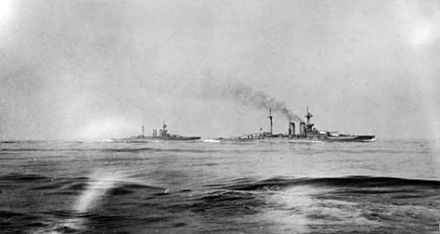


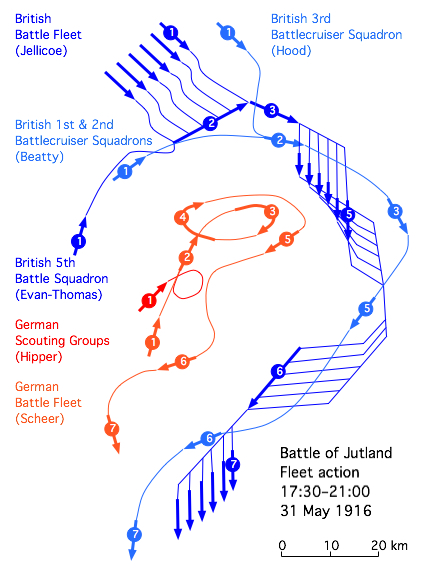


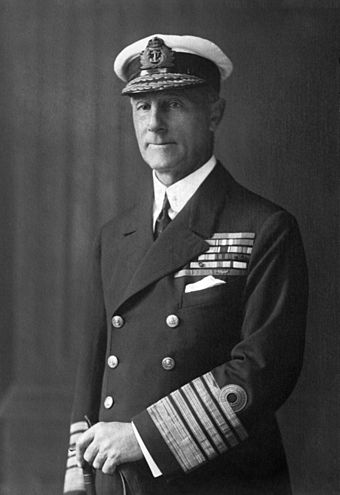


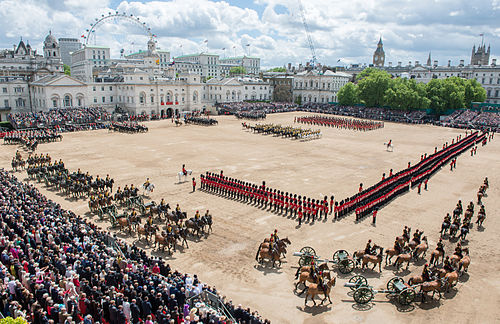


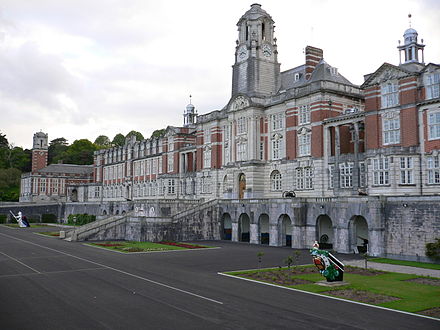



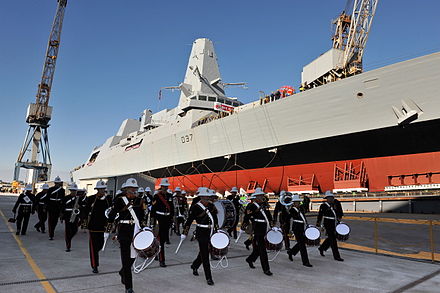


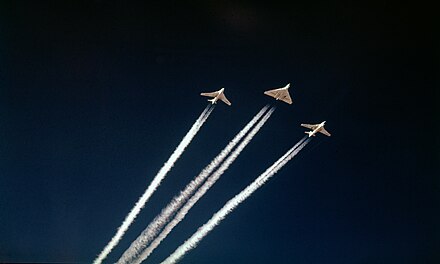
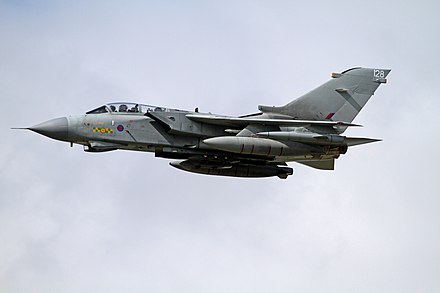
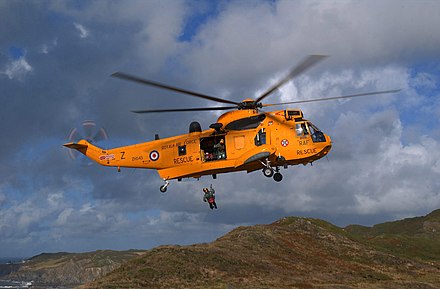





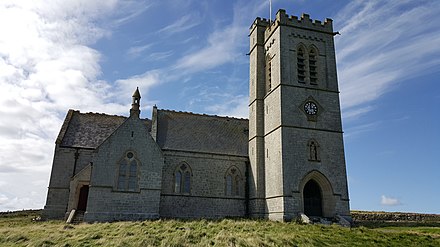


 Diary of a Care Home Inmate