Where On Earth…

In a recent blog post I said how it was that here in the northern hemisphere on Earth we are approaching the longest day of the year and that our days would slowly be getting shorter again. I received a lovely comment on that, but the writer also said how they perhaps didn’t wish to be reminded of this quite yet, as winter seemed to have lasted a little longer this year! I assured them that it just happens and it will be becoming cooler again, just not yet. But as each day follows night and we are refreshed, so also must the Earth itself be refreshed through all the changing seasons. Some lives end, new lives begin and it is a cycle that I hope and pray will continue for a very long time yet. Global time was not managed or organised in the way it is today though, in fact time itself wasn’t known quite as it is now. That is because our measurement of time began with the invention of sundials in ancient Egypt at some point prior to 1500 B.C. However, the time the Egyptians measured was not the same as the time today’s clocks measure. For the Egyptians, and indeed for a great many years after, the basic unit of time was the period of daylight. We all know that time is is of a fixed duration, though as I have said in the past it can seem to drag on sometimes! Now seventy countries change their clocks for Daylight Saving Time, including most of North America, Europe and parts of South America and New Zealand whilst China, Japan, India and most countries near the equator do not. I still like using the terms ’Spring forward’ and ‘Fall back’, so that we remember which way to turn the clocks, although ‘fall’ is of course the American term for Autumn. In the past (and I am going back quite a while now of course) many of the inhabitants here on Earth believed that it was flat and we were the centre of the Universe. Perhaps a little bit like young children think they are, until they start to interact with others. But then so long ago we also began to explore and interact with other races, though not always successfully! In ancient times, people found their way around using various landmarks and rudimentary maps and this worked well locally, but different methods were needed for travelling further afield across featureless terrain such as deserts or seas. Travellers therefore needed a frame of reference to fix their position. Both the Phoenicians (600 B.C.) and the Polynesians (400 A.D.) used the heavens to calculate latitude. It still took a while, but over the centuries increasingly sophisticated devices were designed to measure the height of the sun and stars above the horizon and thereby measure latitude. The first instruments used at sea to measure latitude were the quadrant and the astrolabe, both of which had been used for years by astronomers to measure the inclination of stars. But knowing latitude wasn’t enough, as to determine an exact location you also needed to measure a line of longitude.

Great minds had tried for centuries to develop a method of determining longitude. Hipparchus, a Greek astronomer (190–120 B.C.), was the first to specify location using latitude and longitude as co-ordinates. He proposed a zero meridian passing through Rhodes. He further suggested that absolute time be determined by observing lunar eclipses, measuring the time when a lunar eclipse started and finished, and finding the difference between this absolute time and local time. But his method required an accurate clock, something which had yet to be invented. Then in 1530 Gemma Frisius proposed a new method of calculating longitude using a clock. This clock would be set on departure and kept at absolute time, which could then be compared with the local time on arrival. Unfortunately, sufficiently accurate clocks weren’t going to be available for another two hundred and thirty years or so, but when they were the method Frisius used was shown to work. Calculating exact longitude was not only important for the safety of navigators, but vital for developing sea-borne trade. So in 1567, Philip II of Spain offered a prize to any person who could provide a solution to the problem. This was followed in 1598 by a similar challenge from Philip III, to whom Galileo wrote, telling him that eclipses of Jupiter’s moons would reveal the secret. The King remained unconvinced. In 1667, the Italian astronomer Cassini was persuaded to visit the Academie Royale des Sciences observatory in Paris and as Galileo had suggested, he used Jupiter’s moons to map the world and the eclipses of Jupiter’s moons were timed in Paris using a pendulum clock. In 1681, Cassini travelled to the island of Goree in the West Indies to repeat his measurements. Absolute time was found on the island by observing the eclipses, and this was compared to local time (obtained using the sun), so enabling the island’s longitude to be calculated. So now, the problem of determining longitude on land had been solved, but the method was useless at sea because a ship’s movements made it impossible to time the eclipses of Jupiter’s moons accurately. As a result, in 1714 the English Parliament offered a prize of £20,000 to anyone who could determine longitude at sea to an accuracy of within half a degree, which is two minutes as the Earth rotates three hundred and sixty degrees every twenty-four hours, therefore every one degree of longitude corresponds to four minutes.

Many eminent scientists set to work, but it was an unknown amateur clockmaker from Yorkshire, John Harrison, who rose to the challenge. He saw time as the key and realised that if you could determine local time (from the position of the sun) and the time at some reference point (like Greenwich), you could calculate the time difference between the two. From this, you could work out how far apart the two places were in terms of longitude. The problem was that back then, no timepiece existed which could be set at home and relied on to keep time accurately whilst at sea, because pendulums were notoriously unreliable due to the ship’s movement. It meant that even if local time could be determined from the noonday sun, there was no time to compare it against and this was the problem that Harrison set out to solve. After decades of diligence and many design changes, Harrison eventually produced his marine chronometer, a spring-driven clock that could measure longitude to within the half-degree required for the £20,000 prize. Despite this, he was initially given just half the promised amount. On a voyage from England to Jamaica in 1761–62, his chronometer lost just five seconds in over two months at sea. It was now possible for a navigator to determine local time by measuring high noon, and compare this to the absolute time, which had been set on an accurate chronometer at the start of the voyage. With this information, he could then determine the number of degrees of longitude that he had traversed during his journey. As a result, both latitude and longitude could now be determined accurately in terms of degrees, minutes and seconds and for the first time it was possible to determine exactly where on Earth you were. As time continued to pass, industrial changes were occurring, the railways came and it was realised that a system of regular timekeeping was needed for timetables. By the mid-1850s, almost all public clocks in Britain were set to Greenwich Mean Time and it finally became Britain’s legal standard time in 1880. Then at noon on November 18, 1883, North American railway systems adopted a standardised system of keeping time that used hour-wide time zones. It took many years, but eventually people around the world began using the same timekeeping system.

Math Clock

Technology was and still is continually moving us forward, so many years later the Global Positioning System, or GPS was invented. The first satellite in the system, Navstar 1, was launched on 22 February 1978 and today it is all done electronically through this world-wide radio navigation system made up of a constellation of 24 satellites and their ground stations. These ‘artificial stars’ are used as reference points to calculate a terrestrial position to within an accuracy of a few metres. Then some years later a man working as a concert organiser was struggling to get equipment and bands to musical event locations on time due to inadequate address information. So it was that in 2013, he and three others founded What3Words and the company was incorporated in March 2013 with a patent application for the core technology filed in April 2013. The What3Words system uses a grid of 3 metre by 3 metre squares covering the whole world, with every square given a unique address composed of three words. As of May 2020, the addresses are available in 43 languages according to the What3Words online map, though the addresses are not translations of the same words. Each language uses a word-list of 25,000 words (40,000 in English, as it covers the sea as well as land). The lists have been manually filtered to take account of word length, distinctiveness, frequency, ease of spelling and pronunciation to reduce the potential for confusion and remove offensive words. The system relies on a fixed algorithm in combination with a limited database and the core technology is contained within a file of about 10MB,rather than a large database of every location on earth. The database also assigns more memorable words to locations in urban areas. According to the company this system also distributes similar-sounding three-word combinations around the world to enable both human and automated error-checking, although these claims have been disputed. The result is that if a three-word combination is entered slightly incorrectly and the result is still a valid What3Words reference, then the location will usually be so far away from the user’s intended area that the error will be immediately obvious to both a user and an intelligent error-checking system. In January 2018, Mercedes-Benz bought approximately ten per cent of the company and announced its support in future versions of the Mercedes-Benz User Experience and navigation system. Their A-Class, launched in May 2018, became the first vehicle in the world with What3Words on board. As a result, through scientific advances over very many years, we now have a way of accurate navigation around the whole world.

SatNav

Actually What3Words has proved to be useful for emergency services in finding people, especially in remote areas. Some also use it when meeting family and friends. It is even possible to convert National Grid References to What3Words addresses. I have personally found the system to be quite useful and more detail on how to use and download the it can be found on their website at: https://what3words.com/how-to-use-the-what3words-app whilst the main website is: what3words.com
You might want to click on the following few examples:
Westward Ho!, North Devon, U.K.: w3w.co/slang.precautions.powder
Taj Mahal, India: w3w.co/forgives.shed.mixes
Opera House, Sydney, Australia: w3w.co/family.handy.crisis
Cathedral Square, Peterborough: w3w.co/actual.called.grain
McDonalds, Leicester: w3w.co/plans.images.gates

To close this week…
Life can be all about consequences. As a youngster I was taught to fish and I would go float fishing in our local river, though I rarely caught anything as I found it difficult to spot when the float moved after a fish had taken the bait. But it passed the time, I was out in the fresh air, it was quiet and relaxing for me. On one occasion though I forgot to empty the plastic box of unused maggots before going home, so a couple of days later I opened the box and a few flies flew! I swiftly dealt with them and after that I always fed the fish with the unused maggots before I headed home. Buying more maggots was far better than upsetting mum…
Passing Through Difficult Times

I have been thinking. Yes, I’m afraid so. But it can happen! Here we all are in this beautiful world and (I hope!) slowly emerging from the pandemic. But it isn’t the first one that has occurred, as there have been quite a few others. There are some who still question whether this one was real, but there are many who do not believe things unless they see it for themselves. I have no doubt that all will be revealed in due time, scholars will look back giving us all logical answers to these ideas. Some focus their minds on such global issues, whilst others prefer to concentrate on other things like a favourite sport. No matter what it is, whether it be nature, world politics, formula one motor racing, golf, soccer or whatever I am sure that changes will occur. It may only be to do with transfers between all the various clubs and teams in various sports, but things do get sorted out with rule changes, with new ideas, new technology and new designs. As I have said quite a few times to folk now, the one constant in this Universe is change. I now spend a bit of time looking at the messages people send in online to various websites and I do wonder if a few have either skipped school or did not think through their questions before posting them. What I do like to see are the replies, as for the most part these are done in quite a positive way and not patronising. Sharing knowledge and truth is important and I am trying to do what I can with that. It isn’t an easy time for anyone, but whatever the circumstances I have tried to maintain a positive outlook on my life by remembering the past, not dwelling on it but trying to learn from it. As I wrote on Facebook the other day, some things in our world remain the same whilst other things are constantly changing. Coping with this adds to the pages in our individual book of life. We should not be repeatedly turning back these pages and re-reading them, but remembering they are there and using them for reference when necessary. That is how we learn and develop. Staying focussed in the present enables us to look forward into the future, but sadly there are some who, for a variety of reasons, are either unwilling or unable to let go of the past or learn from their past experiences. There have even been those who expect the world to change for them, rather than adapting, learning to compromise even just a tiny amount and in recent years I have known a few folk exactly like that. I am saddened by such selfish attitudes, no matter how they have developed. I wrote last year about learning to cope and the same is still all true. We adapt, we change, even if it is for a short while until present circumstances alter. But we do not forget who we are. Where I am now is the perfect place for me right now but things change and we survive by adapting. I am alive, I am being very well looked after and I appreciate that very much. But I am still me, I am not losing my individuality, I still retain whatever it is that makes me who I am. Perhaps one of the hardest things to adapt to though are the changes in routines, the ones we are comfortable with. Some folk like the comfort of their surroundings, they like being with the same people, animals as well as collectibles and they can find it difficult to adapt to the smallest of changes, even for just a short time.

Then there is the actual passage of time. Though of course time itself is an interesting concept. It is a constant, and yet it can seem to be a variable. When we were young, it often flew by. As I have said before, when it seemed to drag we either found or were found things to keep us busy. Except that could allow us to be led astray and into doing things that got us into trouble. Where I grew up it was a small town and my dad was a local schoolteacher, so everyone knew our family. It meant that for myself and my two elder brothers it was in our best interests for us to behave! I have said on a few occasions how I was taught to keep myself occupied and it still works for me. I have said about my enjoyment in putting together a whole range of plastic stick-together kits, usually of aircraft but I did then progress to the large sailing ships. Some manufacturers put two aircraft together, calling them ‘dogfight doubles’ and in this way I learned about the aircraft types in both World Wars. It was a clever way to learn about the past, but remembering also that time is always moving forward. My writings have recalled past memories of things perhaps long forgotten, both for me and others. I realise there are those who prefer to forget times long since past but those memories too are part of what makes us who we are. I was once married but am long since divorced. I can still recall those years, but do not dwell on the memories, merely acknowledge them as being part of me, of my life’s history. Just so long as we are able to keep our minds clearly focussed on reality and not be drawn into fantasy, we can enjoy our lives along with our family and friends around us. To take a quote from the Bible, “When I was a child, I spoke as a child, I understood as a child, I thought as a child; but when I became a man, I put away childish things.” (~ 1 Corinthians 13:11) So I can think back to the toys I had as a child, I remember the games I played and the funny cartoons which entertained me. I learned new words through reading, I learned of humour through jokes, along with their spellings and meanings, all these things helped me in the art of conversation and good communication with others. As many of you know I am quite a Star Trek fan and I have been for a great many years, so it is fascinating to see how we as children marvelled at things like their flip-up communicators which became reality in almost no time at all. Did the idea for them come from Star Trek? Perhaps. I also see the old ‘Thunderbirds’ series and then look at the Space Shuttle. There are in this world a great many inventors, but there are also a many developers who see the original idea and adapt it. I have said about retaining our own individuality and character, but in the Star Trek science fiction series we are introduced to the Borg, whose well-known phrase when approaching another starship was “We are the Borg. Lower your shields and surrender your ships. We will add your biological and technological distinctiveness to our own. Your culture will adapt to service us.” I have read recently of something called a ’new world order’ but there may be some who always wish to control, to have things done their way and no other. This is not a new idea, as over the years that us humans have been on Earth, many have tried to conquer others, it just seems to be an ongoing thing. Interestingly Gene Rodenberry, the creator of Star Trek, considered that one day there would be a United Federation of Planets, with Earth as a member. He considered that on Earth there would be no wars, we would all live together in peace, helping each other. Perhaps one day we will achieve that and I hope we will, but I’ll not hold my breath on that one right now.

So how do we manage through these times? I know the difference that it has made to me being able to remain in contact with friends over the past eighteen months. Also having people around me has been and still is a blessing. Some might say not an ideal scenario, a Care Home with some inmates who have dementia, but they each have their individuality and character, even if they do present difficulties for the Carers sometimes. Dementia it seems affects folk in different ways, some more than others. I know some inmates crave attention like two-year old children, with them as the centre of the Universe and wanting everything revolving around themselves, but they are treated calmly, politely, gently but firmly and rarely do we hear any temper tantrums! For those of you on the ‘outside’ who have been unable to go to work, ways have been found around that issue and I believe many are enjoying the freedom that provides. But keeping in touch with folk is vital, as I keep saying. There are groups that meet online via ‘Zoom’ or similar, they might be sewing or knitting circles, computer clubs, I know one group who recently held their annual general meeting online as it was the only way. I have been on a few calls with the student groups that I am connected with at Leicester Medical School but we are all done now for their summer break. I am a member of a local u3a group and whilst I haven’t been doing too much with them due to my health, I am doing what I can. A friend of mine is learning a language, just as I am doing, for me it is slow going but still fun. I mentioned this in January and I am still keeping on with it! That actually pleases me as I wondered if I might lose interest, but it really does seem that the more we learn, the more we find there is to learn. It can be seen as a huge jigsaw puzzle, with seemingly unrelated pieces dropping into place and all of a sudden you see part of a picture emerging! That is how it seems to me, anyway.

On a more personal note it has been relatively hot here recently and I have not been at my best, in fact a doctor was called. I have been on a course of antibiotics, I am having soothing creams applied to the parts I cannot easily reach (well, I am in a Care Home!) and a dear friend did ask me one time if it was the soothing cream or the soothing touch as it was being applied that I enjoyed! I have not replied to her on that one!!! So I have been taking things a bit easy. It means that this week’s writing may be slightly shorter than usual, but I already have ideas for next week.

For now…
I don’t dream that often, but just remember – when you dream in colour, it’s a pigment of your imagination.

Click: Return to top of page or Index page

Health, Safety And Security

In 1969 I left school and began working for Post Office Telephones. Right from the day that I started I had to learn about such things as health, safety and security. I was taught where to find out the details of these things and this was in addition to being trained how to do my job. We held a copy of the relevant instructions in our office and for a few years one part of my job included keeping our paper copies kept up to date, filing the updates and destroying the old items securely. It meant that I could learn of the changes as they occurred. I knew the details of the various buildings, I learned the basic structure, layout and hierarchy of people and places. In those days we didn’t have computers in the office, no Internet, our work was all on paper. As a result there were many different forms, some of them dating back to World War II, when a department within the UK Government called the Ministry of Works was formed in order to organise the requisitioning of property for wartime use. After the war, the ministry kept responsibility for government building projects. In 1962 it was renamed the Ministry of Public Buildings and Works, and acquired the extra responsibility of monitoring the government building industry as well as taking over the works departments from the War Office, Air Ministry and the Admiralty. Then in 1970 the ministry was absorbed into the Department of the Environment (DoE), although from 1972 most former works functions were transferred to the largely autonomous Property Services Agency (PSA). As I write, I can still imagine Sir Humphrey Appleby from the ‘Yes Minister’ and ‘Yes Prime Minister’ tv series delighting in all these changes! Sadly I can still remember many of the forms I used from those days, so clearly my training was well done. It meant that I was a Civil Servant, for a few months at least and when the Post Office became a Corporation on October 1, 1969 it seemed the majority of the rules and regulations we all had to follow didn’t change. I was bound by the Official Secrets Act and I still am, even though I stopped being in the employ of British Telecom after July 31, 2007. Time passed, technology progressed and a few years later much of my work entailed filling in many pre-printed cards which were then sent to a computer centre for processing. After a couple of years I was moved to a different department, still filling in forms by hand, just different ones. But a while later forms were discarded and computers took their place, which pleased a few folk as me being left-handed, my writing wasn’t the best! With all these computer terminals, for security reasons a ‘grade’ structure was still in place and each person was given their own key which plugged in to the terminal. This was to determine the level of access the user was allowed. Some keys allowed data entry, whilst others enabled backup and some other system features. It was all very well done. In time systems changed and this old key system was discarded. Also in my early days, first-line managers and those above were addressed formally, especially my own manager who was an ex-army major. In his eyes, rules were meant to be followed and orders obeyed without question but then perhaps politely enquired about afterwards, as a training exercise. He was someone who expected you to be alert to his commands at all times and that taught me a great deal. It was also where I learned that if something was wrong, to always speak up. If I saw it and didn’t say anything, let’s just say that it wasn’t in my best interest! For quite a while even office furniture was provided in the old Civil Service manner, so it amused me that where I worked, the basic grade (Clerical Assistant) was allowed a chair without arms, whilst the grade above (Clerical Officer) was allowed a chair with arms. Senior managers had larger desks, too. When I first started work, the site where my office was consisted of the telephone exchange, the adjacent office building and a yard that had a postal sorting office. But then Post Office Telephones became separated from the postal side and the old postal yard had a new building erected on it when the telephone exchange needed to be expanded. Peterborough itself was growing and new settlements meant more telephones as well as equipment to handle the extra call traffic. Within the complex we had a good Safety Officer, though some folk weren’t always too happy to see him as he ensured that rules were strictly followed. It is where I learned about such things as the foolishness of propping open fire doors with fire extinguishers! But we still see that occurring. Whilst I was working for the firm there were fire drills and on occasions the alarms would sound but our exit to one staircase would be deliberately blocked. So our fire warden would lead us to the alternative fire exit. These drills were and still are very important, as one day they could be for real and lives saved.

Most if not all of us have travelled at various times by land, sea or air, when we take driving lessons we are made aware of the many signs and signals. Those of us who have travelled by air are aware of the safety drills that are shown to us as the aircraft is making its way out to the runway, like wearing safety belts, no smoking and emergency exits. On all trains there are many, even numerous safety signs, but I am unsure whether too many people pay them all that much attention. I have noticed the changes in routines on trains, as over a period of time technology has required alterations to train staff procedures when both approaching and leaving stations. Carriage doors are now kept secure and locked until the train is at a standstill and locked a good few seconds before the train can then leave for its next stop. It isn’t so long ago that the doors could still be opened manually even after a train had begun to move, thus enabling passengers to scramble on at the very last minute, but I am not aware of that being allowed nowadays! I have already written in previous blog posts about my lovely cruise, but one of the things which impressed me with that cruise was the care and efficiency that everything was done. It seemed that everyone had a dual role, in some cases a triple role for getting passengers and their luggage along with the various provisions on board, then getting passengers to their cabins and looking after them, as well as what to do when assisting passengers ashore. Staff would also know what to do in emergencies. It seems that cruises may be starting up again, but I think we still need to be careful as travelling to and from some countries is not easy at the moment. During our present difficulties, getting bored can be a bit of a problem and there is an old saying that “The devil makes work for idle hands” so I try to keep occupied. We all know that the more we learn, the more we find there is to learn and I have mentioned before how it was that my parents taught me to keep busy and to learn, thus doing the things that I enjoyed. It is still the same now and I am enjoying all this writing! But I am researching too, still learning, sometimes reminding myself as well as others of times past. We can so easily allow things from our past to be forgotten. We say that when a loved one passes away, they are never truly gone whilst at least one person remembers them and the good they did, whether they were our parents, grandparents, sisters, brothers, friends or neighbours. I saw the other day on Facebook how one person was asking what to me was a simple thing that I thought everyone would know, but they really did not. Then I recalled a time when students I had been talking to about early computers began to question my recollection of the memory capacity on my very first home computer. It genuinely was 1k, or 1,024 bytes! But as with all these things, old knowledge and skills can so easily be lost. In terms of knowledge, much is written down but skills, tips, tricks that we might never think of should surely be shared with others. For example there is a really clever trick to maintaining the accuracy of the striking clock in St. Stephen’s Tower, which is situated at the north end of the Palace of Westminster in London. A great many people still refer to it as Big Ben, even though that is actually the nickname for the Great Bell within the tower. The original name of this tower was simply the Clock Tower but it was renamed the Elizabeth Tower in 2012 to mark the Diamond Jubilee of Queen Elizabeth II. The trick relates to placing old coins on the clock mechanism as balance weights to keep the time accurate. These are coins used prior to the decimalisation of UK currency which took place on February 15, 1971 and it seems the weight of these old coins works perfectly! To me, this sort of knowledge and skill needs to be remembered. Memory is important and we do find individual ways of remembering things. I know that I am going a bit ‘off subject’ here, but I feel it is very well worth me mentioning at this point that on Facebook I see what at first seem to be innocuous questions being asked and it is good that we remember these things. But revealing the name of your first pet or similar items of information is not something I approve of as these are often used as ‘security’ questions when changing website passwords! Especially your mother’s maiden name. Something to perhaps be mindful of please.

Security Questions

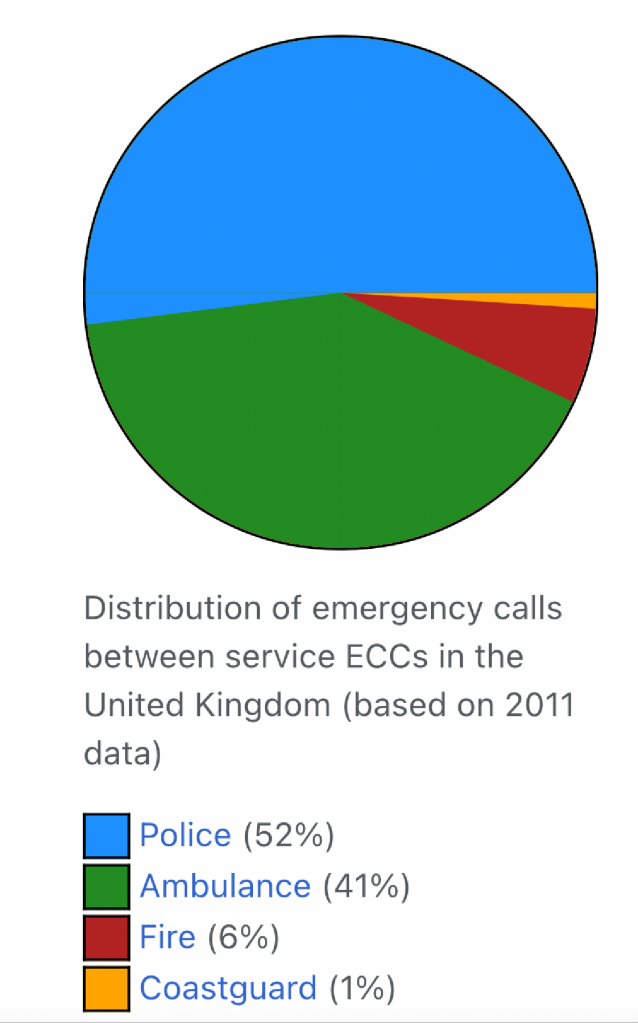
As part of my research I have found more and more ‘live’ online web cams, cameras showing places all around this beautiful world. Some of these are dedicated to specific interests like train spotting, others are for security but many are just there for folk to simply watch and even chat with each other. One I have found shows the hovercraft service from Ryde on the Isle of Wight to the mainland and even there a very strict, safe and secure process is followed. On arrival from the mainland, the passenger exit gate remains closed until the twin fan blades on the engines of the hovercraft come to a complete stop. When all is secure, the hovercraft’s hatches are opened and the passengers are allowed to disembark. Then about five minutes before the craft is due to depart back to the mainland, the next set of passengers are allowed to leave the departure lounge and get on board. At the correct time, the hatches are closed and inspected. When all is secure, a siren is sounded from the craft. A member of staff walks to a point where they are a safe distance from the rear of the hovercraft and they can see there is nothing behind it. A signal is given, the engines are started, the twin fans rotate, and then the craft raises itself into the hover and slides over the beach and onto the sea, where it departs across the water to the mainland. Sadly it is easy to forget a simple routine and that can be when accidents occur. It is often something just as simple as a cloth to clean up water from a wet floor as soon as it is seen. I am sure we all know 999 as the telephone number of the emergency services here in the UK as well as 111, the NHS Helpline number. We are glad of them when they are needed, which is usually when we least expect it.

Emergency Services UK Distribution

Whichever office I worked in, I tried to make sure I kept up to date with the changes in the processes and procedures, knowing where the emergency exits were and who to contact. In fact there were times when audits were done when I would be called upon to talk one-to-one with an auditor. I would be asked what I would do in this or that circumstance, who I would advise if necessary and where would I go to find out the correct procedure. I was able to do that. There was one occasion when I saw a person walking along an office corridor who I did not know and who was not displaying any identification, not even a ‘visitor’ badge. Although visitors were not supposed to wander unaccompanied around that building anyway! So I politely stopped him and asked who he was. His reply was a rather rude “Don’t you know who I am?”. I assured him that I did not and he said he wanted to talk to my manager about me. I assured him that suited me and off we went. I politely escorted him to my manager’s desk, explained why I had brought this person to my manager’s attention and he thanked me. For all I knew, the person I had stopped might have been doing a security check of the building! Time passes, I still see some silly instances where folk haven’t done what I know they should have, most times without incident but occasionally with tragic consequences. With me now being in a Care Home and recovering from heart problems as well as this Covid-19 business I have kept myself occupied. Sadly it seems that some folk here simply let our beautiful world turn, they let time pass, some not able to distinguish when it is time for either breakfast, lunch or dinner. So it is a stressful time for the Carers, making sure that everyone is attended to in as polite and dignified way as possible. Our needs are different, mine are not perhaps as demanding as some of the other inmates, but I am having to come to terms with the fact that I do need help at times. All of the staff here manage very well, making sure that our individual needs are attended to. Most of all though our health, safety and security are maintained. Though it was frustrating for me when the Internet service here stopped working for a little while! So I went for ‘Plan B’. I read a book and listened to some music! Services were restored after a while.

It is now June, so it will not be too long before the longest day reaches this part of our world and the days begin to grow shorter once more. To me our lives are a continuing journey and as I sit looking out of the window to the gardens below, I am reminded of the following:
“A flower does not know the lives it brightens, but it shares its life with all who wish to enjoy its splendour.” ~ Unknown.

Click: Return to top of page or Index page

Trains And Boats And Planes

In the latter part of 1952 there was a heavy smog in London, resulting in pollution issues and this severely affected my mother’s health as well as mine. So, after I was born the following year, we simply had to move from there. My dad was offered a teaching job in Whittlesey that included use of the school house, so it was an ideal choice. We had relatives and friends in London and they visited us from time to time and we would do the same when we could, but during school holidays of course. Travelling to and from London in the car we had back in the late fifties and early sixties was fun for me, but it must have been tiring for my dear dad as the A1 was a dual carriageway at best in those days, not a motorway! Because one of my uncles worked on the engineering side of what is now British Airways, when I was felt to be old enough permission was given for me to have a look around a Boeing 707 that was in for service. It was most definitely a guided tour, but I got to sit in the pilot’s seat! My paternal grandparents were by then coming up to retirement and having visited us a few times in Whittlesey, they liked the place so much that they made their visit permanent, which I think may have surprised my parents. My elder brothers, being a few years older than me, were quite naturally off out with their circle of friends, whilst I preferred to keep myself amused. Both my parents were good, I was taught to read and found it a source of enjoyment. Being left-handed meant my writing wasn’t brilliant, but we all worked on that and I found setting the paper at an angle helped, it suited me. I have seen other left-handers manage in different ways, some by almost writing backwards. I was bought stick-together kits, but I was taught to read the instructions first and then identify all of the parts before starting the assembly process. A logical thing to do in my view. The good thing was that in most cases the parts were numbered. Then it was always a good idea to follow the assembly process in the correct sequence, although some instructions used pictures rather than words, which I personally didn’t think helped. Sometimes it could be a bit frustrating when I wanted to see the item all finished, so that may be one of the reasons why kit-makers put lovely pictures on the boxes! But all this taught me much, because I learned patience. As I write, I am reminded of a time just a few years ago when I and a couple of others were helping a good friend assemble a small occasional table which had glass shelves. One person did not want to bother to read the instructions and insisted he knew what he was doing. We ended up having to stop half way through, take the unit apart and reassemble it in the proper sequence just as detailed in the instructions, so that the shelves would all fit in. Instructions are written for a reason! I went on from aircraft kits to the complicated old ships such as the Cutty Sark, Endeavour and HMS Victory. I would make much of the rigging out of black cotton and my dear mum kept the models I made for a great many years. Doing things in the proper order taught me much. I have watched quite a few programmes on television about the care and maintenance of both steam and diesel-powered trains and it really is very important to do things the way they are meant to be done, I also have good friends who have worked on aircraft and they feel the same way, as lives are at risk if things are not done as they should be. I am thankful for the good teaching I have had, right from an early age. Mind you, with my dear dad as a teacher it was always in my interest to listen! For me, going to school was quite easy at first with us living where we did as I would simply go out from our back door, across the yard, through a side gate and there I was, in the playground. There was never any chance of me being late for school! We had visits from family and friends and as I have mentioned in earlier blog posts I would enjoy being taken down the road to the train station. I have never lost my enjoyment of watching trains, but I do not bother to write down their numbers or anything like that. Steam, diesel or whatever, it was and still is a source of wonderment to see, hear and smell these huge beasts passing by, rattling over the points and commanding right of way as cars and other road vehicles are made to give way to them. I was taught from an early age that the journey to and from is all part of the holiday, though I do wonder sometimes if that wasn’t partly to stop the “are we there yet?” from the back seat. But it did work! So I thoroughly enjoyed going on holiday, especially if it was a day out to Hunstanton and we stopped at the level crossing in Kings Lynn. I vividly recall one delightful time when we stopped at that level crossing in Kings Lynn and I saw my first diesel shunter engine, with bright yellow and black stripes on the front of it! Then a bypass was put in and we went nowhere near that railway crossing. We preferred Hunstanton to Skegness, I am not sure why. Perhaps it was the cliff walks over to Old Hunstanton, with its lovely old lighthouse as it was followed by a walk back to the main town and if I could I’d spend time on the pier in the amusement arcade. I became quite adept at working some of the machines in there, getting to know when pennies would be likely to drop in a machine like the ones used now in the tv series Tipping Point. Just along from the arcade was a cafe and we would call in for a bite to eat. It was a delight to have a cup of coffee as well as a bacon sandwich there! Just across the road from the cafe was the railway station. We never used that service, but I was saddened when that train line was closed down. My research has taught me that Hunstanton railway station was the northern terminus of the Lynn and Hunstanton Railway and the line was brought to public notice by Sir John Betjeman (28 August 1906 – 19 May 1984) in the 1962 British Transport film ‘John Betjeman Goes By Train’. This is a ten-minute documentary film as he travels by train from Kings Lynn railway station, pointing out various sights and stopping off at Wolferton station on the Sandringham Estate, then Snettisham station where he extols the virtues of rural branch-line stations. Wolferton was originally opened as Wolverton in 1862 and re-named Wolferton in 1863. Snettisham was only ever used for carrying passengers, whilst Wolferton and Hunstanton were used for freight until 1964. Hunstanton became unstaffed in 1966 and all three were closed for passenger use on 5 May 1969, when the line itself was closed. We had the occasional holiday on a caravan site in Hunstanton – ‘Golden Sands’, I think it was called. There was even a small boating lake, with some rowing boats. I couldn’t manage those, but there were a few electrically-powered motor boats and they were fun for me!

The Lynn And Hunstanton Railway

I have recounted in earlier blog posts about the family holidays we had in Devon and Cornwall. This was partly because we liked the area and partly because we had relatives that way. We had also made friends with people who owned a garage in the area so when Mum and Dad celebrated their twenty-fifth wedding anniversary down there these friends laid on a special meal for them. In time both my parents retired and they began travelling a little more, going first to Guernsey, then another year over to Jersey and they returned each time with such glowing reports that one year I did the same. I drove down to London, stayed over at my aunt and uncle’s then went to Heathrow airport. I was checked in and all went well, except for the weather, which was awful. The flight was delayed and so we waited, but eventually we were put on a coach and driven down to Southampton. We took off from there in a turbo-prop aircraft, a few passengers weren’t too happy as it was a bit bumpy to begin with, but we were soon clear of that. I enjoyed the flight as well as the holiday, it was just one week but it was the break I needed. I went on a trip to Sark, too. So a couple of years later I went to Jersey and did the real ’tourist’ thing, I went on tours around the island, I also sampled the local brew and found out that even though it was served in a small bottle, it really was very strong stuff! Quite relaxing, but I ended up with a rather thick head the following morning! Then work became a priority and for a while I was tending towards living to work, rather than working to live. So I began having an occasional holiday away on my own, one being a leisurely break away up to the Lake District. I started out from home, drove over to Wolverhampton to see friends there, then it was straight up the motorway to Kendal. I did each place a day at a time, I would drive to my next planned stop, find a hotel or inn to stay at for the night and then explore, never booking in advance. I did this for a few days, visiting Windermere, Grasmere, Buttermere and Penrith before returning to Wolverhampton. Then it was over to Coventry the next day for a look around the cathedral and finally back to Peterborough. For me it was a true holiday, taking my time all the way. I did similar holidays on my own in Wales, but then marriage meant I was doing many miles to South Wales as at the time my ex still had a house near Bridgend. I had been able to get a better car by then but I wore it out, putting over 100,000 miles on the clock in almost no time at all! We even honeymooned in Portugal and that was quite a change. Whilst there I was enticed into hiring a car so that we could travel around a little, but this meant driving on the opposite side of the road as well as operating the gear lever with my right hand! But I did it. One thing I wasn’t prepared for though related to the quality of the roads there. The main driving surface was all right, but the edges were really rough so it was a good idea to stay on the tarmac and not go near the edge. On one occasion we went over to Seville in Spain, going on an organised coach trip. Seville had some great sights, for me the best was the guided tour around the cathedral there.

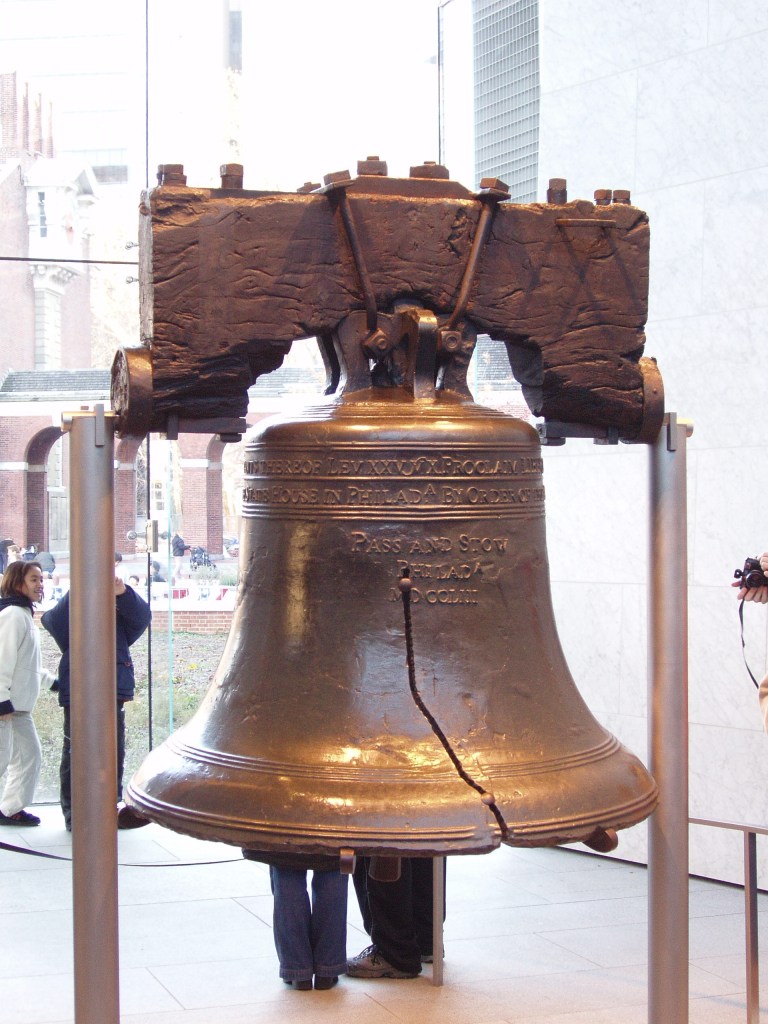
Then work meant a good deal of travelling and money was short for a while but circumstances do change and it came about that I could finally afford a holiday abroad – really abroad, not just over to Belgium, the Channel Islands or to Portugal. Many of my work colleagues were taking holidays here, there and everywhere and then the opportunity came for me. I had flown a few times by now, but this time it was a real flight. My aunt and uncle were not in a position to put me up the night before and it would not have been fair for me to even ask them so I really did the absolute full ’tourist’ bit. I booked my holiday well in advance, I drove down to London Heathrow and left my car in the secure car park of the hotel. Early the following morning I was whisked off by taxi to Heathrow airport and was checked in. Security was gone through and I flew off to Philadelphia. I had chosen that place in preference to New York because the latter seemed too commercial and crowded from what I had read and heard, but it was mainly because I had a friend in Philadelphia and we could meet up. I went by taxi to my hotel, checked in and found that the bar & restaurant area had a ‘London, England’ theme! Even to the bright red telephone kiosk. I just laughed, I could not get away from BT! I saw a few good sights, including the famous Liberty Bell, I met my friend and as so often happens the time went by far too quickly. As I mentioned in a blog a few weeks ago, I then had yet another holiday in the U.S.A. some two years later, seeing the sights of both Washington D.C. and Orlando. What was interesting was that despite flying from Heathrow to Washington then on to Orlando, it seemed that my point of exit from the United States was to be the same as my point of entry. So I was flown back to Washington and only then on to Heathrow. I made sure that I handed in all of the appropriate documentation in the correct place, so the relevant authorities would know I had in fact left the country in a proper and legal manner. I was told that this was a very important thing to do if I wanted to be allowed in again at any time in the future! Over previous weeks I have detailed my lovely long cruise and so I really have travelled the world (well, not all, but a fair bit) by car, train, boat and plane. Right now, travelling isn’t exactly easy for any of us for a variety of reasons but things change. I have been watching a webcam of the hovercraft service from the Isle of Wight to the mainland – but that tale is for another day…

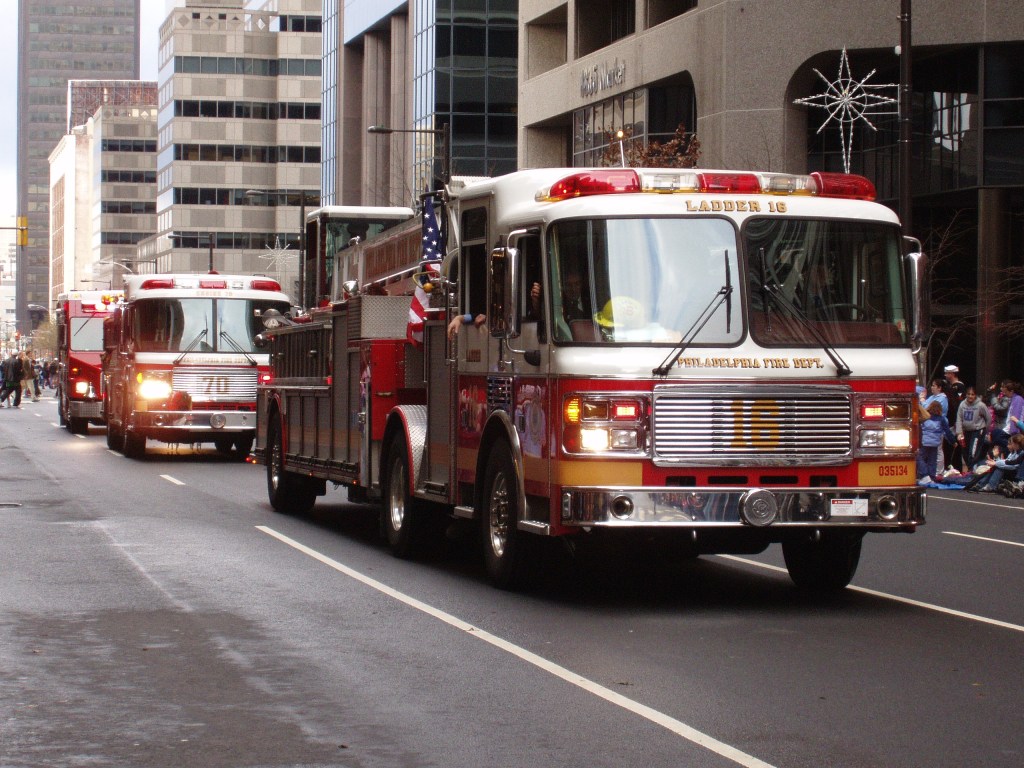
Fire Trucks On Parade, Philadelphia.

This week…
Notice seen inside the back of an ambulance:
“If you have a preferred route, please inform your driver at the start of the journey.”

Click: Return to top of page or Index page

Knowledge And Education

A favourite saying I have from my former teaching days is that we don’t know what we don’t know. A question was asked of me a little while ago regarding my blog posts and how is it that I know so much. Be assured, I do not know all that much, but as I have mentioned before, I was taught where to look and find out. I am an inquisitive soul, though sometimes not always to my advantage! It really amazes me how contestants on quiz shows can instantly recall what seems to me to be vast amounts of information. London taxi drivers must learn ‘The Knowledge’ of city streets – I bet they and taxi drivers elsewhere aren’t happy when a council pedestrianise whole areas, create new roads and one-way systems! Thank goodness for these satellite navigation systems, though I do consider that a decent sense of direction to be a good thing. So far as almost any sort of information is concerned, for me it is more about knowing just where to look, knowing that the answer must be out there. Except I have friends with bookshelves that are stacked from floor to ceiling as well as two or perhaps three books deep, all packed full of historical data relating to a vast range of aircraft and other things military. They truly do have their own library. But in my humble opinion it is a shame that so often all this information is collated by folk, but not then shared with others in some way. The danger is that we will then get those who come along with half-baked ideas, putting two and two together to make forty-two! I know of a time a few years ago when a good friend of mine was in casual conversation with a group of people and another person in that group was spouting on about an aircraft-related item as if they knew exactly what they were talking about. I am sure we have all met them. I have, in relation to computers. Now I don’t know the fine detail, but my friend stopped this chap and said “I am sorry, but what you’re saying is incorrect”. My friend was then spoken to in a rather derogatory tone and asked how he could possibly know! My friend told him, politely but firmly, “The reason I know is because I am ex-RAF, I worked for years on those aircraft and what you are saying is rubbish”. He then explained to the group how that part really worked. He wasn’t giving any secrets away, it was something that anyone with a proper knowledge of hydraulics would know. The chap who had been spouting on went very quiet. There are times when we are mistaken and it is of course polite to acknowledge the fact, but if we still think we are in the right, then we can just quietly research, check our facts and if appropriate then point out what we have found (and where) to the person we disagreed with. Honour is then satisfied. I am aware of occasions when that has occurred, but thankfully we don’t call anyone out to a duel these days! I read a great deal because I am always wanting to learn more. I have been proved wrong sometimes and that has never been a problem to me as things do and will change. But I like to see knowledge kept up to date, to be put to good and proper use as well as shared, so that it is never forgotten. If not, mistakes can and do occur. I watched a programme about an error made in the repair of a Space Shuttle, when a part had been re-fitted incorrectly. The good news is that it didn’t result in a major problem, but it happened. All because information was not kept accurate as well as up-to-date and people had not been kept informed. In the latter instance they had simply presumed, without checking.

In a previous post I provided a fair bit of detail relating to my father’s cars and then mine, but I also said about when I was having driving lessons. In that particular year we had some really strong winds over East Anglia, causing the land to dry out, thus creating dust storms over the fens. It was then that I took my driving test! My father would not teach me to drive, instead he kindly paid for me to have professional driving lessons, just as he had done for my two elder brothers as a present for their respective seventeenth birthdays. Interestingly, one brother passed his test at his first attempt but the other kept on failing – then after he passed, he went into the army and by the end of his time with them he could drive just about anything! He later held an HGV1 licence, he drove buses as well as ambulances, was a driving instructor and eventually ran his own business as an engineer, adapting cars so they could be driven by disabled drivers. But for me, when I reached the grand age of seventeen there was an excellent driving instructor living just down the road from us, so that was all set up. After a number of lessons I was put in for my test but I failed on that first occasion, I don’t think that I displayed enough self-confidence. So I continued with my lessons and just as we were nearing the end of one lesson the instructor asked if I was going back to work. At that time we lived some five miles from the city and on learning that I was planning on going home straight away on a bus, I was told to carry on driving. I therefore took my instructor home, as he lived near to us! It meant that I was in charge of the car, I knew where I was going and that helped my driving confidence immensely. The day of my second attempt arrived and I began the test, but soon afterwards it began to rain. I then made a silly mistake, I knew I had and I just thought “Oh well, that’s it then” and relaxed. It was the best thing I could have done! At the end of the test the examiner said “Well, you made one mistake but I think you realised that and so I’m going to pass you”. I was delighted, as was my instructor. So I arrived home, cheerfully waving my pink slip of paper to prove I had passed. A little while later my Dad suggested that I perhaps take my older brother’s Vauxhall Victor for a drive, with brother sitting next to me of course! This was a much bigger car with a steering system very different to the Ford Escort I had passed my test on. (For the technically minded it had a steering box as opposed to a rack and pinion system). In addition, it was a windy day so keeping this bigger car straight wasn’t exactly easy. But I did it. Then I was allowed to drive my dad’s Austin 1100 and that to me was so very easy. Insurance had already been set up and it meant that I could take my mother out shopping, or for her to attend local meetings, things like that. Then one day, a few years later, I was taking mum over to a meeting. I had stopped on a main road near to our house, I was waiting to turn right, I was in the correct position on the road, I was signalling, my brakes were on but another driver thought he could sneak past on the inside. Except he couldn’t. Instead he hit the left corner of dad’s car, spinning it round across the other carriageway. Happily there were now no cars coming the other way as they had just passed by, so I was able to pull across the road and park. Having checked that mum was fine and uninjured, I went to get out of the car to talk to the other car’s driver as he had stopped. But my mum was in a state of shock and wanted to get back across the main road to our house and to dad. I spoke to mum in a firm tone, as it was important she stay in the car. But no, dear mum wasn’t listening to me. So I turned to her and said “Mum, stay in the b*&&@y car!”. She obediently sat down and closed the car door. A few minutes later we all crossed the road safely, the driver of the other car freely admitted responsibility in front of me as well as dad. The car was repaired, but forever afterwards when talking about the incident, my mum would always say how shocked she was that I had spoken to her in such a manner and used such language!

I discovered my instructor was good, as he got me through the driving test, but that was the first step to hopefully becoming a good and competent driver. A few years passed, I managed to get a better car every few years, not new under any circumstances, but better. Then circumstances dictated that I either sell my car or my house as I could not afford both, so the car went and it was suggested that I might buy a small motor bike. My mother was utterly shocked at the idea, but as I mentioned in a blog last year, the local vicar assured her I would be fine. So that kept me in my own transport for a couple of years until I could afford a car again, which I did. Then one day my eldest brother asked me to drive him to over to a particular event that was associated with his business, it also gave him a chance to see how my vehicle was behaving since he had worked on it shortly before. It is also my belief that he wanted to assess my driving! He then kindly pointed out a few things as it was clear I wasn’t looking far enough ahead along the road, or anticipating the possible hazards, especially on motorways. One trick he showed me related to HGV driving, where these drivers must be in the correct gear well in advance of reaching the bottom of a hill, or the correct lane before approaching a junction. If we are more aware as car drivers that lorry drivers need more time, that might at least reduce accidents. It might also reduce wear & tear, as well as the fuel used, not to mention the stress it puts on everyone. As many of you know, I enjoy watching Formula One motor racing and I recently watched a programme about a the workload of a Formula One driver during just a single lap around the Monaco Grand Prix circuit. I knew they had a busy time ‘in the office’, but not that fast – and sometimes at 180mph! That was scary. They do not have a second of ‘free’ time. It is no wonder that this race is described by some as ‘challenging’! As for me, I gained experience over a number of years driving various vehicles, including an Austin Mini 850, a Ford Capri 1600 and a Land Rover Series 3 and Discovery. All very different. During my time with British Telecom I even drove one of their vehicles that had been converted into a small mobile exhibition centre. It was a type that I could drive, so long as I had a full, clean standard driving licence. The vehicle itself was compact and probably saved the firm some money, as for anything larger they had to get an engineer to drive it and set it up! I had a training session at what some of you would call our O.C.U., or conversion unit to familiarise myself with its rather different handling characteristics, for example what seemed to me like I had to be revving the engine far too much before changing up a gear. But I soon learned that was necessary, otherwise the thing wouldn’t pull away in the next gear. I gained knowledge in this and it certainly was an education, as I visited various towns around the area. But then Phone Shops came along, so the mobile exhibitions largely ended.

Getting the transfer from Peterborough to Leicester created a few changes for me. I had expected some of course, but not as much as took place over the next few years. I found some of it hard work, much of it was good as I was working with people who wanted the same as me, to do a good job and enjoy it. A while later I was moved over to a different department where the work required additional training and one day we were being shown how charges were calculated for a particular product. A good number of years before, whilst I was still at school, we were being taught a particular aspect of mathematics and at the time I asked the teacher why we needed to know this. I was told “One day, you will need this”. I didn’t believe him. So there I was all these years later and the tutor was describing how the charges for this product were calculated. At which point I said “I don’t believe it!” I then recounted the story from my schooldays as it was of course the use of Pythagoras’ Theorem! My teacher was correct, we can never know when what we learn now may be of use in years to come. My job moved me around the Midlands and I found that the knowledge I had gained with my Sinclair Spectrum computer along with its programming language, then moving on to Microsoft Windows and what it used through Word and Excel meant I was writing and running small programs that helped the team I was working with in Birmingham to automate and speed up data manipulation. This helped me when I moved up to Sheffield, still working
for BT but into quite a different job as I was able to use these skills and learn even more. As I have said, the knowledge and education we get can be invaluable. If it had not been for that Sinclair Spectrum and my inquisitiveness. It is fascinating how things work out and sometimes we must accept opportunities with thanks, whilst at other times have faith. As I have been reminded, the light at the end of the tunnel is never switched off – but it is sometimes just out of immediate sight, around the corner. That knowledge in itself has been an education.

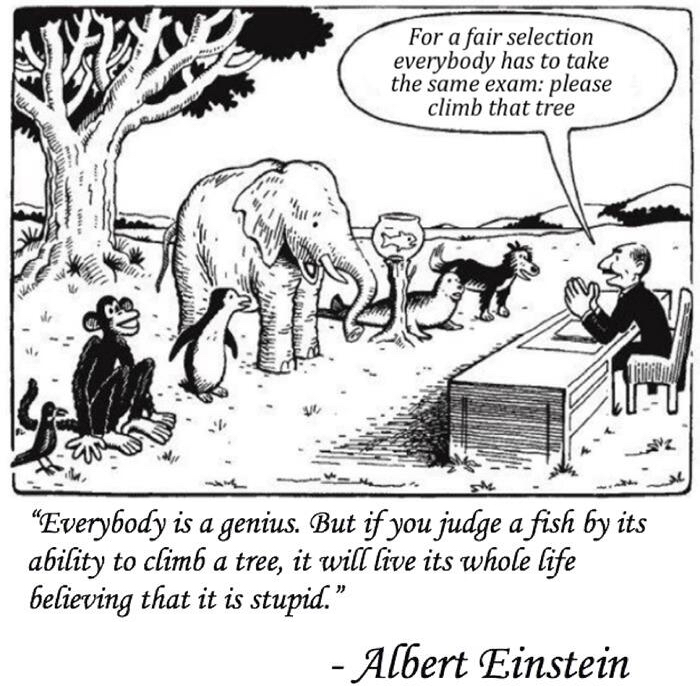
The Goal Of Education…

This week…
I am in a Care Home at the moment and me being short-sighted, some Carers here do think it rather interesting that I wear my glasses whilst toddling to and from the dining room, then I take them off whilst I am eating but put them back on again before I get up and leave the room. Some have asked me why I do this, so I smile at them and say it is because I am short-sighted, so taking my glasses off makes the plate and the food on it look bigger and it looks like I’m eating more! Not all of them know my sense of humour – yet…

Click: Return to top of page or Index page

Memories Are Made Of This

Our memory is a strange thing, but we all need one. Except it isn’t just one area of the brain but a few areas, all linked together. So, whilst I do not know a tremendous amount about it, I do know that there are different parts which work together, utilising electrical signals that enable us to somehow ’store’ information. I have no idea how, but I do know that we have a ’short-term’ memory as well as a ‘long-term’ one, and these can be adversely affected by injury or illness, such as dementia or head injuries. Such effects can be intermittent, short or long term. I am presently being well looked after in a Care Home and one elderly inmate here behaves almost like a child, remembering things from long ago and yet they do not know the current date or what time of day it is. I know what happened to my dear mother after her stroke as it affected her decision-making. Asking her to choose between two things was no great problem, but if she had to choose over more than two items, she would often politely decline. Parts of our brain never ‘switch off’ as they keep vital systems functioning, including our memory. I was made aware of this one night some years ago when I was living ‘up North’. I was fast asleep and there was an earthquake not all that far away. I slept through it and had no recollection of it! But another night I had left a small light on and the bulb blew. It was a most unusual, unexpected sound and I was instantly awake. Strangely, I could even remember what sound had woken me up! I checked, saw the remains of the bulb, cleared it up and made sure all was well before going back to bed. So it seems that some senses are never dormant, it is just that we are not fully aware of them whilst we are sleeping. As humans one might expect that we are all the same, but of course we are not. We all have a brain, so some might expect that we all think and reason the same. In practice that is not so, I guess just as we don’t all look the same. During my research for this blog post I found an article asking the question as to whether the brains of females are ‘wired’ differently to males. I believe the term for someone thinking that way is ‘neurosexism’. Now I may be starting to tread on rather dangerous ground here, quicksand even, but in truth I do not think they are any different. We do know that in many species males have a tendency to fight their enemies, whilst females tend more towards caring for their offspring, but that isn’t so in all cases. Some have suggested that women’s brains are said to be wired for empathy and intuition, whilst male brains are supposed to be optimised for reason and action. But research suggests that the brain is no more gendered than the liver or kidneys or heart. Also, if we consider a few different creatures in our wondrous world, just one example of paternal care is in seahorses, where the males brood the eggs in a pouch until they are ready to hatch. Males from the sunfish family exhibit paternal parental care of both their eggs and fry through a variety of behaviours such as nest guarding and nest fanning (aerating eggs). In the case of lions, both males and females hunt, just in different ways, whilst male marmosets take care of their offspring as newborns — even licking and grooming them at birth. In addition, after his babies are born, a marmoset daddy doesn’t look twice at an ovulating female, despite stereotypes that male animals are always out to spread their genes!

So far as we humans are concerned, I am of the humble opinion that some of it may be to do with how we are treated as we grow up. Some still cling on to the idea that the males should go out to work whilst the females stay home in order to cook, clean and bring up offspring. There are those who are content to do that, but over the years that has changed dramatically, despite some quite serious opposition from their families on occasions! Either way, whether they be male or female, I am amazed how some folk can instantly recall some facts and figures when they are on quiz shows and the like. I prefer to take time and then share knowledge with others this way, on blog posts. I use my memory more to know where and how to retrieve information, knowing that it exists, rather than filling my mind up with the information itself. Although one person I knew who has sadly passed away now once referred to me as a walking encyclopaedia! Comments have been made that my writings have reminded others of past events and it does seem that much of what we store in our memory may never be truly ‘lost’ to us. The most unexpected things can restore a memory to us, or should it be ‘reawaken’. It may be a sight, a smell or a sound, but it seems to be integrated into at least one of our senses. I recently saw a clip of film on YouTube showing a few folk singing in Welsh whilst they were on a London Underground escalator and the sound of their singing echoing up and down reminded me of a time back in 1986 when I was returning home after watching a game of American Football at Wembley Stadium. A whole crowd of us fans were walking along a long corridor leading to the nearby London Underground station and one person began singing “You never close your eyes any more when I kiss your lips..”, the opening line of “You’ve Lost That Lovin’ Feeling” from the Top Gun film which had recently been released. When it came to the chorus, just about everyone joined in! That sound echoed all along the corridor beautifully, it was a thrilling sound and it really did bring back good, happy memories, just as the thought of it does now. But what of pain? When someone passes away for whatever reason, we often hear the phrase ‘remember the good times’, and we do just that. During the past twelve months, quite a bit has been said as well as written about isolation and coping with depression. It is a fact, I know. We have physical pain when we are injured, but there is also the pain of isolation. Except there are ways to overcome the dark times. I have found that being in this Care Home has helped me, as there are other inmates in the building and I do chat to them at times, but I also set great store by chatting with the Carers and staff here. Some of you reading this know that I send morning greetings to you, as we all need to retain such connections with the world outside. I have found a few ‘live’ web cams that I can watch, so I know what is occurring out there. I am not at all in ’solitary’, despite being an inmate! Contact is important. We can and will get sad at times though and when we are sad, playing certain music can also lighten our mood.

I mentioned last week about language and words, but even they are not sufficient to express some feelings. Our brain though is very clever. It is true that the memories I recalled last week were painful and brought tears to me. If we perhaps fall over or injure ourselves somehow, we often cry in pain. It is of course why we are given a painkiller of some sort for headaches, or perhaps an anaesthetic for when we might need an operation. This pain is a different sort as it is the ‘alarm’ system in our body, alerting us that we do have a problem. It also triggers the release of certain chemicals and other events within our body to help in the process of bringing things back to normal. When things are repaired, much of the time that pain goes away or is at least dramatically reduced. But if we think of the ‘good’ events in our lives, the things that make us happy, they are also times when we cry and it is an emotional outpouring that enables us to cope, to manage the pain we are feeling. So we remember those events, we literally do remember the good times in our lives. They are the happy memories and we will block out the painful memories. One thought that comes to mind relates to childbirth, where some women say they will never go through that again. Yet the joy they have of bringing new life into the world means that they do repeat, generation after generation. But there are times when some pain is deliberately forgotten. In an earlier blog post I mentioned my immediate grandfathers. I never personally met my maternal grandfather as he passed away in 1938, but I did know my paternal grandfather, who I called ‘Pop’. So I tried to talk to Pop about his time in World War I, I learned he was at the Somme and was captured, that he was injured and lost a finger of one hand. But he simply would not talk to me about his memories of that time. He would tell a few anecdotal jokes, like the fact that he was captured and how they diverted the attention of prison guards in order to break into a food store and steal extra food, but that was all. My own father was the same, he would share anecdotes like how he was taught to drive and the fun he had with that, but the war itself was never spoken about.

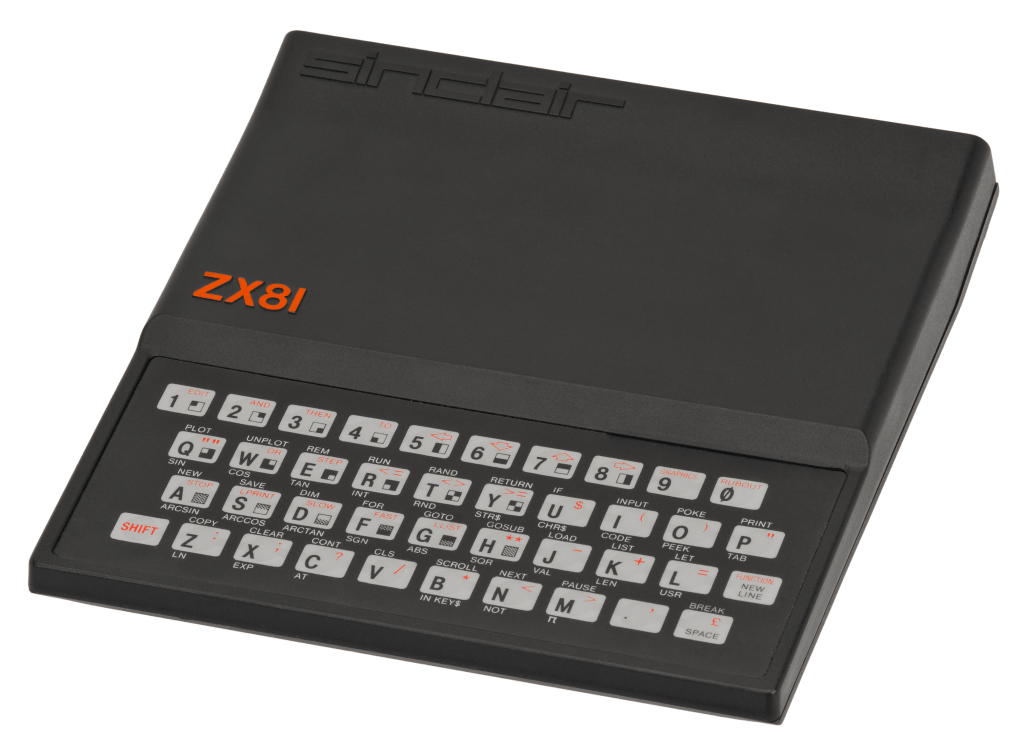
Our memory is vital as we grow, like learning to not touch things, though it is something that babies do. We want to learn. In an earlier blog post I mentioned that there are teachers and there are educators. I was always encouraged to learn, I was (and still am!) an inquisitive soul, so I would read quite a lot. Any time that I wanted to learn the meaning of a ‘new’ word that I had read, rather than just tell me its meaning my dear dad would get me to look up the word in a dictionary and then go tell him what the word meant. I would then have to compose a new sentence of my own using that new word and also show this to my dad. In that way I was reading, writing, thinking, speaking and combining these skills all together. It also kept me quiet, for a while at least! One thing I do not know too much about is our skill at learning. I know that it is essentially the same for everyone but we each ‘remember’ different things. I think that we have different ways of learning, we have different skills that enable us to do different things. Not everyone is a fighter pilot or a teacher or a farmer. Most of us have the same body structure of arms, legs etc but not all and these can change over time. We can put our skills to different uses to control our body. At school we are taught basics, some have a greater aptitude towards perhaps sport, whilst others not so much. We can be taught to higher levels and go on to areas we might not have originally been thought capable of. In my late teens I was told I had no aptitude for working with computers, but fifteen years later I purchased my very first computer, a Sinclair ZX81 with just 1k of memory where the programs were loaded each time using a cassette tape recorder and a black-and-white tv was used, rather than a monitor like we use today. Very different, especially considering that the laptop computer I am using to write this has its own integrated screen and keyboard with 64Gb of memory. I also recall that far from having no aptitude, years later I ended up teaching others how to use the computers at work as well as writing programs. But it is amazing to realise how much has changed in forty years! I wonder what the children of today will think of our technology in years to come. I would hope that they put their memories, skills and learning with ours to the good of everyone and everything on Earth.

A Sinclair ZX81 computer.

This week, a thought…
If electricity comes from electrons, does that mean that morality comes from morons?

Click: Return to top of page or Index page

Abbreviations And Words Over Time

In September last year I posted a blog on the subject of abbreviations and words. Since then I have seen more on this, so I decided to do additional writings. There isn’t too much in this world that disappoints me, but one thing that does is when folk use odd abbreviations but presume that everyone will know their meaning. I do appreciate that many abbreviations will be so well-known that everyone ought to know them, but if someone asks for an explanation, it is surely both polite and kind to explain. Everybody has a bad day sometimes, most especially with what we are all having to cope with right now! When writing about a specialist subject, I was taught the importance of providing either a simple explanation to something like a TLA (Three Letter Abbreviation) and after that just the abbreviation may be used. Where quite a few technical terms are written it is expected that a full-blown glossary will be added as an appendix, with relevant links to where appropriate explanations may be found. In all the course work for my teacher training, that was mandatory! Whether it be in books or online, I appreciate that there are places where folk reading an item are almost certain to understand a particular TLA, for example in a Facebook group dedicated to a particular town, then spelling out the name of a local school is hardly necessary when just about all the members of that group will either know that school, having attended the establishment themselves or have had relatives educated there. In fact, that knowledge or something similar may be part of the series of questions which must be answered correctly before entry to the group is permitted. I have friends who were in the Royal Air Force, so technical terms relating to aircraft shouldn’t require explanation and if by any chance it is, then a very quick explanation keeps the focus on what we are reading. I do appreciate how difficult it can be in this modern world of ours, where so much online communication may be achieved globally within mere seconds through Facebook or similar and we have many and varied cultures. But words, even a smile, can bring us together. I am reminded of a quote by Srinivas Arka on this, which is:

Different Cultures In The World

Mentioning Facebook, I know that not everyone likes using this particular social networking site but it does make it easy for folk to connect and share with family and friends online around the world and there are safeguards. Today it is the world’s largest social network, with more than a billion users worldwide. One aspect that I like are the ‘closed user’ groups meant for those with specific interests or who have links to certain areas. As well as answering correctly a series of questions prior to joining, there are also Administrators and Moderators. Break the rules and you are barred or at least warned. I am in a Facebook group called G.A.S.P. (Grammar And Spelling Police) but this was set up by some people in America. So it can be entertaining at times, as there are quite a few British in the group besides me, as well as folk from other English-speaking countries. It is also used by some to improve their knowledge of English when it isn’t their first language. To my mind the idea of the group is to see how a simple spelling error can be so funny. It is not to make fun of anyone, but simply to see how easily errors can occur and create humour by doing so. Except of course we then come to that old saying, “Britain and America – two nations divided by a common language”. As well as spellings, there are many words which are the same but which have different meanings and this can be confusing. For example a British biscuit is an American cookie and an American cookie is a British cookie, but an American biscuit is a British scone and an American scone is, so far as I know, a dense wedge or triangle, compared to our British scone which is taller and usually round. An American scone uses much more butter than the British scone and has quite a bit more sugar. I am also a member of The Bollardorium group on Facebook, but as the description on there states, it is a public group so anyone can see who is in the group and what they post, it is visible, so anyone on Facebook can find this group. As the Administrator writes, “It’s all rather bollard and all rather simple. The Bollardorium is here to celebrate, collate, enthuse and reflect on all things bollardic.” So anyone finding bollards of any shape size, colour, even in an unusual location, may share the image. We do find fun examples to share and the comments can also be brilliant!

Poor Traffic Cone!

Whilst first at school and then later at work, we are taught various ways of remembering different things. So learning to type, in order to use and learn the location of keys on an English keyboard, the phrase ‘the quick brown fox jumps over the lazy dog’ is taught because it uses all of the twenty-six letters of the alphabet and enables the typist to memorise their position on the keyboard. To remember the order of colours in the visible spectrum (Red, Orange,Yellow, Green, Blue, Indigo, Violet) then ‘Richard Of York Gave Battle In Vain’ is taught. Similarly, a way to recall the names of the eight planets, Mercury, Venus, Earth, Mars, Jupiter, Saturn, Uranus, and Neptune giving the order of the planets in our Solar System is ‘My Very Educated Mother Just Served Us Nachos’. But many of the terms we use may be uttered without thinking, such as a PIN, or Personal Identification Number. With the coming of Twitter, where only a limited number of characters may be used, acronyms are commonplace. But problems can and do occur when certain words are only found in a particular country. We should all know ones like ASAP, As Soon As Possible, but LASER, short for Light Amplification by the Stimulated Emission of Radiation may not be as well known! One that I didn’t know until fairly recently was SCUBA, short for Self-Contained Underwater Breathing Apparatus. Even in photography, a well-known image format, GIF, is short for Graphics Interchange Format. But one I did know, through delivering training courses, was making sure that things were SMART, meaning that they were Specific, Measurable, Achievable, Relevant and Timely. The list of these is almost endless and too long to detail here, but I do recall SNAFU…

With the onset of wars and changes in industry along with weapons, many things have changed and new words have been brought in to our everyday lives. Even in the last fifty or so years the use and meaning of words has changed, as can be seen when looking back to when I was a child. There are some phrases we do not or perhaps even dare not use now. For example, back then a certain figure could be found on particular brand of marmalade, but after a time that was deemed unacceptable and was removed. Learning of different languages is becoming more expected, although English and Spanish are predominant. It is known that in some countries a particular term relating to a person’s skin is sometimes frowned upon but that too is changing. I am in the very slow process of learning Spanish and anyone learning or knowing that language will know that, as with other languages, there is often both a ‘masculine’ and ‘feminine’ form to a word, depending on its use. That is the case in Spanish, such that the colour black in its feminine form is ‘negra’, whilst its masculine form for the same colour is ‘negro’. In my previous blog post I mentioned ’Tonto’ as being the Native American (either Comanche or Potawatomi) sidekick of Roy Rogers in the children’s cowboy adventures created by George W. Trendle and Fran Striker. There, the name means ‘wild one’ but in Italian, Portuguese, and Spanish, “tonto” translates as “dumb person”, “moron”, or “fool”. As a result the name has been amended, especially in their dubbed translations. When I was a child, the term ‘bright and gay’ meant we were happy. The latter term now has a different connotation. Equally some phrases have more literal meaning, such as ’tip of the iceberg’, because a large percentage of an iceberg is hidden under the sea, with only a small part actually visible. So if something is said to be ‘the tip of the iceberg’, it means that something is only a small part of a much bigger situation. There are so many phrases nowadays, far too many to mention here, but one I caught recently whilst watching a game of snooker on television was ’nip and tuck’, where the two players were matching scores frame by frame, but a historical explanation for this expression is that it comes from sword-fighting, where a nip is a light touch and a tuck a heavier blow. Another use is in horse racing, where it means the same as neck and neck from start to finish.

Languages change over time, as anyone who has studied the history of the English language will know. Old English, or Anglo-Saxon, is the earliest recorded form of our present language, spoken in England as well as southern and eastern Scotland in the early Middle Ages. It was brought to Great Britain by Anglo-Saxon settlers in the mid-5th century, and the first Old English literary works date from the mid-7th century. After the Norman Conquest of 1066, English was replaced for a time as the language of the upper classes by Anglo-Norman, a relative of French. This is regarded as marking the end of the Old English era, developing as it did into a phase now known as Middle English. This was spoken until the late 15th century. Changes continued and the Oxford English Dictionary specifies the period when Middle English was spoken as being from 1150 to 1500 when it saw significant changes to its vocabulary, grammar, pronunciation, as well as orthography. Writing conventions varied widely and examples of writing from this period that have survived show extensive regional variation. The more standardised Old English language became fragmented, localised and was, for the most part, improvised. By the end of the period (about 1470) and aided by the intervention of the printing press by Johannes Gutenberg in 1439 the Chancery Standard, based on the London dialects, had become established. This largely formed the basis for Modern English spelling, although pronunciation has changed considerably since that time. Middle English was succeeded in England by Early Modern English, which lasted until about 1650. Scots developed concurrently from a variant of the Northumbrian dialect (prevalent in northern England and spoken in south-east Scotland). Little survives of early Middle English literature though, due in part to Norman domination and the prestige that came with writing in French rather than English. During the 14th century, a new style of literature emerged with the works of writers including John Wycliffe and Geoffrey Chaucer, whose Canterbury Tales remains the most studied and read work of the period. I am also fascinated how some European languages have their ‘word order’ seemingly back-to-front, as in in Spanish. One example is our ‘green table’, where in Spanish it is ‘mesa verde’ (table green). Some years ago I saw a ’spoof’ list of car parts translated into German, where one part, the carburettor, became ‘Der gasundairmixensuckerbit’. I shall find that list again, one day!

Finally this week… personal memories.
My dear mother passed away just a few years ago, but were she still with us here on Earth then this May 9th would have been her 100th birthday. Instead she is with her soulmate, my father, the two of them resting together in peace.

Click: Return to top of page or Index page

Looking Back In Time

As I look back fifteen months from today at where and how I am now, I can assure you that things were very different then. Not just for me, but for this beautiful world we live in too. There was no pandemic that we knew of, but my health was not as good as I should have liked either. In fact I needed treatment twice a week for a leg wound that simply would not heal. It was painful too, so I wasn’t sleeping at all well. It meant that I would fall asleep in an armchair at the wrong times, instead of going to bed at the right ones. I wasn’t eating properly either, but I didn’t let my friends know as I thought this was just temporary, that the wound would heal and I’d be out and about in no time. But that did not happen. I also tried to keep things to myself. Perhaps I didn’t want to admit that I couldn’t manage on my own any more as I had for so many years. That was the physical effect of this on me.

When I was a child, as I grew up at home I had my parents, elder brothers and family around me. At school there were teachers, but I didn’t chat to my school colleagues all that much. I joined a music group and played a trumpet and I played chess, so I was mixing with others. Then I left school and was at work for thirty-eight years. Photography was one of my hobbies, I was part of a few different musical groups and singing in choirs, I became interested in home computers when they appeared on the scene, I also got married then divorced. I learned a great deal about many things, as well as about myself. I even started and ran my own business for a while. All this meant that I moved around the Midlands a fair bit, so I never settled in one place for very long until recent years. They weren’t always the happiest of times, but I wasn’t on my own all that much. I do know now that working as I did in a communications company certainly taught me and helped me to communicate! But then I retired and after a while some poor health along with my disabilities caught up with me. In fact by not looking after myself and not letting others know about things, by insisting I was fine, I made myself worse. That was silly of me. It took the knowledge of my habits by friends and neighbours as well as them not seeing me out and about or answering my phone that got whoever it was to break into my flat last year and get me to hospital. For that I don’t think I can ever thank them enough. My point is that throughout all of my childhood, school and work I always had people around me. Then, for the reasons I have already stated, I was on my own for much of the time each day. Yes, it was foolish of me not to talk about it, but sometimes the hardest lessons to learn are the most painful and most folk do try and learn from their mistakes. In fact it is sometimes the only way to learn. What I had never thought of before was that the majority of us are never truly alone. Some are, perhaps out of choice for different reasons, but throughout our lives we usually have someone we can turn to or chat to somehow. But my foolishness was having a negative effect on me emotionally.

So last year, there I was in hospital where I was told that my heart rhythm wasn’t as it should be, but thankfully the electric shocks I was given then stabilised things. Following that I contracted Covid-19 and was therefore kept isolated for a fair while until I recovered. I was then moved to a few different Care Homes before arriving at the place I am at now. I am sure many of you will pick up on the fact through my writings that since moving here I am dramatically happier, hence my weekly blogs. Only now have I realised that in hospital and Care Homes alike, there have been people for me to interact with. I was and am not alone. So I have had to face an aspect of my well-being that I had never considered before, that of my emotional health. I have also been talking officially with medical students from the local University Medical School, under the watchful eyes of their tutors of course. That is a proverbial two-way street as they are learning from me about how I am coping as well as being managed, but I am also able to perhaps help them in their studies, so they perceive life from my point of view and maybe in this way I am ‘giving back’ a little for all the amazing help I have and am having in my life. I am more able to recognise and cope with aspects of my health that I hadn’t thought about before. I do wonder if we forget just how important the emotional side of our well-being actually is. It surfaces at times of special events like Christmas, birthdays as well as births, marriages and deaths, but they are always there. So many of us try and keep our emotions under control, but I think that can be a rather negative thing sometimes. I am still learning to let my emotions out on occasions, as some of the staff here in this Care Home have seen. But it was not always that way with me. Many years ago I was quite a shy individual and would avoid confrontation if at all possible. But that did me no good at all. Then came the time for me when things had to change. I had been promoted at work, but was finding it difficult to cope as I was getting stressed by the attitude of a co-worker towards me. These days we would call it ‘bullying’, but I let it happen to me. So one morning I arrived at work and was firmly told by a colleague there to go see a doctor. So I did. Despite not having an appointment there I was seen quite quickly and was given a bit of good advice, along with some tablets to take. They weren’t full-blown tranquillisers, but I relaxed a little. So it was that a few days later I was back at work and sure enough, this same person started having a go at me again. I looked at them and in an assertive tone, I told them to shut up and not talk to me unless it was about a work issue or they had something good to say to me. I felt really good at that, but it went very quiet for quite a while that day! The positive tone worked and the bully left me alone, which often happens. A few months later I was moved into a completely different office, doing harder work but with some really good people. It is true that two of them sitting opposite me reorganised my desk, as that way my desk was laid out the same as others on the team, (at least, that was their excuse!) but that helped me too and I am grateful for all they did. It helped me a great deal. I felt better in myself and was learning to deal with other people and work as part of a proper team. That all led to far greater experience and promotion, as well as a change of office to a different city. Moving house took some time and so for a few months I was travelling by train to that new city. I even ‘chatted up’ a certain young lady on the train journey and we were together for a number of years. That really did open up the emotional side of my life!

During my time working for this particular firm I was moved around every few years, mainly because of their changes and reorganisations. One move brought me in contact with folk I had worked with a few years before and that was good. I was also invited by a work colleague there to attend a talk being given on a particular form of Relaxation Therapy and Meditation. It sounded interesting, so I went along and sure enough it was to my liking. I attended a few more talks, read one of the books this person had written and then learned more about his work. This man was Srinivas Arka. A while later I was visiting my dear mother and I told her about this, but I then had to explain to Mum how this was not a religious group I had joined and my faith as a Christian had not changed in any way. What I found was that this relaxation therapy helped me to remain calmer in stressful situations. I still have more to learn on this, but it works for me. So after all these years, by bringing all this together I feel like I am perhaps now a better, more fulfilled person. To use a well-known phrase, I may have ‘found’ myself. I try not to get in any way annoyed or upset over those things that I cannot control, whilst those things which I can control or at least have an input to, I do my best by always giving an honest and clear opinion. I believe that the old saying how we “can lead a horse to water but we cannot make it drink” is very true. Just like my dear Dad did, if at any time I am asked for my views or opinions I will give them. If I am certain on a point I will say so, but if I am unsure I will also make that clear. Likewise, if I do not know I will say so, rather than just guess wildly! But then if I don’t know, there are bound to be others who do know as well as there being other ways to find out.

A quote I like is “the one constant in this Universe is that things change”. That really is ironic. During these past twelve months we have all found ourselves in need, missing friends and family, unable to do the things we have been so used to doing. We have been learning to use technology in new ways, adapting to limitations, even simply adapting to how we pay for items. I feel certain that we must continue to adapt and to cope with these changes in a positive way, having faith that things will change for the better as they did for earlier generations, but most especially not being afraid of change or afraid of asking others for help. It really isn’t easy, as I have found out over these last twelve months. For me it feels like a new level of bravery. Another aspect of this change can be to learn to trust, knowing that we may be hurt in the process. I try to remember that by doing so I will be much stronger as a result. If we remember that steel is made from soft iron and in order to become stronger it has to change, but not always in appearance, it goes through processes of both heating and quenching. The changes are inside, and are only noticed in how it behaves. It adapts. A good few years ago I was helping out in preparation for my teacher training course and one of the students needed additional tutoring. They needed guidance on a particular subject, so I had to explain not just what a spreadsheet was and how to use it, but what it could be used for. I learned that this student was very keen on a particular sport, so using a spreadsheet they were able to insert game scores, then calculate league positions and create charts on a season-by-season basis. For this student it was a ‘lightbulb’ moment, as all became clear. An ability to share knowledge can be invaluable, especially if it is then used to pass on to future generations. There are always different ways, but they are often tailored to suit individual needs, and should be.

Everybody Is A Genius

But it is not just the knowledge, it can also be how best to use it. A few years ago, when my eldest brother ran his own business by adapting motor vehicles for use by people with disabilities, he was called out to fix a car. Being a qualified motor engineer, my brother checked out the vehicle and promptly got the car working again by hitting an item in the engine with a hammer. He charged the customer his standard rates, but the customer was unhappy at the cost for such seemingly little work. So my brother politely pointed out that the charge wasn’t just a call-out fee, it was also for diagnosing the problem, knowing which tool to use, just where and what to hit as well as exactly how hard. The customer paid. Like I have said, it is not just the knowledge, it can also be how best to use it. I see that happening every day in this Care Home, as the Carers here know when to listen and when to be firm, like dealing with a child. For me it is a fascinating learning experience during these troubled times. I still have minor physical wounds that continue to heal, I do still get emotional at times but I say my prayers and am thankful. I look back over the last fifteen months or so and I know that I am happier now than I have been for quite a while. I am at peace, despite how things are.

We all need help, often when we least expect it…

Time for a smile. This week…
Whilst in a second-hand shop one day I bought an old record called “Sounds Wasps Make”. But when I got home and played it, I said to myself “These aren’t wasp sounds”. Then I realised – I was playing the Bee side…

Click: Return to top of page or Index page

Travel Memories

Over the last few weeks I have detailed my lovely, extended holiday around much of this beautiful world in 2013 and it is such a good thing that I kept a daily log during the journey, noting the sights and sounds. In fact it has been so useful that I’ve been keeping a personal daily diary for a few years now and the only times I didn’t manage to was when poor health got in the way. Some days I have had more to write about than others and that is life, but I am glad that I have kept up with it. I try not to dwell on the past though, as I was taught a few years ago that we should surely learn from the past, live in the present and look to the future with a smile. In my recent writings I have done my best to share at least a few of the photos I took along the way, but as you might imagine one of the hardest things for me to do has been to decide which photos to share. I will try and sort out a few more though. I have both read and heard about some folk not liking sea travel, but it is something we can often adjust to. I found that P&O’s ‘Arcadia’, the large cruise ship I was travelling on coped extremely well and I do recommend such ways to travel, even if it is perhaps only a short cruise around the British Isles, which I know is done. In fact my first was a short ’taster’ cruise which I mentioned in my ‘Holiday Memories’ blog post in January of this year. It was as a result of that I was more than happy to get myself booked on a much longer cruise. The present restrictions on travel may mean it will be a while yet before the long cruises get going again, but I expect they will, in time. Having said that, I am reminded of the old saying that “A change is as good as a rest”, and I do believe that to be true. With what we have already been through during the last twelve months and are all coping with now, we have had to adjust, to adapt, to change. To take a quote from Srinivas Arka, “Our future depends mainly on the way we think at present. To change our lives, we must change the way we think”. It has often fascinated me the way some people will have an opinion about things they know nothing about simply by making assumptions.

So some of you reading this will have read my earlier blog posts and may not be too enthralled by the idea of the long journey I did. Yes, it is true that one of my grandfathers was in both the Royal Navy and the Merchant Navy and it has already been suggested that maybe I have some sea salt in my veins! But one option taken by a few folk I met on board ‘Arcadia’ was to combine sea and air travel. In fact two ladies I met during my time on board were doing just that, as they had flown from Australia to the UK, had a bit of a holiday here and then sailed back home. I also learned only the other day of someone else I know who did that, except they did their sea journey ‘in reverse’ as you might say, going from Southampton, across to the Caribbean and through the Panama Canal that way. I expect they did a trip up to Hawaii then across and down to Australia and New Zealand. Others have done a return journey through Australia to the UK by going across land part of the way and seeing the sights there, then meeting their cruise ship in somewhere like Darwin. Travelling north from there are so many places to visit, for example I have read about a vast religious complex in Cambodia called Angkor Wat which was built in the 12th century by King Suryavarman II. This vast complex comprises more than a thousand buildings, and is one of the great cultural wonders of the world. Continuing their journey and having stopped off at a few other places, the return to the UK included a journey through the Suez Canal. Happily for them strong winds did not cause a container ship to get stranded in quite the way one did recently and prevent other ships from travelling through for a few days! Fortunately this sort of delay is an extremely rare event. Then, after a stop off at a few ports in Italy, Spain and Gibraltar perhaps, the English Channel was reached. I still have mixed memories of the latter though, because whilst my encounters with the Channel in recent years have been absolutely fine, I still recall one particular time back in about 1967 on a school trip to Belgium. I was fine to begin with, but then it got a bit rough and let us just say I wasn’t at my best for a short while. It all settled down though. Whilst on that holiday, we had lovely tours around various places. We were staying in Bruges, where there are lovely canals and we had returned to our hotel for an evening meal. The first course was green-coloured soup, but one of my school colleagues looked at it and said they weren’t touching it as it looked like canal water! To be fair to them yes it did, but the soup tasted fine to me when I tried it, as were all the meals we had there. But others were put off by the adverse comment. That may have been the start of my learning to give some credence to my own thoughts and ideas rather than ‘going with the crowd’. Incidentally, whilst writing this I learned that a credence is also the name given to the small side table, shelf or niche in a church for holding the elements of the Eucharist before they are consecrated. Which means that I have stood by a credence table many times as I passed various items to the vicar during a communion service. I never knew that until now. But back to my travels. Our visits on that holiday were very well organised, as I got to visit the Atomium near Brussels, I even managed to meet with an aunt and uncle who travelled over from their home in Antwerp to see me. I had my first taste of real, Belgian waffles! On that same trip a few of my schoolmates had tried smoking cigarettes as well as consuming alcoholic drinks, but they made themselves ill as a result. The response from our Headmaster who was with us on the trip was simply “You’re not men yet.” A while later attempts were made by my school colleagues for me to try smoking a cigarette, but the reason they gave me for doing so was because ‘everyone else was’. That to me was illogical, I’d also learned how smoking might not be good for me with my singing and playing my trumpet, so I declined. Some years later I did try smoking a pipe, but that made me ill so I left that well alone! It wasn’t until years later that I was diagnosed with asthma did I realise how sensible that decision had been. But I kept a daily diary of the time and I am glad I did as it has proved useful. Time passes, so much happens and we don’t always recall exactly when events occur.

I have said previously about the lovely holidays to Devon and Cornwall but it was always a long journey, especially before the motorways we have now. This meant keeping everyone as happy as possible, not to mention safe so that Dad could concentrate on driving the car! After a few years it ended up with me as ’navigator’ and Mum as ‘stewardess’. It meant I was kept busy watching for road signs, signals, map-reading as well as identifying other vehicles. Both my parents smoked as we travelled, so I was inhaling second-degree cigarette smoke but we thought nothing of it at that time. If we knew then what we know now about smoking, then things might have been different but twenty-twenty hindsight can be wonderful… As a few folk will know from training sessions, “we don’t know what we don’t know”. A favourite quote of mine. After a few years Mum did stop smoking, but despite giving up the habit dear Dad had sadly left it too late. A good friend of mine still smokes and despite efforts to persuade him otherwise he has decided that it is his life to do with and live as he pleases. There is a very old saying that one can lead a horse to water but not make it drink. Except there are consequences! As I got older and began living my own life I started to explore this country, taking holidays in the Lake District, Wales and the West Country. I took a great many photographs, mainly slides rather than prints and I still have many of them in storage. One day I will sort through a few! It was not until a good few years later when I got married that my wife and I had holidays in the Algarve, Portugal. Then I was on my own again for a while, but these things happen. In 2004 I spent a week in Philadelphia, U.S.A., seeing the famous sights there and that got me out and about again, so I did the same a while later to Washington D.C. then on to Orlando, Florida and in both places I really did do the traditional tourist thing, seeing both the Space Centre along with Launch Pad 39b, where the Space Shuttle had been moved to the previous day. I also visited the Disney Animal Kingdom. Then I saw a simulator ride called Star Tours and I went on that. It was based on Star Wars and naturally our shuttlecraft became involved with a battle – it was fun to be behind an x-wing fighter, especially when I saw a trench appear on the screen – we were about to destroy the Death Star! It was all very well done. I visited the Epcot centre and was glad of the map they provided! Altogether my visits to the U.S.A. were most enjoyable. My next holiday abroad was a few years later and this time was to southern Spain. Dear Dad had sadly passed away and after a while Mum started having holidays of her own, initially to Brighton or the like. Then one year she announced that she was going to Lucerne and without thinking I responded “That’s in Switzerland, isn’t it?” To which I received a rather condescending “Very good dear!” in reply. I then learned that Dad had been there many years ago and had said he would take Mum. He didn’t manage to, so she was going on her own – and she did! After that it was regular trips abroad, one year to South Africa, but then she found a lovely place in southern Spain, so one year I went with Mum, just for a week. We had a lovely time together, especially as it became her last holiday abroad. So I have treasured memories of all my travels. Who knows what and where we will all be in the time to come.

The Liberty Bell, Philadelphia, U.S.A.

A thought…
Without art, Earth is just Eh…

Click: Return to top of page or Index page

The U.S.A. And Voyage Home

Day 72. Sunday March 17th. Latitude: 21,18,13N; Longitude: 157,51,51W
We arrived in Hawaii. This was a special day as I celebrated my sixtieth birthday! I went on a special tour in the morning which took me to Waikiki beach, where I walked for a while until my tour boat was ready. This tour boat then took me out to a little submarine, where I and around thirty or so others went on board and we dived to around one hundred feet below the surface. The views were amazing, the water was extremely clear, it was so very special. I had planned this, as I had often been to see fish in aquariums and at such times they were seeing me in my own environment, so it felt only right and proper for me to now see them in theirs. After a while we surfaced and the tour boat returned us to shore and on the way some of us saw a whale as it surfaced – I managed to get a photo of it, although it was a distance away! On the way back to the ship I stopped off at the Ala Moana shopping centre and did some retail therapy, including a visit to the Apple store. I returned to the ship and in the evening, had a lovely meal in one of the specialist restaurants on board with a friend I had made whilst on board. It was a lovely surprise, she had arranged it as a special treat for me! It was a lovely birthday! After that it was a relatively quiet few days for me, though it had to be in many ways because sadly some bright spark had sneezed near me but not covered their nose or mouth, so I caught a cold. Thank you very much – not what I had needed just then! Though I did get to see a lovely sight, as early one morning a school of dolphins passed by us. The sun was shining and the temperature was around 16C, 61F. So it was decidedly cooler now as we headed towards San Francisco. Our clocks continued to go forward as we travelled east. The day before we arrived into San Francisco, during the regular mid-day briefing the third officer had advised us that the seas might be rougher that night and he was correct, in fact the sea was indeed a great deal rougher than I think I had ever experienced on the journey thus far. The winds had been up to force nine or ten at times. Given that I was trying to get rid of a cold, a good night’s sleep would have helped, but it was not to be. From the conversations of other passengers the following day, very few of us slept much that night!

Underwater view from the mini-submarine, Hawaii
Sunset at Hawaii

Day 77. Friday March 22nd. Latitude: 37,48,30N; Longitude: 122,24,24W
We were now docked in San Francisco. I was booked on a short tour, but instead I rested as much as possible. I still wasn’t totally recovered, but I was better. I took some photos of the sun as it set behind the Golden Gate Bridge, as that really lived up to its name! The following day was a better one for me, especially as I had caught up on some much-needed sleep. When a good friend of mine had sadly passed away a few years ago, I found myself in contact with a mutual friend and I kept in touch with her. I discovered that she was living in San Francisco with her husband and their two children. Long before my holiday started I told her of my plans and was delighted when I was able to meet up with her, along with her husband and children. So we all met up, I had a really lovely time with them, seeing the Golden Gate Bridge, then having a meal with them at a nearby Italian restaurant. It was a pleasure to meet them all. I had to get back to the ship though, as I was feeling a bit weary. Also, all passengers were required to be back on board by 5.00pm, ready for the mandatory safety drill. This was especially needed as we had quite a few new passengers on board. The following day, after a much needed and restful sleep, I was feeling better. My cold had about gone and the cough was gradually clearing. The sun shone, the skies were clear and it was a beautiful day. Very different weather conditions to those back home at that moment. Arcadia was now heading towards our next port of call in Mexico. The weather was good, the seas calm and everybody, including me, was happy for that. It was getting warmer again too… This day was the eightieth day of my journey but I hadn’t managed to get all around the world quite yet. I had another twenty days to go, but I had been stopping at a few places…

Seals at Pier 39, San Francisco
View of Golden Gate Bridge, San Francisco

Day 83. Thursday March 28th. Latitude: 15,45,12N; Longitude: 96,7,48W.
After a few quiet days at sea and on arrival in Santa Maria Huatulco, Mexico, it was a lovely hot day, clear skies, bright sunshine! But at that latitude and location, it was perfectly normal! The next event on my adventure would be traversing the Panama Canal, which would be on Sunday. I hoped to post more details of this, I had also let folks at home know about the Panama canal’s live web cams as with any luck they would be working! The following day we were off the coast of Guatemala, the weather was good although a little windy. At 8.00am the temperatures were 28C, 82F. It really didn’t feel like Good Friday, but it was! No sign of any hot cross buns though. It never ceases to amaze me how the sea conditions can change, sometimes in a short time. The captain had warned that Thursday night into Friday morning might be a little rough, also windy, but it wasn’t too bad at all – certainly nothing like the night before San Francisco! Now there was sunshine, light cloud and almost no swell at all, not completely flat calm but almost! The following morning Arcadia would begin its journey through the Panama Canal, I think at around 8.00am local time, around 2.00pm UK time, taking into account that their clocks would have gone forward to British Summer Time. I found the website, www.pancanal.com with free webcams which allowed folks to watch Arcadia as we went through!

Day 86. Sunday March 31st. Latitude: 8,59,36N; Longitude: 79,35,18W.
We were now traversing the Panama Canal. We started through at around 8.00am, guided through each lock by ‘mules’, the name given to the trains that help pull ships through each lock. Another cruise ship, the Island Princess, preceded Arcadia. The transit was completed by around 2.00pm. It was very hot though, at least 28C, 82F, with a high humidity. I discovered that it is high humidity which tires me out! The following day it seemed that most people, including me, were taking it easy, which was a good idea as we had rough seas, force eight winds but still with sunny skies!!! It amazes me how the weather and the sea can change so quickly at times. We would arrive at the island of Curaçao the next day. My thanks to the kind person who sent the following photo to me!

‘Arcadia’ traversing the Panama Canal
‘Island Princess’ from ‘Arcadia’ traversing the Panama Canal

Day 88. Tuesday April 2nd. Latitude: 12,6,36N; Longitude: 68,56,0W.
By 8:00am we were docked in Willemstad, Curaçao and the pre-arranged tours were soon on their way. I had a relaxed breakfast, then walked ashore and into the town. It was hot, but a breeze kept things fairly cool. I found the McDonalds that was widely advertised, but it was extremely crowded and sadly the free Wifi advertised there was not working. I would wait until our next port of call, Barbados, and try to find a free Wifi there instead. By lunchtime temperatures were up to 30C, 86F so I had coffee and biscuits in a Subway shop and then headed back to the ship. Temperatures were still the same by mid-afternoon, and the strong wind was deceptive. I think some were caught out by the heat. The pedestrian swing bridge they have there was entertaining – if a ship wishes to pass through then they simply close the bridge. Then the whole bridge pivots from one end, still with people on it! The ship then passes through, the bridge pivoting back to its normal position and then pedestrian access is restored! If you are on the bridge when it pivoted, then you moved with it. When Arcadia left the port, the swing bridge had to be opened fully – but the tug being used to move us off the berth had a problem with its towing rope. This was soon sorted out, but in the meantime the pedestrian bridge was left open. Even after we had left the port the bridge had not been put back to normal for pedestrians to use, as the pilot boat had yet to return. We then crossed the Caribbean, the seas had calmed a little since the day before although we still had a ‘moderate’ sea state, force seven winds and an average to moderate swell. Occasional showers were forecast but that didn’t stop some passengers sunbathing on the open decks!

A view of Curaçao from ‘Arcadia’

Day 90. Thursday April 4th. Latitude: 13,6,6N; Longitude: 59,37,42W.
It was a warm day in Bridgetown, Barbados. At 8.00am the temperature was 27C, 81F and forecast for higher levels. The sky was almost clear of cloud and a lovely blue, there was a slight wind but nothing at all like it had been. I had been busy charging up the various batteries on my phone and camera as I thought I might need them both today. I was correct, I was happy with the photos I managed to get. Then a quiet day was planned, especially after the lovely, busy days in Curaçao and Barbados. Already temperatures were dropping as we headed north-east, but I was hoping that the gradual change would allow an easier acclimatisation to the cooler conditions back home. Even so, where I was it was still 25C, 77F at 7.30am. At mid-day the ships clocks were put forward one hour, putting us to GMT-3. The following day I noted in my daily log that the last time I was in this area of latitude was January 10th, and I had travelled quite a few miles since then! The next day our clocks went forward again at mid-day, putting us just two hours behind GMT and three hours behind current UK time. We were catching up! This time-travel was tiring though. A few days passed and by now it was clear to me that we were moving in a north-easterly direction, as each day the early morning temperatures were definitely dropping. I was getting used to it though, ready for my return home. As we neared Ponta Delgada, at 8.00am the sky was overcast, the wind was south-westerly force 6, the temperature was 18C, 64F and there was a moderate sea state with an average to low swell. At noon, local time, Arcadia’s clocks were put forward one hour to GMT, putting us in line with Ponta Delgada and one hour behind London time.

As seen in Barbados

Day 96. Wednesday April 10th. Latitude: 37,44,12N; Longitude: 25,39,42W.
By 7:30am we were docked in Ponta Delgada, near Portugal. It was raining, and seeing the green grass, wet roads and lower temperatures there was getting me prepared for when I returned to the UK! I didn’t go ashore, but I took a few photos to remind me. Then the following day I was successfully immigrated! To save time when Arcadia reached Southampton, we had a UK Immigration Officer come aboard at Ponta Delgada and they completed an organised, face-to-face inspection of all 2,000 or so passengers against their passports. It was a very good idea, as it would still take time to get off the ship and go through Customs – or UK Border Control as I think they call it these days. The sun was shining and the wave height was around four metres, according to the bridge, so in their words, the ship was ‘moving around a little…’. I would say that was an economic way of phrasing it!!! All passengers were therefore asked to take care when moving around the ship. It was like that the previous night too, but after a while I got to sleep. I was used to it by now. I wondered how I’d manage when I was back home, where the ground stayed still – or ought to! It would feel strange for a while.

Day 99. Saturday April 13th. Latitude: 48,17,24N; Longitude: 7,34,12W.
Our course was 55 degrees, speed 16 knots and by mid-day Arcadia was about forty miles south of the Lizard. Unfortunately, weather conditions meant that there was not much to see as it was raining, with a heavy mist. The third officer had advised that the harbour pilot would be on board tomorrow at around 3.00am – I doubted if I would be on deck to watch, as it would be a bit dark then! All being well Arcadia will be on its berth in Southampton for around 6.00am. I had hoped that, as we got closer to shore, I would pick up a land-based mobile signal, rather than using the ship’s network. However, by around 8.00pm Arcadia was definitely in the English Channel, and whilst my mobile could recognise local networks, I could not connect to the one I needed. Perhaps later. I experienced yet another aspect of sea travel a bit later too – fog! The ship’s siren was sounding regularly, I did wonder if any passengers would complain at the noise? Just joking!

Day 100. Sunday April 14th. Latitude: 50,54,18N; Longitude: 1,25,42W.
We had reached Southampton. Arcadia was securely docked by 7.00am and those passengers capable of carrying their own luggage were allowed to disembark. The rest of us had to wait until our pre-arranged time, mine was not until around 10.30am. However, all passengers were asked to vacate their cabins by 8.00am to allow cleaning and preparation for the new passengers joining on the next cruise. For the staff there was no time to rest, these new people would come on board from about mid-day! I was able to disembark more quickly and easily than I had expected, I was off the ship at 10.10am. I walked straight through Customs, found my cases fairly easily and then joined the queue for taxis. Again I was not waiting long, although some other passengers were complaining – it can be a bit stressful if you’re not sure exactly where you are going… Soon I was at a nearby hotel, where I left my cases etc and walked across the road to the shopping centre for a coffee. A while later I walked to the train station and purchased my ticket for tomorrow. After lunch I window-shopped and then returned to the hotel. I could not buy any more items, my cases had no spare space! As planned, I returned home to Leicester the following day.

Me, Dinner Jacket, Bow Tie…

This has been my round-the-world cruise, I thoroughly enjoyed it, I saw things and places I never ever dreamed that I would. It has been good for me to share this with you, I hope you have enjoyed reading it as much as I’ve enjoyed writing it. I plan to write more next week about more recent events…

Click: Return to top of page or Index page