The Sun

The Sun is the at the centre of the Solar System and is a massive, hot ball of plasma, inflated and heated by nuclear fusion reactions at its core. Part of this internal energy is emitted from the Sun’s surface as light, ultraviolet and infrared radiation, providing most of the energy for life on Earth. The Sun’s radius is about 695,000 kilometres (432,000 miles), or 109 times that of Earth. Its mass is about 330,000 times that of Earth, making up about 99.86% of the total mass of the Solar System. Roughly three-quarters of the Sun’s mass consists of hydrogen (73%); the rest is mostly helium (25%), with much smaller quantities of heavier elements, including oxygen, carbon, neon and iron. The Sun is classed as a G-type main-sequence star, informally called a yellow dwarf, though its light is actually white. It formed approximately 4.6 billion years ago from the gravitational collapse of matter within a region of a large molecular cloud. Most of this matter gathered in the centre, whereas the rest flattened into an orbiting disk that became the Solar System. The central mass became so hot and dense that it eventually initiated nuclear fusion in its core. It is thought that almost all stars form by this process. Every second, the Sun’s core fuses about 600 million tons of hydrogen into helium, and in the process converts 4 million tons of matter into energy. This energy, which can take between 10,000 and 170,000 years to escape the core, is the source of the Sun’s light and heat. Far in the future, when hydrogen fusion in the Sun’s core diminishes to the point where the Sun is no longer in hydrostatic equilibrium, its core will undergo a marked increase in density and temperature which will push its outer layers to expand, eventually transforming the Sun into a red giant. This process will make the Sun large enough to render Earth uninhabitable approximately five billion years from the present. After this, the Sun will shed its outer layers and become a dense type of cooling star known as a white dwarf, and no longer produce energy by fusion, but still glow and give off heat from its previous fusion. So we have a while yet to live here! The enormous effect of the Sun on Earth has been recognised since prehistoric times and the Sun was thought of by some cultures as a deity. The synodic rotation of Earth and its orbit around the Sun are the basis of some solar calendars and the predominant calendar in use today is the Gregorian, which is based upon the standard sixteenth-century interpretation of the Sun’s observed movement as actual movement.

The English word ‘Sun’ developed from Old English ‘sunne’, though it appears in other Germanic languages. This is ultimately related to the word for ‘sun’ in other branches of the Indo-European language family, for example Latin (sōl), ancient Greek, (hēlios) and Welsh (haul), as well as Sanskrit, Persian and others. The principal adjectives for the Sun in English are ‘sunny’ for sunlight and, in technical contexts, ‘solar’ from Latin sol’, the latter found in terms such as solar day, solar eclipse and Solar System. In science fiction, Sol may be used as a name for the Sun to distinguish it from other stars. The English weekday name ‘Sunday’ stems from Old English ‘Sunnandæg’ or “sun’s day”, a Germanic interpretation of the Latin phrase ‘diēs sōlis’, itself a translation of the ancient Greek ‘hēmera hēliou’, or ‘day of the sun’. The Sun makes up about 99.86% of the mass of the Solar System. The Sun has an absolute magnitude of +4.83, estimated to be brighter than about 85% of the stars in the Milky Way, most of which are red dwarfs. The Sun is regarded as a heavy-element-rich, star. The formation of the Sun may have been triggered by shockwaves from one or more nearby supernovae and this is suggested by a high abundance of heavy elements in the Solar System, such as gold and uranium, relative to the abundances of these elements in poorer heavy-element stars. These heavy elements could most plausibly have been produced by nuclear reactions during a supernova, or by transmutation through neutron absorption within a massive, second-generation star. The Sun is by far the brightest object in the Earth’s sky and is about thirteen billion times brighter than the next brightest star, Sirius. At its average distance, light travels from the Sun’s horizon to Earth’s horizon in about eight minutes and twenty seconds, whilst light from the closest points of the Sun and Earth takes about two seconds less. The energy of this sunlight supports almost all life on Earth by photosynthesis and drives both Earth’s climate and weather. The Sun does not have a definite boundary, but its density decreases exponentially with increasing height above the photosphere. For the purpose of measurement, the Sun’s radius is considered to be the distance from its centre to the edge of the photosphere, the apparent visible surface of the Sun and by this measure, the Sun is a near-perfect sphere with an oblateness estimated at nine millionths, which means that its polar diameter differs from its equatorial diameter by only 6.2 miles (10 kilometres). The tidal effect of the planets is weak and does not significantly affect the shape of the Sun. The Sun’s original chemical composition was inherited from the interstellar medium from which it formed. Originally it would have contained about 71.1% hydrogen, 27.4% helium, and 1.5% heavier elements. The hydrogen and most of the helium in the Sun would have been produced by nucleosynthesis in the first twenty minutes of the universe, and the heavier elements were produced by previous generations of stars before the Sun was formed, and spread into the interstellar medium during the final stages of stellar life as well as by events such as supernovae. Since the Sun formed, the main fusion process has involved fusing hydrogen into helium and over the past 4.6 billion years, the amount of helium and its location within the Sun has gradually changed. Within the core, the proportion of helium has increased from about 24% to about 60% due to fusion, and some of the helium and heavy elements have settled from the photosphere towards the centre of the Sun because of gravity, but the proportions of heavier elements are unchanged. Heat is transferred outward from the Sun’s core by radiation rather than by convection, so the fusion products are not lifted outward by heat; they remain in the core and gradually an inner core of helium has begun to form that cannot be fused because presently the Sun’s core is not hot or dense enough to fuse helium. In the current photosphere, the helium fraction is reduced, and the metallicity is only 84% of what it was in the ‘protostellar’ phase, that is before nuclear fusion in the core started. In the future, helium will continue to accumulate in the core, and in about 5 billion years this gradual build-up will eventually become a red giant.

An illustration of the Sun’s structure, shown here in false colour to provide contrast.

The visible surface of the Sun, the photosphere, is the layer below which the Sun becomes opaque to visible light. Photons produced in this layer escape the Sun through the transparent solar atmosphere above it and become solar radiation, sunlight. The change in opacity is due to the decreasing amount of ‘H−ions’, which absorb visible light easily. Conversely, the visible light we see is produced as electrons react with hydrogen atoms to produce H-ions. The photosphere is up to hundreds of kilometres thick, and is slightly less opaque than air on Earth. Because the upper part of the photosphere is cooler than the lower part, an image of the Sun appears brighter in the centre than on the edge or limb of the solar disk, in a phenomenon known as limb darkening. During early studies of the optical spectrum of the photosphere, some absorption lines were found that did not correspond to any chemical elements then known on Earth. In 1868, Norman Lockyer hypothesised that these absorption lines were caused by a new element that he dubbed helium, after the Greek Sun god Helios. Twenty-five years later, helium was isolated on Earth. The Sun’s atmosphere is composed of four parts, these being the photosphere (visible under normal conditions), the chromosphere, the transition region, the corona and the heliosphere. During a total solar eclipse, the photosphere is blocked, making the corona visible. The coolest layer of the Sun is a temperature minimum region extending to about 500 km above the photosphere, and has a temperature of about 4,100K. This part of the Sun is cool enough to allow for the existence of simple molecules such as carbon monoxide and water, which can be detected via their absorption spectra. The chromosphere, transition region, and corona are much hotter than the surface of the Sun.

The Sun’s Transition region, taken by Hinode’s Solar Optical Telescope.

Above the temperature minimum layer is a layer about 2,000 km thick, dominated by a spectrum of emission and absorption lines. It is called the chromosphere from the Greek root ‘chroma’, meaning colour, because the chromosphere is visible as a coloured flash at the beginning and end of total solar eclipses. The temperature of the chromosphere increases gradually with altitude, ranging up to around 20,000K near the top. In the upper part of the chromosphere helium becomes partially ionised. Above the chromosphere, in a thin (about 200 km) transition region, the temperature rises rapidly from around 20,000K in the upper chromosphere to coronal temperatures closer to 1,000,000K. The temperature increase is facilitated by the full ionisation of helium in the transition region, which significantly reduces radiative cooling of the plasma. The transition region does not occur at a well-defined altitude, rather it forms a kind of ‘nimbus’ around chromospheric features such as spicules and filaments and is in constant, chaotic motion. The transition region is not easily visible from Earth’s surface, but is readily observable from space by instruments sensitive to the ultraviolet portion of the spectrum.

A total solar eclipse seen on Monday, August 21, 2017 above Madras, Oregon. Photo Credit: (NASA/Aubrey Gemignani)

The corona is the next layer of the Sun and the average temperature of this corona and solar wind is about 1,000,000 to 2,000,000K, however in the hottest regions it is 8,000,000 to 20,000,000K. Although no complete theory yet exists to account for the temperature of the corona, at least some of its heat is known to be from ‘magnetic reconnection’, a physical process occurring in electrically conducting plasmas in which the magnetic topology is rearranged and magnetic energy is converted to kinetic energy, thermal energy and particle acceleration. The corona is the extended atmosphere of the Sun, which has a volume much larger than the volume enclosed by the Sun’s photosphere. A flow of plasma outward from the Sun into interplanetary space is the solar wind. Meanwhile the heliosphere, the tenuous outermost atmosphere of the Sun, is filled with solar wind plasma. This outermost layer of the Sun is defined to begin at the distance where the flow of the solar wind becomes ‘superalfvénic’, that is, where the flow becomes faster than the speed of Alfvén waves, at approximately 20 solar radii (0.1 AU). Turbulence and dynamic forces in the heliosphere cannot affect the shape of the solar corona within, because the information can only travel at the speed of Alfvén waves. The solar wind travels outward continuously through the heliosphere, forming the solar magnetic field into a spiral shape until it impacts the ‘heliopause’ more than 50 Astronomical Units (AU) from the Sun. In December 2004, the Voyager 1 probe passed through a shock front that is thought to be part of the heliopause. In late 2012, Voyager 1 recorded a marked increase in cosmic ray collisions and a sharp drop in lower energy particles from the solar wind, which suggested that the probe had passed through the heliopause and entered the interstellar medium and indeed did so August 25, 2012 at approximately 122 AU from the Sun. The heliosphere has a heliotail which stretches out behind it due to the Sun’s movement. The Sun emits light across the visible spectrum, so its colour is white when viewed from space or when the Sun is high in the sky. The Solar radiance per wavelength peaks in the green portion of the spectrum when viewed from space. When the Sun is very low in the sky, atmospheric scattering renders the Sun yellow, red, orange, or magenta, and in rare occasions even green or blue. Despite its typical whiteness, some cultures mentally picture the Sun as yellow and some even red; the reasons for this are cultural and exact ones are the subject of debate. The Sun is classed as a G2V star, with ‘G2’ indicating its surface temperature of approximately 5,778 K (5,505 °C; 9,941 °F), and V that it, like most stars, is a ‘main-sequence’ star.

The Solar Constant is the amount of power that the Sun deposits per unit area that is directly exposed to sunlight. It is equal to approximately 1,368 watts per square metre at a distance of one astronomical unit (AU) from the Sun (that is, on or near Earth). Sunlight on the surface of Earth is attenuated by Earth’s atmosphere, so that less power arrives at the surface in clear conditions when the Sun is near the zenith. Sunlight at the top of Earth’s atmosphere is composed (by total energy) of about 50% infrared light, 40% visible light, and 10% ultraviolet light and the atmosphere in particular filters out over 70% of solar ultraviolet, especially at the shorter wavelengths. Solar ultraviolet radiation ionises Earth’s dayside upper atmosphere, creating the electrically conducting ionosphere. Ultraviolet light from the Sun has antiseptic properties and can be used to sanitise tools and water. It also causes sunburn and has other biological effects such as the production of vitamin D and sun tanning. It is also the main cause of skin cancer. Ultraviolet light is strongly attenuated by Earth’s ozone layer, so that the amount of UV varies greatly with latitude and has been partially responsible for many biological adaptations, including variations in human skin colour in different regions of the Earth.
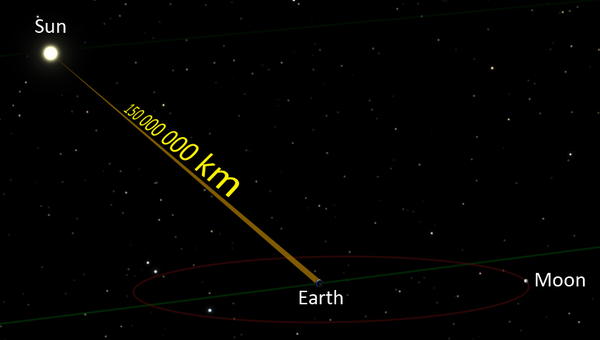
Once outside the Sun’s surface, neutrinos and photons travel at the speed of light.

The Sun is about half-way through its main-sequence stage, during which nuclear fusion reactions in its core fuse hydrogen into helium. Each second, more than four million tonnes of matter are converted into energy within the Sun’s core, producing neutrinos and solar radiation. At this rate, the Sun has so far converted around 100 times the mass of Earth into energy, about 0.03% of the total mass of the Sun. It is gradually becoming hotter in its core, hotter at the surface, larger in radius, and more luminous during its time on the main sequence. Since the beginning of its main sequence life, it has expanded in radius by 15% and the surface has increased in temperature from 5,620 K (5,350 °C; 9,660 °F) to 5,777 K (5,504 °C; 9,939 °F), resulting in a 48% increase in luminosity from 0.677 solar luminosities to its present-day 1.0 solar luminosity. This occurs because the helium atoms in the core have a higher mean molecular weight than the hydrogen atoms which were fused, resulting in less thermal pressure. The core is therefore shrinking, allowing the outer layers of the Sun to move closer to the centre, releasing gravitational potential energy. It is believed that half of this released gravitational energy goes into heating, which leads to a gradual increase in the rate at which fusion occurs and thus an increase in the luminosity. This process speeds up as the core gradually becomes denser and at present, it is increasing in brightness by about 1% every 100 million years. It will take at least one billion years from now to deplete liquid water from the Earth from such increase. After that, the Earth will cease to be able to support complex, multicellular life and the last remaining multi-cellular organisms on the planet will suffer a final, complete mass extinction. Also, according to the ESA’s Gaia space observatory mission made in 2022, the sun will be at its hottest point at the eight billion year mark, but will spend a total of approximately ten to eleven billion years as a main-sequence star before its Red Giant phase. 

The size of the current Sun now in its ‘main sequence’, compared to its estimated size during its future ‘red giant’ phase.

But the Sun does not have enough mass to explode as a supernova. Instead, when it runs out of hydrogen in the core in approximately five billion years, core hydrogen fusion will stop, and there will be nothing to prevent the core from contracting. The release of gravitational potential energy will cause the luminosity of the Sun to increase, ending the main sequence phase and leading the Sun to expand over the next billion years: first into a subgiant and then into a red giant. The heating due to gravitational contraction will also lead to expansion of the Sun and hydrogen fusion in a shell just outside the core, where unfused hydrogen remains, contributing to the increased luminosity, which will eventually reach more than 1,000 times its present luminosity. When the Sun enters its red-giant branch phase, it will engulf Mercury and most likely Venus, reaching about 0.75 AU (110 million km; 70 million miles). The Sun will spend around a billion years in this phase and lose around a third of its mass. After the red-giant branch, the Sun has approximately 120 million years of active life left, but much happens. First, the core (full of degenerate helium) will ignite violently in the helium flash and it is estimated that 6% of the core, itself 40% of the Sun’s mass, will be converted into carbon within a matter of minutes. The Sun then shrinks to around ten times its current size and fifty times the luminosity, with a temperature a little lower than today. It will then have reached the ‘horizontal branch’, but a star of the Sun’s metallicity does not evolve along the horizontal branch. Instead, it just becomes moderately larger and more luminous over about 100 million years as it continues to react helium in the core. When the helium is exhausted, the Sun will repeat the expansion it followed when the hydrogen in the core was exhausted. This time, however, it all happens faster, and the Sun becomes larger and more luminous, engulfing Venus if it has not already. This is the giant-branch phase, and the Sun is alternately reacting hydrogen in a shell or helium in a deeper shell. After about 20 million years on the early asymptotic giant branch, the Sun becomes increasingly unstable, with rapid mass loss and thermal pulses that increase the size and luminosity for a few hundred years every 100,000 years or so. The thermal pulses become larger each time, with the later pulses pushing the luminosity to as much as 5,000 times the current level and the radius to over 1 AU (150 million km; 93 million miles). According to a 2008 model, Earth’s orbit will have initially expanded to at most 1.5 AU (220 million km; 140 million miles) due to the Sun’s loss of mass as a red giant. However, Earth’s orbit will later start shrinking due to tidal forces and, eventually, drag from the lower chromosphere so that it is engulfed by the Sun during the tip of the red-giant branch phase, some 3.8 and 1 million years after Mercury and Venus have respectively suffered the same fate. Models vary depending on the rate and timing of mass loss. Models that have higher mass loss on the red-giant branch produce smaller, less luminous stars at the tip of the asymptotic giant branch, perhaps only 2,000 times the luminosity and less than 200 times the radius. For the Sun, four thermal pulses are predicted before it completely loses its outer envelope and starts to make a planetary nebula. By the end of that phase, which will last approximately 500,000 years, the Sun will only have about half of its current mass.The post-giant-branch evolution is even faster. The luminosity stays approximately constant as the temperature increases, with the ejected half of the Sun’s mass becoming ionised into a planetary nebula as the exposed core reaches 30,000 K (29,700 °C; 53,500 °F). The final naked core, a white dwarf, will have a temperature of over 100,000 K (100,000 °C; 180,000 °F), and contain an estimated 54.05% of the Sun’s present-day mass. The planetary nebula will disperse in about 10,000 years, but the white dwarf will survive for trillions of years before fading to a hypothetical black dwarf. I think that is enough for now! In the future I plan to write about the Solar System and the planets, which I hope you will find of interest. 

This week…Time

People, especially children, don’t know what they don’t know, so raising awareness is a vital first step in their education process. For example, first becoming aware that ‘time’ exists, leading on to using a clock to measure and display time.

Click: Return to top of page or Index page
Memories Of Cars

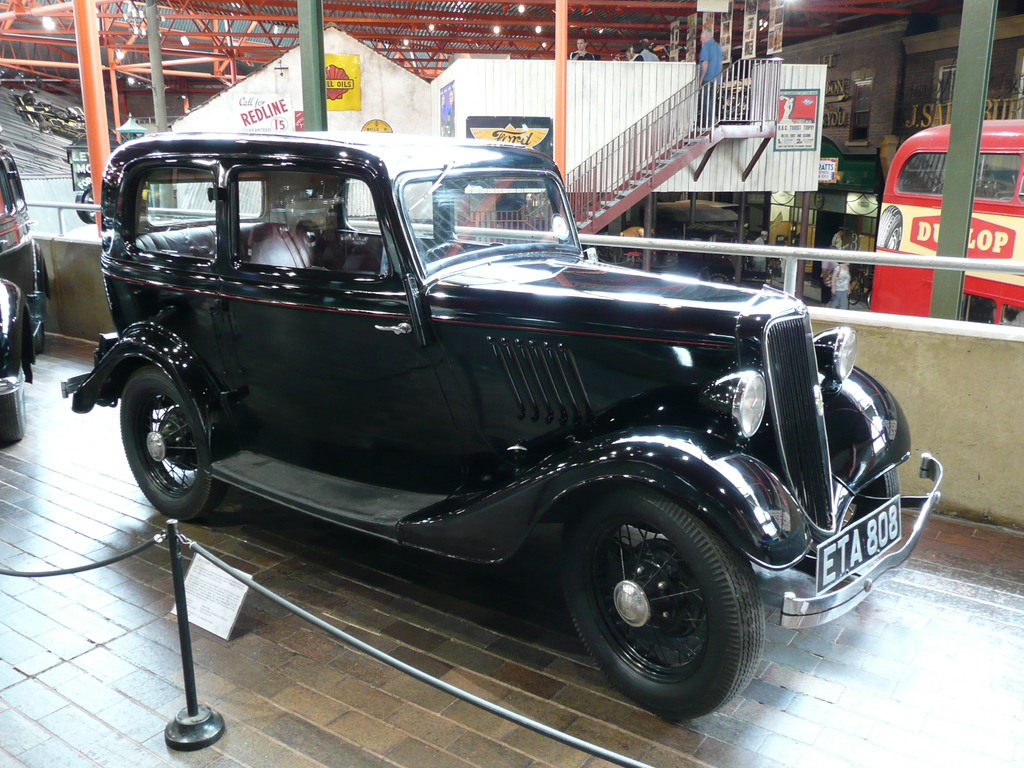
A Ford Model Y, 1937.

I was born in London, but as I have previously mentioned in earlier blog posts the bad smog of 1952 caused severe health issues with my Mum which meant we moved to Whittlesey, near Peterborough. It also meant I arrived in this world just a few weeks earlier than was expected. I was less than a year old then, and my memories of life began there. My age was still in single figures when my Dad bought his first car, a 1937 Ford Eight, though some might call it a Model Y. Even now I can still recall walking down the road with him to the little garage with shiny black doors where our car was kept each night, sliding the garage door open and getting that delightful smell of petrol, oil and leather. 

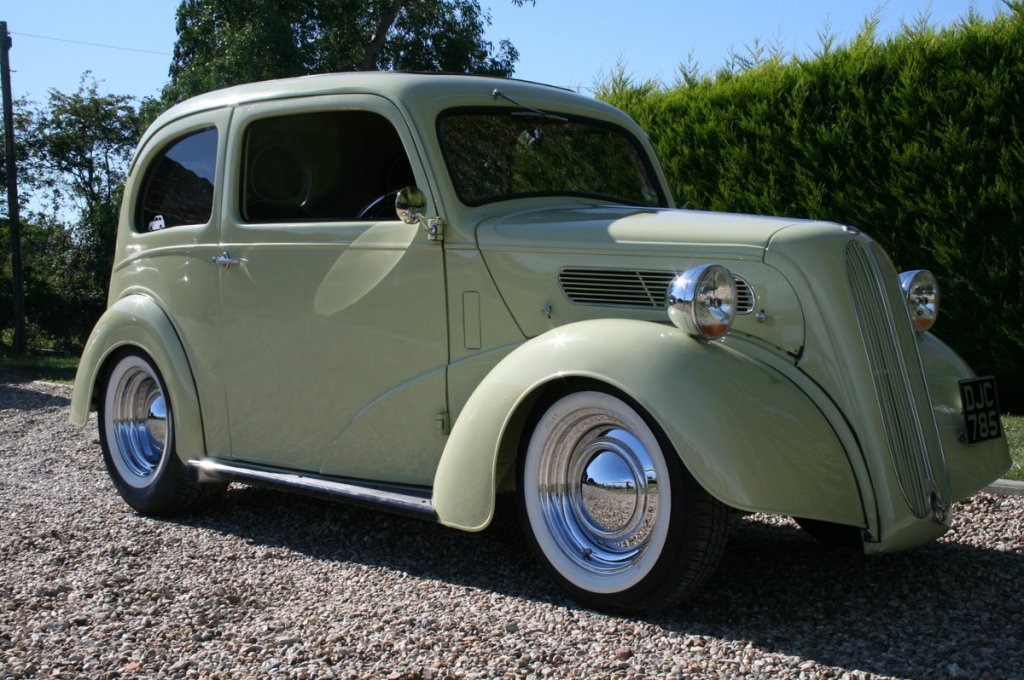
A Ford Popular, c 1960.

But that car, in time, had to be changed and Dad got a green Ford Popular. It wasn’t new, but it was fine for us and I still recall days out along the Wash road to friends in nearby Thorney. But a policeman that we knew there saw it and asked Dad about it, as this same policeman had just got a brand new car and the registration number of his new car wasn’t too far different from Dad’s Ford Popular. It seems Dad’s had been re-registered, for some reason. We think it had been in an accident and rebuilt. But it was fine. Then a few years later Dad saw a Ford Anglia, it was a really lovely turquoise blue with a bright white roof. This made it a deluxe model and it was a special, as it‘d had a bigger engine put in (technically, it was a 1340cc Consul Classic engine with a 3-bearing crankshaft) along with anti-roll bars on the back. Sadly the original owner’s son, who had wanted to use this special car for racing, had been killed in an accident so the owner sold the car.

A Ford Anglia deluxe.

Up to now my Dad had been used to a car with only three forward gears and this one had four, so getting it into reverse took some working out but we managed it! This car went well, but a while later the 1340cc engine needed replacing, so an exchange engine was organised. Ford did exchange engines, so Dad asked to have an Anglia Super, 1200cc engine fitted. But Ford only did exchange engine upgrades, which meant Dad had to have a 1500cc Cortina engine (with a 5-bearing crankshaft) fitted! This made it very much a GT version. It was really lovely, especially as one of my older brothers got to drive it. But after a while my Mum’s back was starting to become a bit painful due to a bad war injury, so Dad sold the Ford Anglia and got a green Austin 1100. Sadly that was a mistake and whilst we were on holiday down in North Devon this Austin 1100 needed a bit of repair. We were friendly with the local garage owner, who, like us, had been born in London so I and my Dad sold petrol etc there at the garage whilst the garage owner fixed the car. A few years later Dad retired from teaching and bought a brand new car, an Austin 1300. It was a really bright yellow colour and when we took ourselves down for a holiday in North Devon, we called in for petrol and the same garage owner took one look and burst out laughing, saying “Who spilt the mustard pot, then?”. We all had a laugh at that.

An Austin 1300.

By now I was able to drive, so Dad let me take Mum shopping and to various places locally, then I was told of a Ford Anglia Super owned by a relative of my sister-in-law. This car needed a bit of work doing to it as the nearside front wing was quite rusty but we agreed a price and I brought it home. With the help of a neighbour I patched up the nearside wing whilst I saved up for a new wing. In truth it was pretty bad, it looked all right as it was held together with chicken wire – it wouldn’t have passed an M.O.T. test! Still, I got it repaired with a brand new wing and then had to carry on saving, as the offside front wing was now going rusty. Meanwhile I drove down to London to visit relatives, but driving round Hyde Park Corner I had a coming together with another car. The other driver didn’t stop, it was just a slight scrape but I was annoyed and showed the uncle I was visiting when I got to their house. He shrugged it off, saying “not to worry it happens all the time here”,  but as you might expect the scrape was on the new wing! My uncle soon got a cloth and cleaned the scrape, all was well. A few years later I sold the car and bought an Austin 1100, but that needed too much work doing so after a while I scrapped that. A little later I was looking around the second-hand cars at a local Ford dealer and I saw a lovely Ford Capri 1600, right at the back of the rows of cars. I asked to see that one and perhaps test-drive it, but the salesman tried to sell me a similar one parked near the front of the others. He was almost too insistent that I try this other one but I stood my ground and after some work the car I wanted was out and did test it. I also got a friend who owned a garage to give that car a once-over, it was fine apart from a couple of minor things and so I bought that lovely Capri 1600.

A Ford Capri 1600.

That did me well for quite a while until sadly, after a long couple of weeks away working, I was only a mile or two away from home when I had an accident. My fault, I was tired and these things happen. The car was scrapped and so a short while later I went back to the Ford dealer to get another car. This same salesman was absolutely delighted to see me, as my old car had been seen and recognised in the scrapyard!

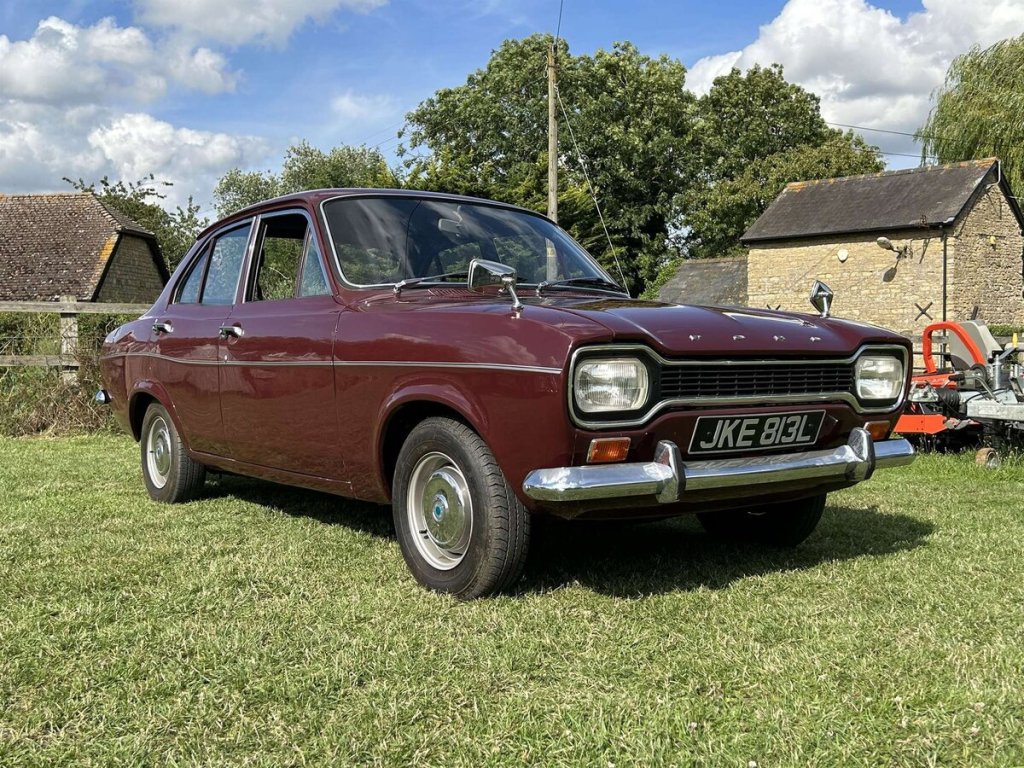
A Ford Escort 1300.

So I tested and bought a Ford Escort which was great. In the meantime I’d had promotion at work and could now afford to buy a house, which I did. My mother had needed bed rest in hospital prior to having a hip replacement and whilst visiting her I had met a nice young lady, in fact I probably spent more time seeing the young lady than I did my mother! I started dating the girl, she had a few difficulties as she was in a wheelchair and couldn’t walk but that wasn’t a problem to me. Sadly it wasn’t meant to be though, as she had other, mental issues which were beyond my help. In the meantime I had changed the Ford Escort for a Ford Fiesta – a bright yellow one – and I was managing. Then at work I was told that in the small print of the form I had signed, there was a clause which meant that I could be demoted within a certain time. That was unexpected, but even with help from the local Union I had to accept it. So I sold the Fiesta and bought a small motorcycle, as I was keeping the house. Later I sold the motorbike, which pleased my dear Mum! I learned some years afterwards that the family had been looking out for a car for me and so I bought a little Austin Mini, which was excellent. I drove that for many miles over the next few years!

An Austin Mini

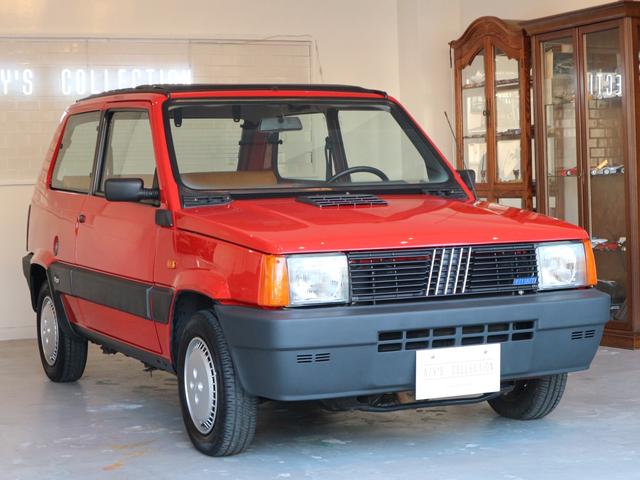
As happens there were changes made at BT, with reorganisations which enabled me to get a transfer to Leicester because I was technically through a promotions board, awaiting a post. I started driving from Peterborough to Leicester every day, but that out a strain on me and the little car, which led to me meeting, chatting up and later marrying the lovely lady who I had met on the train. We divorced a few years later, but that is life. I bought a house in Leicester and sold the mini. It had done its job. Happily I was able to get a Fiat Panda which, with the help of my eldest brother, kept me on the road as I had now transferred from Leicester to Nottingham. I was living in a house not far from Chesterfield though, which again put a strain on me, my marriage and my car. 

A Fiat Panda.

Further changes in BT led me to work in Sheffield, then down to Birmingham for a few years before returning to Sheffield. Yet more reorganisations meant I was in Manchester as a trainer for a while, before returning to… Leicester! Which is where I finished. I had in the meantime got the Fiat Panda sold, I’d had a Land Rover Series 3, then when my eldest brother retired due to ill health I bought his Land Rover Defender. 

A Land Rover Defender.

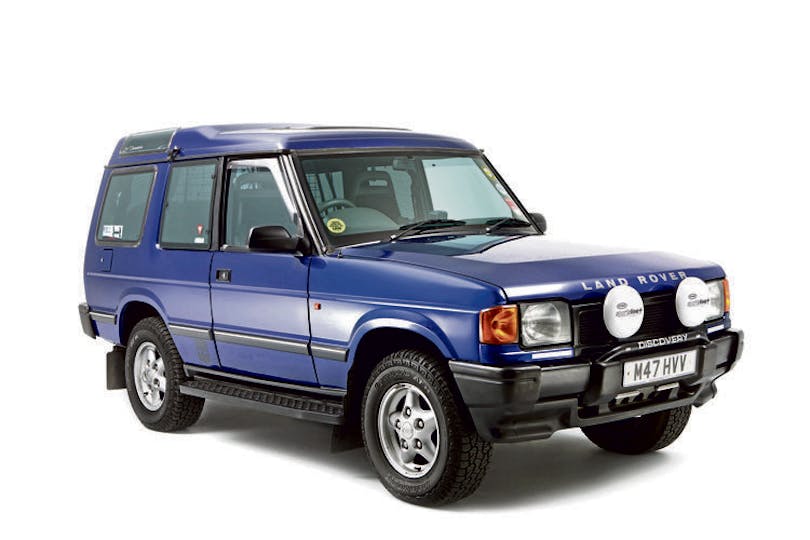
My return to Leicester culminated in me changing that for a Land Rover Discovery that had hardly been used and I did quite a few miles in that. It was to me the absolute best of all the cars I had ever had.

A Land Rover Discovery.

I had to finish my driving career though, as sadly ill-health stopped me driving. Still, I had been driving from 1970 to 2015 and it took a bit of getting used to, using public transport. But I was able to get a bus pass which also enabled me free train travel from Leicester to a few places, including Peterborough, which suited me nicely. I sold the Discovery to a local dealer who I believe may have kept it for himself, as it was in such good condition. I missed driving, but I had to accept that if I had an accident I could not just be putting myeline in danger, but others too. Knowing that meant I had absolutely no choice.

This week… a reminder.

Remember that success is a journey, not a destination.
We take care of our bodies to protect us.
We have family to teach us,
We have good friends to steer us,
We have good food to fuel us,
With breaks to maintain and service us.

A History of Tattooing

A tattoo is a form of body modification made by inserting tattoo ink, dyes, and/or pigments, either indelible or temporary, into the dermis layer of the skin to form a design. The art of tattooing has been practiced across the globe since at least Neolithic times, as evidenced by mummified preserved skin, ancient art and the archaeological record. Both ancient art and archaeological finds of possible tattoo tools suggest tattooing was practiced by the Upper Paleolithic period in Europe, however direct evidence for tattooing on mummified human skin extends only to the fourth millennium BC. The oldest discovery of tattooed human skin to date has been found on the body of Ötzi the Iceman, dating to between 3370 and 3100 BC. Other tattooed mummies have been recovered from many archaeological sites, including locations in Greenland, Alaska, Siberia, Mongolia, western China, Egypt, Sudan, the Philippines and the Andes. There are preserved tattoos on ancient mummified human remains which reveal that tattooing has been practiced throughout the world for millennia. In 2015, scientific re-assessment of the age of the two oldest known tattooed mummies identified as the oldest example then known. This body, with sixty-one tattoos, was found embedded in glacial ice in the Alps and was dated to 3250 BC. In 2018 the oldest figurative tattoos in the world were discovered on two mummies from Egypt which are dated between 3351 and 3017 BC.

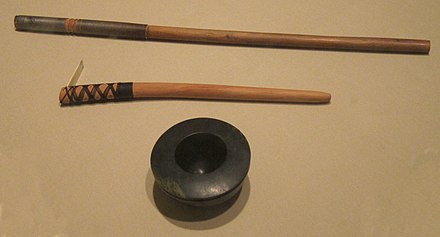
Hawaiian hafted instrument, mallet and ink bowl. which are the classic instruments of traditional Austronesian tattooing culture.

Ancient tattooing was widely practiced among the Austronesian people and was one of the early technologies developed by the pre-Austronesians in Taiwan and coastal South China prior to at least 1500 BC, before the Austronesian expansion into the islands of the Indo-Pacific. For the most part, Austronesians used characteristic perpendicularly hafted tattooing points that were tapped on the handle with a length of wood to drive the tattooing points into the skin. The handle and mallet were generally made of wood whilst the points, either single, grouped or arranged to form a comb were made of Citrus thorns, fish bone, bone, teeth and turtle and oyster shells.

A ‘Yue’ or barbarian statue of a tattooed man with short hair from the cultures of Southern China. (Zhejiang Provincial Museum)

Cemeteries throughout the Tarim Basin of western China have revealed several tattooed mummies with Western Asian/Indo-European physical traits and cultural materials. These date from between 2100 and 550 BC. In ancient China, tattoos were considered a barbaric practice associated with the Yue peoples of southeastern and southern China. Tattoos were often referred to in literature depicting bandits and folk heroes. As late as the Qing dynasty it was common practice to tattoo characters such as ‘Prisoner’ on convicted criminals’ faces. Although relatively rare during most periods of Chinese history, slaves were also sometimes marked to display ownership. However, tattoos seem to have remained a part of southern culture. Marco Polo wrote that “Many come hither from Upper India to have their bodies painted with the needle in the way we have elsewhere described, there being many adepts at this craft in the city”. The Indigenous peoples of North America have a long history of tattooing. Tattooing was not a simple marking on the skin: it was a process that highlighted cultural connections to Indigenous ways of knowing and viewing the world, as well as connections to family, society, and place. There has been no way to determine the actual origin of tattooing for these people, though it is known that the St. Lawrence Iroquoians had used bones as tattooing needles, and turkey bone tattooing tools were discovered at an ancient Fernvale, Tennessee site, dated back to 3500–1600 BC. Until recently, archeologists have not prioritised the classification of tattoo implements when excavating known historic sites, but recent review of materials found from one excavation site point towards elements of tattoo bundles that are from pre-colonisation times. Scholars explain that the recognition of tattoo implements is significant because it highlights the cultural importance of tattooing for indigenous people.

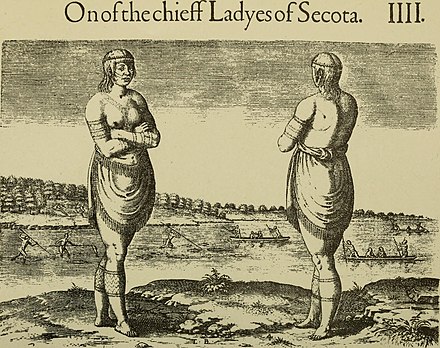
Ladies Of Secota.

The above is a page from Thomas Harriot’s book ‘A Brief and True Report of the New Found Land of Virginia’ showing a painting by John White. Markings on the skin represent tattoos that were observed. Early explorers to North America made many ethnographic observations about the people they met. Initially, they did not have a word for tattooing and instead described these modifications as to ‘’stamp, paint, burn, and embroider’ the skin. The Jesuit Relations of 1652 describes tattooing as “But those who paint themselves permanently do so with extreme pain, using, for this purpose, needles, sharp awls, or piercing thorns, with which they perforate, or have others perforate, the skin. Thus they form on the face, the neck, the breast, or some other part of the body, some animal or monster, for instance, an Eagle, a Serpent, a Dragon, or any other figure which they prefer; and then, tracing over the fresh and bloody design some powdered charcoal, or other black colouring matter, which becomes mixed with the blood and penetrates within these perforations, they imprint indelibly upon the living skin the designed figures. And this in some nations is so common that in the one which we called the Tobacco, and in that which – on account of enjoying peace with the Hurons and with the Iroquois – was called Neutral, I know not whether a single individual was found, who was not painted in this manner, on some part of the body”. It seems that the Inuit also have a deep history of tattooing. In the Inuit language of the eastern Canadian Arctic, the word ‘kakiniit’ translates to the English word for tattoo and the word ‘tunniit’ means face tattoo. Among the Inuit, some tattooed female faces and parts of the body symbolise a girl transitioning into a woman, coinciding with the start of her first menstrual cycle. A tattoo represented a woman’s beauty, strength, and maturity, and this was an important practice because some Inuit believed that a woman could not transition into the spirit world without tattoos on her skin. But European missionaries colonised the Inuit in the beginning of the twentieth century and associated tattooing as an evil practice, ‘demonizing’ anyone who valued tattoos.  But latterly people have talked to elder Inuit folk and these elders were able to recall the traditional practice of tattooing, which often included using a needle and thread and sewing the tattoo into the skin by dipping the thread in soot or seal oil, or through skin poking using a sharp needle point and dipping it into soot or seal oil. As a result, work has been done with the elders in their community to bring the tradition of kakiniit back by learning the traditional ways of tattooing and using their skills to tattoo others. However the Osage people, a Mid-western Native American tribe of the Great Plains used tattooing for a variety of different reasons. The tattoo designs were based on the belief that people were part of the larger cycle of life and integrated elements of the land, sky, water, and the space in between to symbolise these beliefs. These people also believed in the smaller cycle of life, recognising the importance of women giving life through childbirth and men removing life through warfare. Osage men were often tattooed after accomplishing major feats in battle, as a visual and physical reminder of their elevated status in their community. Some Osage women were tattooed in public as a form of a prayer, demonstrating strength and dedication to their nation. Meanwhile in central America a Spanish expedition led by Gonzalo de Badajoz in 1515 across what is today Panama ran into a village where prisoners from other tribes had been marked with tattoos. Except the Spaniards did find some slaves who were branded in a painful fashion. The natives cut lines in the faces of the slaves, using a sharp point either of gold or of a thorn; they then fill the wounds with a kind of powder dampened with black or red juice, which forms an indelible dye and never disappears. 

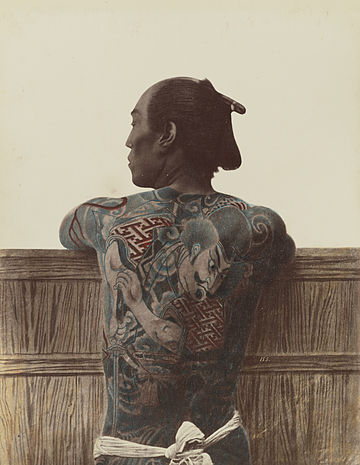
A tattooed man’s back, c. 1875.

Tattooing for spiritual and decorative purposes in Japan is thought to extend back to at least the Jomon or Paleolithic period and was widespread during various periods for both the Yamato and native Jomon groups. Chinese texts from before 300 AD described social differences among Japanese people as being indicated through tattooing and other bodily markings. Chinese texts from the time also described Japanese men of all ages as decorating their faces and bodies with tattoos. Generally firemen, manual workers and prostitutes wore tattoos to communicate their status, but by the early seventeenth century, criminals were widely being tattooed as a visible mark of punishment. Criminals were marked with symbols typically including crosses, lines, double lines and circles on certain parts of the body, mostly the face and arms. These symbols sometimes designated the places where the crimes were committed. In one area, the character for “dog” was tattooed on the criminal’s forehead. Then the Government of Meiji, formed in 1868, banned the art of tattooing altogether, viewing it as barbaric and lacking respectability. This subsequently created a subculture of criminals and outcasts. These people had no place in ‘decent’ society and were frowned upon. They could not simply integrate into mainstream society because of their obvious visible tattoos, forcing many of them into criminal activities which ultimately formed the roots for the modern Japanese mafia, the Yakuza, with which tattoos have become almost synonymous in Japan. It seems too that Thai-Khmer tattoos, also known as Yantra tattooing, was common since ancient times. Just as other native southeast Asian cultures, animistic tattooing was common in Tai tribes that were is southern China. Over time, this animistic practice of tattooing for luck and protection assimilated Hindu and Buddhist ideas. The Sak Yant traditional tattoo is practiced today by many and are usually given either by a Buddhist monk or a Brahmin priest. The tattoos usually depict Hindu gods and used different scripts which were the scripts of the classical civilisations of mainland southeast Asia.

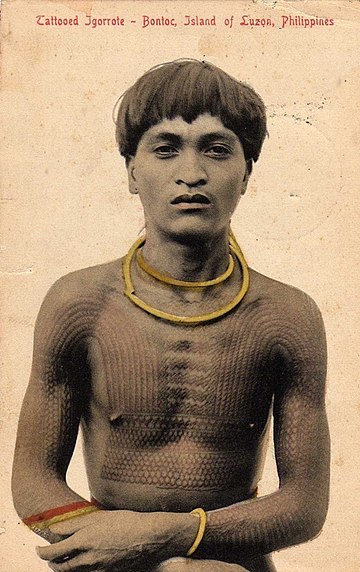
A Bontoc warrior bearing a headhunter’s tattoo.

Tattooing, or ‘batok’ on both sexes was practiced by almost all ethnic groups of the Philippine Islands during the pre-colonial era. Ancient clay human figurines found in archaeological sites in the Batanes Islands, around 2500 to 3000 years old, have simplified stamped-circle patterns, which are believed to represent tattoos and possibly branding (also commonly practiced) as well. Excavations at the Arku Cave burial site in Cagayan Province in northern Luzon have also yielded both chisel and serrated-type heads of possible hafted bone tattoo instruments alongside Austronesian material culture markers like adzes, spindle whorls, bark-cloth beaters, and jade ornaments. These were dated to before 1500 BC and are remarkably similar to the comb-type tattoo chisels found throughout Polynesia. Tattoos are acquired gradually over the years, and patterns can take months to complete and heal. For many the tattooing processes are sacred events that involve rituals to ancestral spirits and the heeding of omens. For example, if the artist or the recipient sneezes before a tattooing, it was seen as a sign of disapproval by the spirits, and the session was called off or rescheduled. At one time artists were usually paid with livestock, heirloom beads, or precious metals. They were also housed and fed by the family of the recipient during the process. A celebration was usually held after a completed tattoo. The Māori people of New Zealand practised a form of tattooing known as ‘tā moko’, traditionally created with chisels. However, from the late twentieth century onwards, there has been a resurgence of tā moko taking on European styles amongst Maori. Traditional tā moko was reserved for head area. There is also a related tattoo art, kirituhi, which has a similar aesthetic to tā moko but is worn by non-Maori.

The earliest possible evidence for tattooing in Europe appears on ancient art from the Upper Paleolithic period as incised designs on the bodies of humanoid figurines. The Löwenmensch figurine from the Aurignacian culture dates to approximately 40,000 years ago and features a series of parallel lines on its left shoulder. The ivory ‘Venus of Hohle Fels’, which dates to between 35,000 and 40,000 years ago also exhibits incised lines down both arms, as well as across the torso and chest. The Picts may have been tattooed with elaborate, war-inspired black or dark blue woad designs. Julius Caesar described these tattoos in Book V of his ‘Gallic Wars’ (54 BC). Nevertheless, these may have been painted markings rather than tattoos. Raised in the aftermath of the Norman conquest of England, William of Malmesbury describes in his ‘Gesta Regum Anglorum’ that the Anglo-Saxons were tattooed upon the arrival of the Normans as ‘arms covered with golden bracelets, tattooed with coloured patterns’. The significance of tattooing was long open to Eurocentric interpretations. In the mid-nineteenth century, Baron Haussmann, whilst arguing against painting the interior of Parisian churches, said the practice “reminds me of the tattoos used in place of clothes by barbarous peoples to conceal their nakedness”. Meanwhile Greek written records of tattooing date back to at least the fifth-century BC. Both the ancient Greeks and Romans used tattooing to penalise slaves, criminals, and prisoners of war. However, in Egypt and Syria, known decorative tattooing was looked down upon and only religious tattooing was mainly practiced. In 316, emperor Constantine I made it illegal to tattoo the face of slaves as punishment. The Greek verb ‘stizein’, meaning ‘to prick’, was used for tattooing. Its derivative ‘stigma’ was the common term for tattoo marks in both Greek and Latin. It still fascinates me how our ‘modern’ words originated! During the Byzantine period, the verb ‘kentein’ replaced ‘stizein’, and a variety of new Latin terms replaced ‘stigmata’ including ‘signa’ or “signs”, ‘characteres’ or “stamps,” and ‘cicatrices’ or “scars”.

Despite a lack of direct textual references, tattooed human remains and iconographic evidence indicate that ancient Egyptians practiced tattooing from at least 2000 BC. It is theorised that tattooing entered Egypt through Nubia, but this claim is complicated by the high mobility between Lower Nubia and Upper Egypt as well as Egypt’s annexation of Lower Nubia around 2000 BC and one archeologist has argued that it may be more appropriate to classify tattoo in ancient Egypt and Nubia as part of a larger Nile Valley tradition. Ancient Egyptian tattooing appears to have been practiced on women exclusively; with an exception of a pre-dynastic male mummy found with “Dark smudges on his arm, appearing as faint markings under natural light, had remained unexamined. Infrared photography recently revealed that these smudges were in fact tattoos of two slightly overlapping horned animals. The horned animals have been tentatively identified as a wild bull (long tail, elaborate horns) and a Barbary sheep (curving horns, humped shoulder). Both animals are well known in Predynastic Egyptian art. The designs are not superficial and have been applied to the dermis layer of the skin, the pigment was carbon-based, possibly some kind of soot.” Two well-preserved Egyptian mummies from 4160 BC, a priestess and a temple dancer for the fertility goddess Hathor, bear random-dot and dash tattoo patterns on the lower abdomen, thighs, arms, and chest.

Meanwhile British and other pilgrims to the Holy Lands throughout the seventeenth century were tattooed with the Jerusalem Cross to commemorate their voyages. Between 1766 and 1779, Captain James Cook made three voyages to the South Pacific, the last trip ending with Cook’s death in Hawaii in February 1779. When Cook and his men returned home to Europe from their voyages to Polynesia, they told tales of the ‘tattooed savages’ they had seen. The word “tattoo” itself comes from the Tahitian word ‘tatau’, and was introduced into the English language by Cook’s expedition, though the word ‘tattoo’ or ‘tap-too’, referring to a drumbeat, had existed in English since at least 1644. It was in Tahiti aboard the Endeavour, in July 1769, that Cook first noted his observations about the indigenous body modification and is the first recorded use of the word tattoo to refer to the permanent marking of the skin. In the ship’s log book recorded this entry: “Both sexes paint their Bodys, Tattow, as it is called in their Language. This is done by inlaying the Colour of Black under their skins, in such a manner as to be indelible.” Cook went on to write, “This method of Tattowing I shall now describe…As this is a painful operation, especially the Tattowing of their Buttocks, it is performed but once in their Lifetimes.” Cook’s Science Officer and Expedition Botanist, Sir Joseph Banks, returned to England with a tattoo. Banks was a highly regarded member of the English aristocracy and had acquired his position with Cook by putting up what was at the time the princely sum of some ten thousand pounds in the expedition. In turn, Cook brought back with him a tattooed Raiatean man, Omai, who he presented to King George and the English Court. Many of Cook’s men, ordinary seamen and sailors, came back with tattoos, a tradition that would soon become associated with men of the sea in the public’s mind and the press of the day. In the process, sailors and seamen re-introduced the practice of tattooing in Europe, and it spread rapidly to seaports around the globe. By the nineteenth century, tattooing had spread to British society but was still largely associated with sailors and the lower or even criminal class. Tattooing had however been practiced in an amateur way by public schoolboys from at least the 1840s and by the 1870s had become fashionable among some members of the upper classes, including royalty. In its ‘upmarket’ form, it could be a lengthy, expensive and sometimes painful process. Tattooing spread among the upper classes all over Europe in the nineteeenth century, but particularly in Britain where it was estimated in Harmsworth Magazine in 1898 that as many as one in five members of the gentry were tattooed. Taking their lead from the British Court, where King George V followed King Edward VII’s lead in getting tattooed; King Frederick IX of Denmark, the King of Romania, Kaiser Wilhelm II, King Alexander of Yugoslavia and even Tsar Nicholas II of Russia all sported tattoos, many of them elaborate and ornate renditions of the Royal Coat of Arms or the Royal Family Crest. King Alfonso XIII of modern Spain also had a tattoo. The perception that there is a marked class division on the acceptability of the practice has been a popular media theme in Britain, as successive generations of journalists described the practice as newly fashionable and no longer for a marginalised class. Examples of this cliché can be found in every decade since the 1870s. Despite this evidence, a myth persists that the upper and lower classes find tattooing attractive and the broader middle classes rejecting it.

As World War I ravaged the globe, it also ravaged the popularity of tattooing, pushing tattoos even farther under the umbrella of delinquency. What credence tattoos got as symbols of patriotism and war badges in the eyes of the public, was demolished as servicemen moved away from the proud flags motifs and into more sordid depictions. At the beginning ofWorld War II, tattooing once again experienced a boom in popularity as now not only sailors in the Navy, but soldiers in the Army and fliers in the Air Force, were once again tattooing their national pride onto their bodies. During the Second World War, the Nazis, under the order of Adolph Hitler, rounded up those deemed inferior into concentration camps. Once there, if they were chosen to live, they were tattooed with numbers onto their arms. Tattoos and Nazism become intertwined, and the extreme distaste for Nazi Germany and Fascism led to a stronger public outcry against tattooing. This backlash would further worsen with use of a tattooed man in a 1950s Marlboro advertisement, which strengthened the public’s view that tattoos were no longer for patriotic servicemen, but for criminals and degenerates. The public distaste was so strong by this point, that usual trend of seeing tattoo popularity spike during times of war, was not seen in the Vietnam War. It would take two more decades for tattooing to finally be brought back into society’s good graces. Interestingly, throughout the world’s different military branches, tattoos are either regulated under policies or strictly prohibited to fit dress code rules. In the United Kingdom, as of 2022 the Royal Navy permits most tattoos, with certain restrictions: unless visible in a front-facing passport photo, obscene or offensive, or otherwise deemed inappropriate. The National Museum of the Royal Navy has presented an exhibit about the long history of tattoos among Navy service members, part of the tradition of sailor tattoos. In the United States, the United States Air Force regulates all kinds of body modification. Any tattoos which are deemed to be “prejudicial to good order and discipline”, or “of a nature that may bring discredit upon the Air Force” are prohibited. Specifically, any tattoo which may be construed as “obscene or advocate sexual, racial, ethnic or religious discrimination” is disallowed. Tattoo removal may not be enough to qualify; resultant “excessive scarring” may be disqualifying. Further, Air Force members may not have tattoos on their neck, face, head, tongue, lips or scalp. The United States Army permits soldiers to have tattoos as long as they are not on the neck, hands, or face, with exceptions existing for of one ring tattoo on each hand and permanent makeup. Additionally, tattoos that are deemed to be sexist, racist, derogatory, or extremist continue to be banned and the United States Navy has changed its policies and become more lenient on tattoos, allowing neck tattoos as long as one inch. Sailors are also allowed to have as many tattoos of any size on the arms and legs, as long as they are not deemed to be offensive tattoos. I have also found that the Indian Army tattoo policy has been in place since 11 May 2015. The government declared all tribal communities who enlist and have tattoos are allowed to have them all over the body only if they belong to a tribal community. Indians who are not part of a tribal community are only allowed to have tattoos in designated parts of the body such as the forearm, elbow, wrist, the side of the palm, and back and front of hands. Offensive, sexist and racist tattoos are not allowed. I have learned too that tattooing in the federal Indian boarding school system was commonly practiced during the 1960s and 1970s. Such tattoos often took the form of small markings or initials and were often used as a form of resistance; a way to reclaim one’s body. Due to the forced assimilation practices of the Western boarding schools, many indigenous cultural practices were on a severe decline, tattooing being one of them. As a way to retain their cultural heritage some students practiced this ritual and tattooed themselves with found materials like sewing needles and India Ink. Within the schools, the authorities physically labeled the students: “a personal identification number was written in purple ink on their wrists and on the small cupboard in which their few belongings were stored.” Students often had a tendency to tattoo their initials on this very spot; the exact place where the school authorities first marked them. This can be seen as a strong act of resistance where the students were physically rejecting their numerical ID, and reclaiming their own body and identity. Here in the United Kingdom, in 1969 the House of Lords debated a bill to ban the tattooing of minors, on grounds it had become “trendy” with the young in recent years but was associated with crime. It was noted that forty per cent of young criminals had tattoos and that marking the skin in this way tended to encourage self-identification with criminal groups. Since the 1970s, tattoos have become more socially acceptable and fashionable among celebrities. Tattoos are less prominent on figures of authority, and the practice of tattooing by the elderly is still considered remarkable. In recent history, authority figures have adopted the trend more widely; in Australia 65% of people in these professions are tattooed. Tattooing has also steadily increased in popularity since the invention of the electric tattoo machine. In 1936, 1 in 10 Americans had a tattoo of some form. Since the 1970s, tattoos have become a mainstream part of global and Western fashion, common among both sexes, to all economic classes, and to age groups from the later teen years to middle age. Tattoos have experienced a resurgence in popularity in many parts of the world, particularly in Europe, Japan, and North and South America. The growth in tattoo culture has seen an influx of new artists into the industry, many of whom have technical and fine arts training. Coupled with advancements in tattoo pigments and the ongoing refinement of the equipment used for tattooing, this has led to an improvement in the quality of tattoos being produced. Over the past three decades Western tattooing has become a practice that has crossed social boundaries from “low” to “high” class along with reshaping the power dynamics regarding gender. But it has its roots in “exotic” tribal practices of the Native Americans and Japanese, which are still seen in present times.

This week… thoughts.

If electricity comes from electrons, does morality come from morons?
A hangover is the wrath of grapes.

Click: Return to top of page or Index page