The Battle of Jutland was a naval battle fought during the First World War between Britain’s Royal Navy Grand Fleet under Admiral Sir John Jellicoe and the Imperial German Navy High Seas Fleet under Vice-Admiral Reinhard Scheer. The battle unfolded in extensive manoeuvring and three main engagements, these being the battlecruiser action, the fleet action, and the night action, from 31 May to 1 June 1916, off the North Sea coast of Denmark’s Jutland Peninsula. It was the largest naval battle and the only full-scale clash of battleships in that war. Jutland was the third fleet action between steel battleships, following the Battle of the Yellow Sea in 1904 and the Battle of Tsushima in 1905, during the Russo-Japanese War and in addition, Jutland was the last major battle in history fought primarily by battleships. Germany’s High Seas Fleet intended to lure out, trap, and destroy a portion of the British Grand Fleet, as the German naval force was insufficient to openly engage the entire British fleet. This formed part of a larger strategy to break the British blockade of Germany and to allow German naval vessels access to the Atlantic. Meanwhile, Great Britain’s Royal Navy pursued a strategy of engaging and destroying the High Seas Fleet, thereby keeping German naval forces contained and away from Britain and her shipping lanes. The Germans planned to use Vice-Admiral Franz Hipper’s fast scouting group of five modern battlecruisers to lure Vice-Admiral Sir David Beatty’s battlecruiser squadrons into the path of the main German fleet. They stationed submarines in advance across the likely routes of the British ships, but the British learned from signal intercepts that a major fleet operation was likely so on 30 May, Jellicoe sailed with the Grand Fleet to rendezvous with Beatty, passing over the locations of the German submarine picket lines whilst they were unprepared. The German plan had been delayed, causing further problems for their submarines, which had reached the limit of their endurance at sea. On the afternoon of 31 May, Beatty encountered Hipper’s battlecruiser force long before the Germans had expected and in a running battle, Hipper successfully drew the British vanguard into the path of the High Seas Fleet. By the time Beatty sighted the larger force and turned back towards the British main fleet, he had lost two battlecruisers from a force of six battlecruisers and four powerful battleships, although he had sped ahead of his battleships of 5th Battle Squadron earlier in the day, effectively losing them as an integral component for much of this opening action against the five ships commanded by Hipper. Beatty’s withdrawal at the sight of the High Seas Fleet, which the British had not known were in the open sea, would reverse the course of the battle by drawing the German fleet in pursuit towards the British Grand Fleet. Between 18:30, when the sun was lowering on the western horizon, back-lighting the German forces, and nightfall at about 20:30 the two fleets, totalling 250 ships between them, directly engaged twice. Fourteen British and eleven German ships sank, with a total of 9,823 casualties. After sunset, and throughout the night, Jellicoe manoeuvred to cut the Germans off from their base, hoping to continue the battle the next morning, but under the cover of darkness Scheer broke through the British light forces forming the rearguard of the Grand Fleet and returned to port. Both sides claimed victory. The British lost more ships and twice as many sailors but succeeded in containing the German fleet. The British press criticised the Grand Fleet’s failure to force a decisive outcome, whilst Scheer’s plan of destroying a substantial portion of the British fleet also failed. The British strategy of denying Germany access to both the United Kingdom and the Atlantic did succeed, which was the British long-term goal. The Germans fleet continued to pose a threat, requiring the British to keep their battleships concentrated in the North Sea, but the battle reinforced the German policy of avoiding all fleet-to-fleet contact. At the end of 1916, after further unsuccessful attempts to reduce the Royal Navy’s numerical advantage, the German Navy accepted that its surface ships had been successfully contained, subsequently turning its efforts and resources to unrestricted submarine warfare and the destruction of Allied and neutral shipping. This included the ‘Zimmermann Telegram’ a secret diplomatic communication issued from the German Foreign Office in January 1917 that proposed a military alliance between Germany and Mexico if the United States entered World War I against Germany. With Germany’s aid, Mexico would recover Arizona and New Mexico. The telegram was intercepted by British intelligence. Revelation of the contents enraged Americans, especially after German Foreign Secretary Arthur Zimmermann publicly admitted on March 3 that the telegram was genuine and it helped to generate support for the American declaration of war on Germany in April of 1917. The decryption was described as the most significant intelligence triumph for Britain during World War I and it marked one of the earliest occasions on which a piece of signal intelligence influenced world events. However, subsequent reviews commissioned by the Royal Navy generated strong disagreement between supporters of Jellicoe and Beatty concerning the two admirals’ performance in the battle. Debate over their performance and the significance of the battle continues to this day.
So, with sixteen dreadnought-type battleships, compared with the Royal Navy’s twenty-eight, the German High Seas Fleet stood little chance of winning a head-to-head clash. The Germans therefore adopted a ‘divide-and-conquer’ strategy. They would stage raids into the North Sea and bombard the English coast, with the aim of luring out small British squadrons and pickets, which could then be destroyed by superior forces or submarines. According to Scheer, the German naval strategy should be:
to damage the English fleet by offensive raids against the naval forces engaged in watching and blockading the German Bight, as well as by mine-laying on the British coast and, whenever possible, submarine attack. After an equality of strength had been realised as a result of these operations, and all their forces had been made ready and concentrated, an attempt would be made with their fleet to seek battle under circumstances unfavourable to the enemy.

On 25 April 1916, a decision was made by the German Imperial Admiralty to halt indiscriminate attacks by submarines on merchant shipping. This followed protests from neutral countries, notably the United States, that their nationals had been the victims of attacks. Germany agreed that future attacks would only take place in accord with internationally agreed prize rules, which required an attacker to give a warning and allow the crews of vessels time to escape, and not to attack neutral vessels at all. Scheer believed that it would not be possible to continue attacks on these terms, which took away the advantage of secret approach by submarines and left them vulnerable to even relatively small guns on the target ships. Instead, he set about deploying the submarine fleet against military vessels. It was hoped that, following a successful German submarine attack, fast British escorts such as destroyers would be tied down by anti-submarine operations. If the Germans could catch the British in the expected locations, good prospects were thought to exist of at least partially redressing the balance of forces between the fleets. The hope was that Scheer would thus be able to ambush a section of the British fleet and destroy it.

The Germans maintained a fleet of Zeppelins that they used for aerial reconnaissance and occasional bombing raids. The planned raid on Sunderland intended to use Zeppelins to watch out for the British fleet approaching from the north, which might otherwise surprise the raiders. By 28 May, strong north-easterly winds meant that it would not be possible to send out the Zeppelins, so the raid again had to be postponed. The submarines could only stay on station until 1 June before their supplies would be exhausted and they had to return, so a decision had to be made quickly about the raid. It was decided to use an alternative plan which was to abandon the attack on Sunderland but instead send a patrol of battlecruisers to the Skagerrak, where it was likely they would encounter merchant ships carrying British cargo and British cruiser patrols. It was felt this could be done without air support, because the action would now be much closer to Germany, relying instead on cruiser and torpedo boat patrols for reconnaissance. Orders for the alternative plan were issued on 28 May, although it was still hoped that last-minute improvements in the weather would allow the original plan to go ahead. The German fleet assembled in the Jade River and at Wilhelmshaven and was instructed to raise steam and be ready for action from midnight on 28 May. By 14:00 on 30 May, the wind was still too strong and the final decision was made to use the alternative plan. The coded signal “31 May G.G.2490” was transmitted to the ships of the fleet to inform them the Skagerrak attack would start on 31 May. The pre-arranged signal to the waiting submarines was transmitted throughout the day from the E-Dienst radio station at Bruges and the U-boat tender Arcona anchored at Emden. However, only two of the waiting submarines, U-66 and U-32, received the order. Unfortunately for the German plan, the British had obtained a copy of the main German codebook from the light cruiser SMS Magdeburg, which had been boarded by the Russian Navy after the ship ran aground in Russian territorial waters in 1914. German naval radio communications could therefore often be quickly deciphered, and the British Admiralty usually knew about German activities. The British Admiralty maintained direction finding and interception of German naval signals. It had intercepted and decrypted a German signal on 28 May that provided “ample evidence that the German fleet was stirring in the North Sea”. Further signals were intercepted, and although they were not decrypted it was clear that a major operation was likely. At 11:00 on 30 May, Jellicoe was warned that the German fleet seemed prepared to sail the following morning. By 17:00, the Admiralty had intercepted the signal from Scheer, “31 May G.G.2490”, making it clear something significant was imminent. Not knowing the Germans’ objective, Jellicoe and his staff decided to position the fleet to head off any attempt by the Germans to enter the North Atlantic or the Baltic through the Skagerrak, by taking up a position off Norway where they could potentially cut off any German raid into the shipping lanes of the Atlantic or prevent the Germans from heading into the Baltic. A position further west was unnecessary, as that area of the North Sea could be patrolled by air using aircraft.
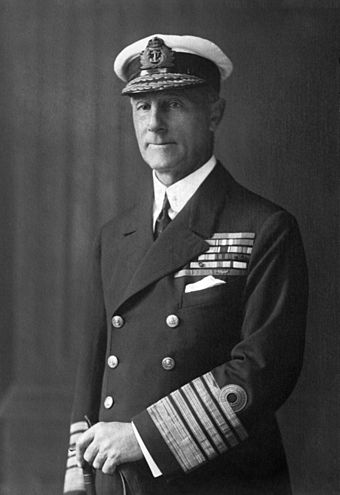
Consequently, Admiral Jellicoe led the sixteen dreadnought battleships of the 1st and 4th Battle Squadrons of the Grand Fleet and three battlecruisers of the 3rd Battlecruiser Squadron eastwards out of Scapa Flow at 22:30 on 30 May. He was to meet the 2nd Battle Squadron of eight dreadnought battleships coming from Cromarty. Beatty’s force of six ships of the 1st and 2nd Battlecruiser Squadrons plus the 5th Battle Squadron of four fast battleships left the Firth of Forth at around the same time. Jellicoe intended to rendezvous with him 90 miles (78 nm, 140 km) west of the mouth of the Skagerrak off the coast of Jutland and wait for the Germans to appear or for their intentions to become clear. The planned position would give him the widest range of responses to likely German moves. Hipper’s raiding force did not leave the Outer Jade Roads until 01:00 on 31 May, heading west of Heligoland Island following a cleared channel through the minefields, heading north at 16 knots (30 km/h, 18 mph). The main German fleet of sixteen dreadnought battleships of 1st and 3rd Battle Squadrons left the Jade at 02:30, being joined off Heligoland at 04:00 by the six pre-dreadnoughts of the 2nd Battle Squadron coming from the Elbe River. The Naval tactics in 1916 were of concentration of force and was fundamental to the fleet tactics of this time. Therefore tactical doctrine called for a fleet approaching battle to be in a compact formation of parallel columns, allowing relatively easy manoeuvring, and giving shortened sight lines within the formation, which simplified the passing of the signals necessary for command and control. A fleet formed in several short columns could change its heading faster than one formed in a single long column. Since most command signals were made with flags or signal lamps between ships, the flagship was usually placed at the head of the centre column so that its signals might be more easily seen by the many ships of the formation. Wireless telegraphy was in use, though security (radio direction finding), encryption, and the limitation of the radio sets made their extensive use more problematic. Command and control of such huge fleets remained difficult. Thus, it might take a very long time for a signal from the flagship to be relayed to the entire formation. It was usually necessary for a signal to be confirmed by each ship before it could be relayed to other ships, and an order for a fleet movement would have to be received and acknowledged by every ship before it could be executed. In a large single-column formation, a signal could take 10 minutes or more to be passed from one end of the line to the other, whereas in a formation of parallel columns, visibility across the diagonals was often better (and always shorter) than in a single long column, and the diagonals gave signal “redundancy”, increasing the probability that a message would be quickly seen and correctly interpreted. However, before battle was joined the heavy units of the fleet would, if possible, deploy into a single column. To form the battle line in the correct orientation relative to the enemy, the commanding admiral had to know the enemy fleet’s distance, bearing, heading, and speed. It was the task of the scouting forces, consisting primarily of battlecruisers and cruisers, to find the enemy and report this information in sufficient time, and, if possible, to deny the enemy’s scouting forces the opportunity of obtaining the equivalent information. Ideally, the battle line would cross the intended path of the enemy column so that the maximum number of guns could be brought to bear, whilst the enemy could fire only with the forward guns of the leading ships, a manoeuvre known as “crossing the T“. Jellicoe achieved this twice in one hour against the High Seas Fleet at Jutland, but on both occasions, Scheer managed to turn away and disengage, thereby avoiding a decisive action. In terms of ship design, within the existing technological limits, a trade-off had to be made between the weight and size of guns, the weight of armour protecting the ship, and the maximum speed. Battleships sacrificed speed for armour and heavy naval guns. British battlecruisers sacrificed weight of armour for greater speed, while their German counterparts were armed with lighter guns and heavier armour. These weight savings allowed them to escape danger or catch other ships. Generally, the larger guns mounted on British ships allowed an engagement at greater range. In theory, a lightly armoured ship could stay out of range of a slower opponent while still scoring hits. The fast pace of development in the pre-war years meant that every few years, a new generation of ships rendered its predecessors obsolete. Thus, fairly young ships could still be obsolete compared with the newest ships, and fare badly in an engagement against them. The British fleet in the pre-war period favoured large guns, oil fuel, and speed, whilst the German fleet favoured ship survivability and chose to sacrifice some gun size for improved armour. Warships of the period were armed with guns firing projectiles of varying weights, bearing high explosive warheads. The sum total of weight of all the projectiles fired by all the ship’s broadside guns is referred to as “weight of broadside”. At Jutland, the total of the British ships’ weight of broadside was 332,360 lb (150,760 kg), whilst the German fleet’s total was 134,216 lb (60,879 kg). This does not take into consideration the ability of some ships and their crews to fire more or less rapidly than others, which would increase or decrease amount of fire that one combatant was able to bring to bear on their opponent for any length of time.

Jellicoe’s Grand Fleet was split into two sections. The dreadnought Battle Fleet formed the main force and was composed of twenty-four battleships and three battlecruisers. The battleships were then formed into three squadrons of eight ships, further subdivided into divisions of four, each led by a flag officer. Accompanying them were eight armoured cruisers, eight light cruisers, four scout cruisers, fifty-one destroyers and one destroyer-minelayer. The Grand Fleet sailed without three of its battleships, these being Emperor of India, in refit at Invergordon, Queen Elizabeth, dry-docked at Rosyth and Dreadnought, in refit at Devonport. The brand new Royal Sovereign was also left behind, as with only three weeks in service her untrained crew was judged unready for battle. British reconnaissance was provided under David Beatty with six battlecruisers, four fast Queen Elizabeth-classbattleships, fourteen light cruisers and twenty-seven destroyers. Air scouting was provided by the attachment of the seaplane tender HMS Engadine one of the first aircraft carriers in history to participate in a naval engagement.

The German High Seas Fleet under Scheer was also split into a main force and a separate reconnaissance force. Scheer’s main battle fleet was composed of sixteen battleships and six pre-dreadnought battleships arranged in an identical manner to the British. With them were six light cruisers and thirty-one torpedo-boats, the latter being roughly equivalent to a British destroyer. The only German battleship missing was SMS König Albert. The German scouting force, commanded by Franz Hipper, consisted of five battlecruisers, five light cruisers and 30 torpedo-boats. The Germans had no equivalent to Engadine and no heavier-than-air aircraft to operate with the fleet but had the Imperial German Naval Airship Service’s force of rigid airships available to patrol the North Sea. All of the battleships and battlecruisers on both sides carried torpedoes of various sizes, as did the lighter craft. The British battleships carried three or four underwater torpedo tubes. The battlecruisers carried from two to five. All were either 18-inch or 21-inch diameter. The German battleships carried five or six underwater torpedo tubes in three sizes from 18 to 21 inch and the battlecruisers carried four or five tubes. The German battle fleet was hampered by the slow speed and relatively poor armament of the six pre-dreadnoughts of II Squadron, which limited maximum fleet speed to 18 knots (33 km/h; 21 mph), compared to maximum British fleet speed of 21 knots (39 km/h; 24 mph). On the British side, the eight armoured cruisers were deficient in both speed and armour protection. Both of these obsolete squadrons were notably vulnerable to attacks by more modern enemy ships.
So there we have it. The two fleets, set up for battle. Next week I shall go through what actually occurred and I think, at least I hope, you find it as interesting as I am finding!
This week…
The capacity to be alone is the capacity to love. It may look paradoxical to you, but it is not. It is an existential truth: only those people who are capable of being alone are capable of love, of sharing, of going into the deepest core of the other person – without possessing the other, without becoming dependent on the other, without reducing the other to a thing, and without becoming addicted to the other. They allow the other absolute freedom, because they know that if the other leaves, they will be as happy as they are now. Their happiness cannot be taken by the other, because it is not given by the other. ~ Osho
Click: Return to top of page or Index page
 Diary of a Care Home Inmate